MWE Correspondent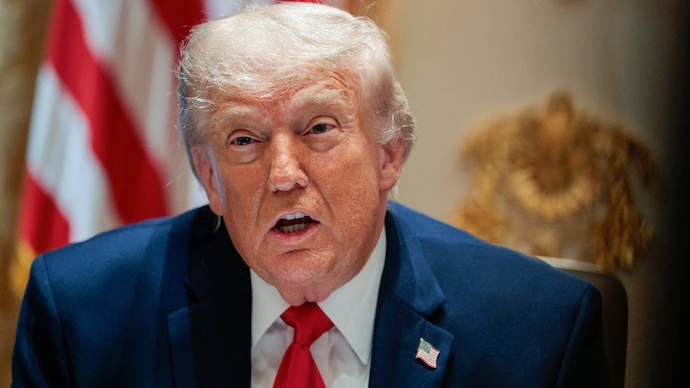
US President Donald Trump has said Iran will not receive sanctions relief in exchange for handing over its highly enriched uranium, as negotiations over a possible new nuclear agreement continue amid heightened regional tensions.
According to US media reports, Trump has maintained a firm position that Tehran must fully surrender its enriched uranium stockpile before Washington considers easing economic sanctions, reinforcing what administration officials describe as a “no concessions upfront” policy.
The latest remarks come as diplomatic efforts intensify to revive negotiations aimed at limiting Iran’s nuclear activities and reducing the risk of wider conflict in the Middle East. US officials are reportedly demanding strict verification mechanisms to ensure Iran fully complies with any future agreement before financial or economic relief is granted.
American negotiators are said to be pushing for the complete removal or transfer of Iran’s highly enriched uranium stockpile as a central condition of any deal. Washington argues that the measure is necessary to prevent Iran from moving closer to weapons-grade nuclear capability.
Trump’s stance signals a continuation of the hardline approach that has defined US policy toward Iran in recent years. Administration officials insist that sanctions relief cannot be offered in advance without concrete guarantees and verifiable actions from Tehran.
Iran, however, has strongly resisted demands to transfer its uranium stockpile abroad. Iranian leaders maintain that the country’s nuclear programme is intended solely for civilian energy and scientific purposes and argue that sanctions relief should come first as part of any negotiated settlement.
Tehran has repeatedly accused the United States of using economic pressure as leverage while failing to provide assurances that sanctions would actually be lifted in a meaningful and lasting way. Iranian officials also argue that surrendering strategic nuclear material before receiving economic guarantees would place the country in a vulnerable negotiating position.
The disagreement has become one of the main obstacles in ongoing diplomatic talks, which are also linked to broader regional security concerns following months of military tensions and strained relations between Iran and the United States.
Analysts say the dispute over uranium stockpiles reflects deeper mistrust between the two countries, making negotiations increasingly fragile despite continued diplomatic engagement through mediators and regional partners.
Also Read; US Strikes Iranian Targets as Hormuz Tensions Escalate
The talks are taking place against the backdrop of heightened instability across the Middle East, including tensions in the Gulf region and continued disputes involving maritime security, sanctions enforcement, and military activity linked to Iranian-backed groups.
International observers warn that failure to reach a compromise could further increase regional uncertainty and complicate efforts to prevent escalation. Some experts fear that prolonged deadlock may encourage additional military confrontations or tougher economic measures from Washington.
Despite the hardened rhetoric, diplomatic channels remain open, with negotiators continuing discussions behind closed doors. Officials involved in the talks say there is still hope for progress if both sides show flexibility on verification procedures, sanctions sequencing, and security guarantees.
European and Gulf mediators are also reportedly working to narrow differences between Washington and Tehran, hoping to revive momentum toward a broader agreement that could reduce tensions and stabilize the region.
For now, however, the gap between the two sides remains significant. Trump’s latest comments suggest that the United States is unwilling to soften its position on sanctions relief unless Iran first makes major concessions regarding its nuclear programme.