MWE Correspondent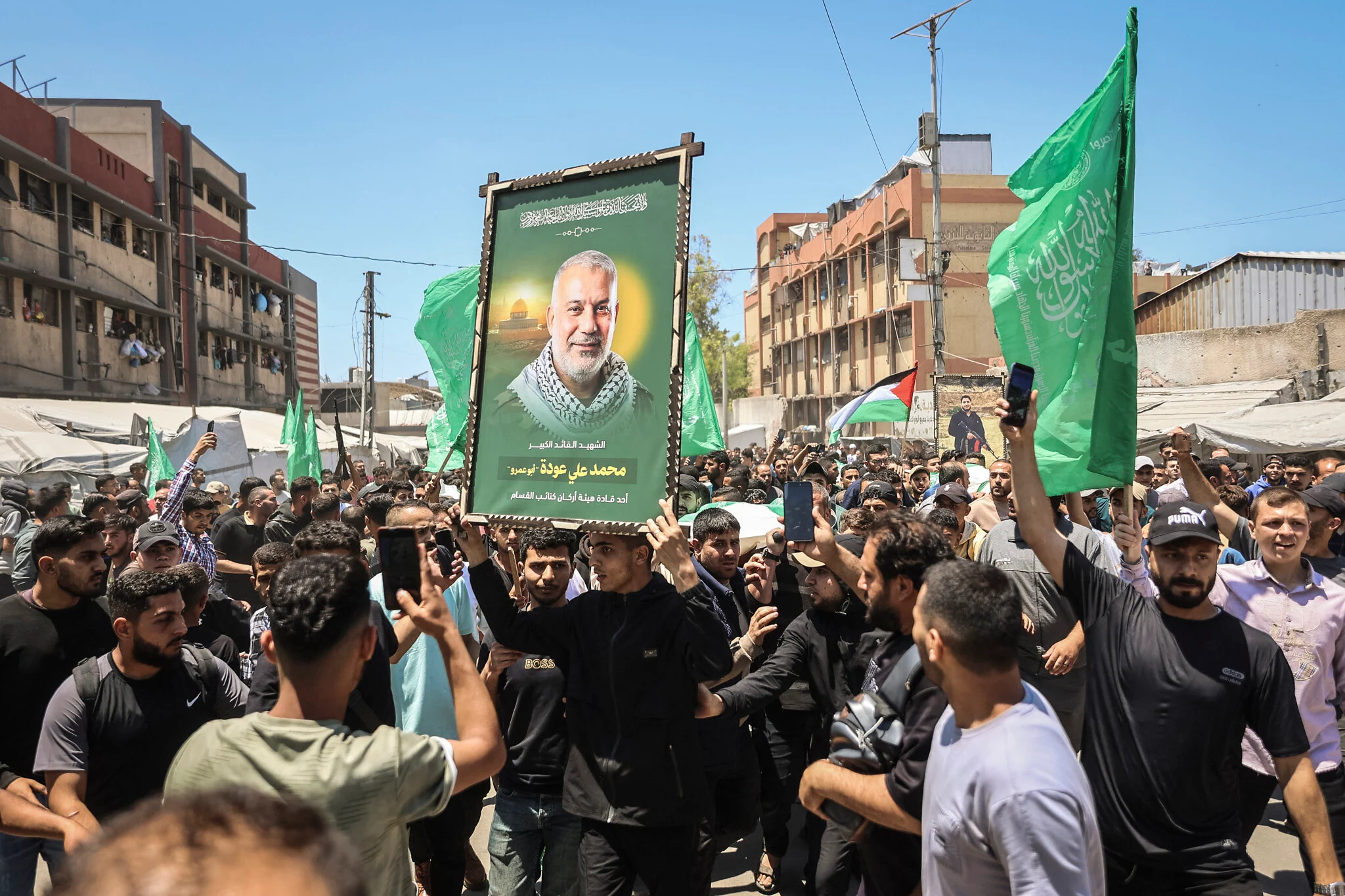
The newly appointed commander of Hamas’s military wing, Mohammed Odeh, has been killed in an Israeli air strike targeting a residential building in Gaza City, marking another major escalation despite an existing ceasefire agreement between Israel and Hamas.
Hamas confirmed on Wednesday that Mohammed Odeh died alongside his wife and two children after missiles struck the upper floors of the al-Kayali building, located in one of Gaza City’s busiest commercial districts ahead of Eid al-Adha celebrations. The attack reportedly caused widespread destruction and panic in the densely populated area, where markets had been crowded with residents preparing for the religious holiday.
Local medical teams said dozens of civilians were injured in the blast, while rescue workers struggled for hours to access damaged sections of the building due to heavy congestion, collapsed structures, and the intensity of the destruction caused by the strike.
The Israeli military and the Shin Bet internal security agency later confirmed carrying out the operation, stating that the strike followed months of intelligence monitoring focused on Mohammed Odeh and individuals close to him. Israeli authorities described Odeh as a key figure within Hamas’s armed structure and linked him to operational planning connected to the October 7 attack on Israel.
In a statement released after the operation, the office of Israeli Prime Minister Benjamin Netanyahu referred to Odeh as one of the “architects” of the October 7 assault, which triggered the current war and dramatically reshaped security conditions across the region.
The killing comes only days after the death of Odeh’s predecessor in another Israeli strike, highlighting what analysts describe as an intensified Israeli campaign targeting Hamas leadership figures inside Gaza. Israeli officials maintain that such operations are necessary to weaken Hamas’s command structure and prevent future attacks against Israeli civilians and security forces.
However, Hamas condemned the strike as a violation of the ceasefire agreement reached in October and accused Israel of repeatedly undermining efforts to reduce violence in Gaza. The group said continued attacks on residential neighborhoods are worsening humanitarian conditions and placing civilians at extreme risk.
Also Read; US Strikes Iranian Targets as Hormuz Tensions Escalate
Israel, meanwhile, insists that the ceasefire does not prevent it from targeting individuals it considers active security threats. Israeli officials argue that military operations against Hamas operatives remain justified under national security and self-defense considerations.
The strike has intensified concerns about the fragility of the ceasefire, which has already faced repeated accusations of violations from both sides. Despite the truce framework, violence has continued intermittently across Gaza, with air strikes, clashes, and security operations contributing to rising casualties.
According to Gaza’s health ministry, more than 900 people have been killed during the ceasefire period, underscoring the continued instability in the territory despite international mediation efforts aimed at preventing a broader escalation.
Residents in Gaza City described scenes of chaos following the latest strike, with smoke rising above the market district and emergency crews rushing to evacuate wounded civilians. Witnesses said the attack occurred during one of the busiest shopping periods before Eid celebrations, amplifying fears among families already struggling with months of conflict and humanitarian hardship.
International observers have warned that continued targeted killings and retaliatory attacks could further weaken already fragile diplomatic efforts to stabilize the region. Mediators from several countries have been attempting to preserve the ceasefire while encouraging broader negotiations on humanitarian access, prisoner exchanges, and long-term security arrangements.
As tensions continue to rise, the death of Mohammed Odeh is expected to deepen uncertainty surrounding the future of the ceasefire and the possibility of renewed large-scale fighting between Israel and Hamas.