MWE Correspondent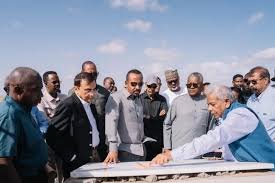
Nigerian business magnate Aliko Dangote has announced plans to establish a fertiliser manufacturing plant in Tanzania, in a move expected to significantly boost agricultural productivity and strengthen the country’s industrial base.
The proposed investment was discussed during high-level talks with President Samia Suluhu Hassan at State House in Dar es Salaam, where both sides underscored the urgent need to expand local fertiliser production as a way of supporting farmers and reducing dependence on costly imports.
If implemented, the project would mark one of the most significant private-sector industrial investments in Tanzania in recent years, positioning the country as a potential fertiliser production hub for the wider East African region. Fertiliser access remains a critical challenge for many African farmers, with high import costs and supply chain disruptions often limiting agricultural output.
According to the Food and Agriculture Organization (FAO), Africa accounts for less than 5% of global fertiliser consumption despite agriculture employing more than half of the continent’s workforce. Experts argue that improving fertiliser availability is essential to closing Africa’s food production gap and increasing crop yields.
Dangote, who has built one of Africa’s largest industrial empires with major investments in cement, oil refining, and fertiliser production in Nigeria, has increasingly expanded his focus across the continent. His fertiliser complex in Nigeria is among the largest in the world, with an annual production capacity exceeding several million metric tonnes.
Also Read; Kenya Protests Turn Deadly Amid Fuel Crisis
The potential Tanzania project aligns with broader regional efforts to industrialise agriculture and reduce reliance on imported agricultural inputs. Officials say such investments could help stabilise food prices, improve rural incomes, and strengthen food security across East Africa.
President Samia has in recent years promoted an industrialisation agenda aimed at attracting large-scale investors in manufacturing, energy, and agro-processing sectors. The government has identified agriculture as a key pillar of economic transformation, given its role in employment and export earnings.
Analysts note that fertiliser production in Tanzania could also benefit from the country’s natural gas resources, which are a key input in nitrogen-based fertiliser manufacturing. This could provide a cost advantage and support long-term sustainability of local production.
While details of the investment timeline and scale have not yet been disclosed, the discussions signal growing confidence among major African investors in Tanzania’s economic direction and policy stability.
If finalized, the project is expected to create jobs, strengthen supply chains, and reduce the region’s vulnerability to global fertiliser price shocks, which have intensified in recent years due to geopolitical tensions and supply disruptions.