
 MWE Correspondent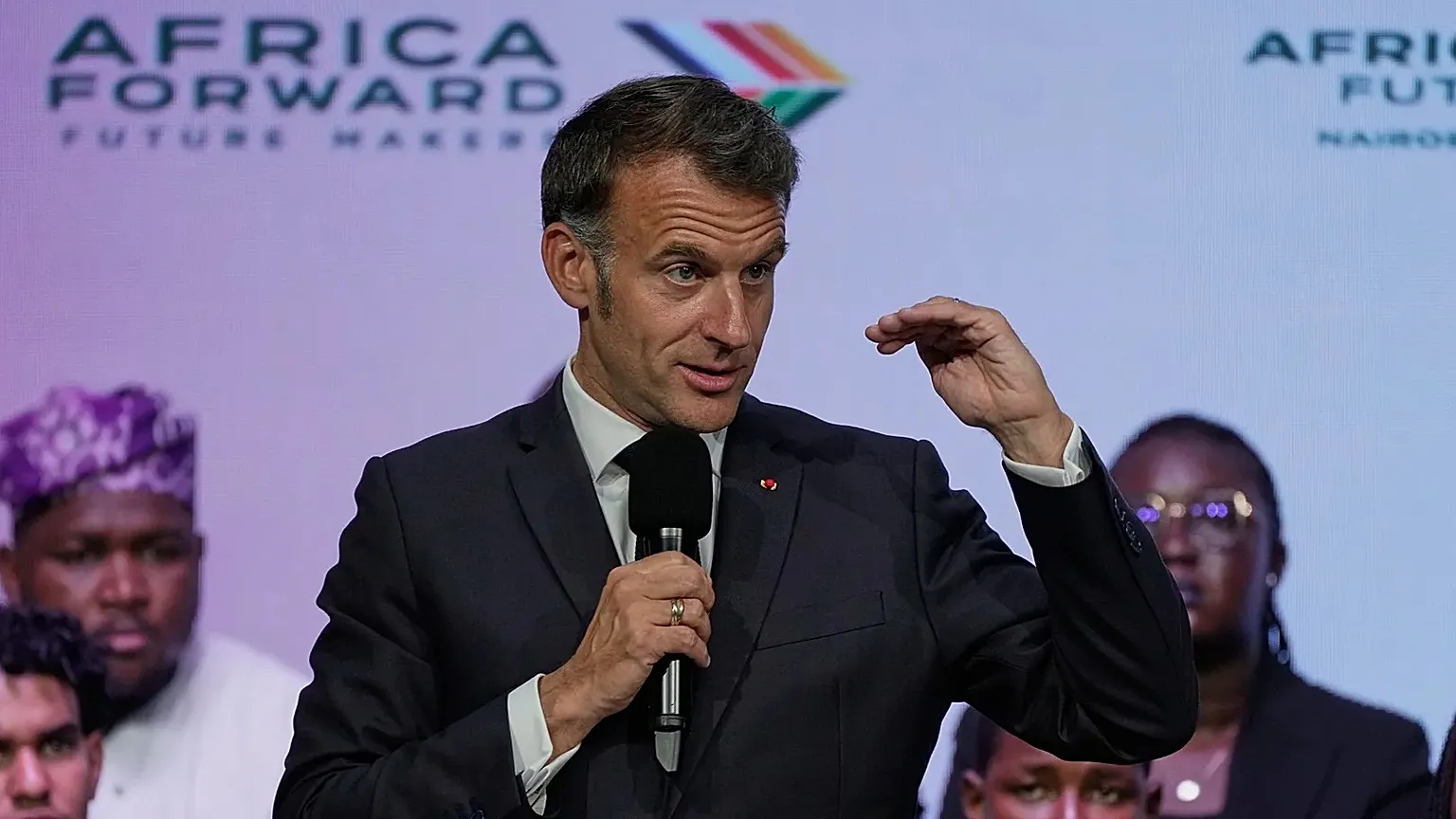
The Africa-France summit in Nairobi has ignited intense debate across the continent after Kenyan President William Ruto declared that “we will never be slaves again” during high-level talks with French President Emmanuel Macron, moments before France announced a multi-billion-dollar investment package targeting Africa’s economic transformation.
Macron unveiled a $27 billion investment commitment during the summit, presenting the package as part of what he described as a new partnership between France and Africa focused on infrastructure, energy, technology, and industrial development.
However, the announcement has generated sharp reactions online and among political commentators after details emerged showing that approximately $16.4 billion of the investment would come directly from French corporations, raising renewed questions about who ultimately benefits from large-scale international financing initiatives on the continent.
Critics argue that African economies continue to face a structural imbalance where foreign companies dominate investment flows, strategic industries, and profit extraction while African nations remain dependent on external capital and expertise.
The controversy intensified further after Macron was seen addressing audience members during a summit session and calling for silence and respect while speaking on stage — a moment that circulated widely across African social media platforms and triggered mixed reactions about diplomatic optics and post-colonial sensitivities.
The summit also drew attention because several leaders from the Alliance of Sahel States (AES), including Burkina Faso’s Ibrahim Traoré, Mali’s Assimi Goïta, and officials from Niger, did not attend the gathering.
Observers noted that the absence of the AES bloc reflects widening political and ideological divisions across Africa regarding relations with former colonial powers and international partnerships.
Also Read; Trump Rejects China Role in Iran Crisis
Analysts say the Nairobi summit highlighted two competing visions emerging across the continent.
One approach emphasizes engagement with global powers through negotiated investment, trade partnerships, and institutional cooperation aimed at accelerating development. The other increasingly advocates for economic self-reliance, reduced foreign influence, and sovereignty-centered models inspired by historical African revolutionary figures such as Thomas Sankara.
Supporters of the latter view have increasingly praised Traoré’s policies in Burkina Faso, arguing that his administration represents a shift toward resource nationalism and independent economic planning outside traditional Western influence.
The Nairobi summit itself was historically significant because it marked the first France-Africa summit held outside a former French colony, a development some analysts interpret as evidence of France’s changing position and influence across parts of Africa amid rising geopolitical competition from Russia, China, Türkiye, and Gulf states.
Despite the controversy, supporters of the summit argue that Africa still requires large-scale international investment to finance infrastructure, industrialization, energy access, and job creation, particularly at a time of mounting global economic uncertainty.
The debate now unfolding across Africa goes far beyond one summit or one investment package. At its center lies a broader question increasingly shaping political discourse on the continent: whether Africa’s future economic liberation will come through reforming partnerships with global powers or through breaking away from dependency structures entirely.







