MWE Correspondent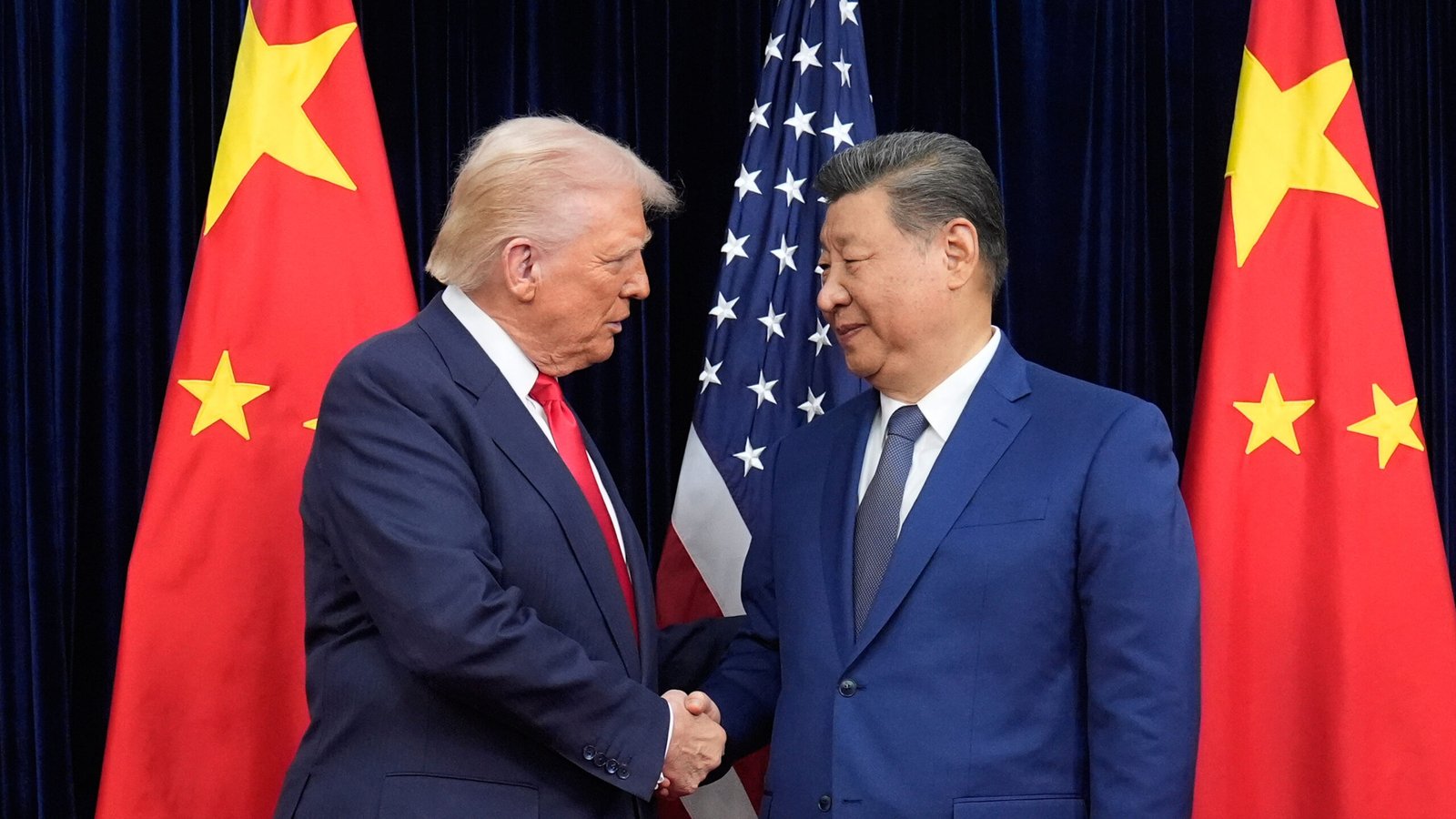
U.S. President Donald Trump and Chinese President Xi Jinping opened one of the most consequential diplomatic meetings of the year on Thursday in Beijing, holding high-stakes talks that could reshape the balance of global economic and geopolitical power.
The two leaders exchanged a carefully choreographed handshake outside Beijing’s Great Hall of the People before entering closed-door negotiations overshadowed by rising tensions over trade, artificial intelligence, Taiwan, military competition, and the escalating Iran conflict.
The summit comes at a moment of extraordinary international uncertainty, with relations between Washington and Beijing increasingly defining the direction of the global economy, security alliances, technological dominance, and energy stability.
Officials from both governments described the meeting as critical to stabilizing relations between the world’s two largest economies after years of deepening rivalry and diplomatic strain.
At the center of the negotiations are unresolved disputes over tariffs and technology restrictions that continue to disrupt global markets and supply chains. Washington has intensified pressure on China over industrial policies, advanced semiconductor production, cybersecurity concerns, and intellectual property disputes, while Beijing has condemned what it calls efforts to contain China’s economic and technological rise.
Despite repeated attempts to reduce tensions, competition between the two superpowers has expanded far beyond trade.
Artificial intelligence, semiconductor manufacturing, military modernization, rare earth minerals, and control over strategic technologies have become central battlegrounds in an increasingly complex struggle for global influence. Analysts say both countries now view technological supremacy as directly tied to national security and long-term geopolitical power.
Also Read; Ghana Orders Emergency Evacuation From South Africa
Taiwan remains among the most dangerous flashpoints.
China has repeatedly warned against continued American military cooperation and weapons support for Taiwan, the self-governed island Beijing considers part of its territory. U.S. officials, however, have continued to emphasize their commitment to maintaining stability in the Indo-Pacific region, raising fears that miscalculation between the two nuclear powers could trigger a broader international crisis.
The ongoing Iran war has further elevated the importance of the Beijing summit.
The conflict has unsettled global energy markets, disrupted international shipping routes, and increased fears of wider regional instability across the Middle East. American officials are believed to be seeking greater Chinese diplomatic involvement due to Beijing’s close economic and strategic ties with Tehran.
Beyond immediate security concerns, the meeting also reflects a deeper transformation underway in global politics.
For decades, the United States dominated the international order politically, economically, and militarily. China’s rapid rise, however, has increasingly challenged that structure, creating a world shaped less by cooperation and more by strategic competition between rival power centers.
International observers say the Beijing summit could determine whether the two nations pursue managed coexistence or move closer toward prolonged confrontation with worldwide consequences.
Financial markets, multinational corporations, and governments across Europe, Asia, Africa, and the Middle East are closely monitoring the outcome, aware that decisions made inside the Great Hall of the People may influence everything from global inflation and trade routes to military alliances and emerging technologies.
While public statements from both sides emphasized dialogue and cooperation, substantial divisions remain unresolved.
Still, diplomatic analysts note that the willingness of both leaders to engage directly signals recognition that sustained instability between Washington and Beijing carries enormous risks not only for the two countries, but for the broader international system itself.