MWE Correspondent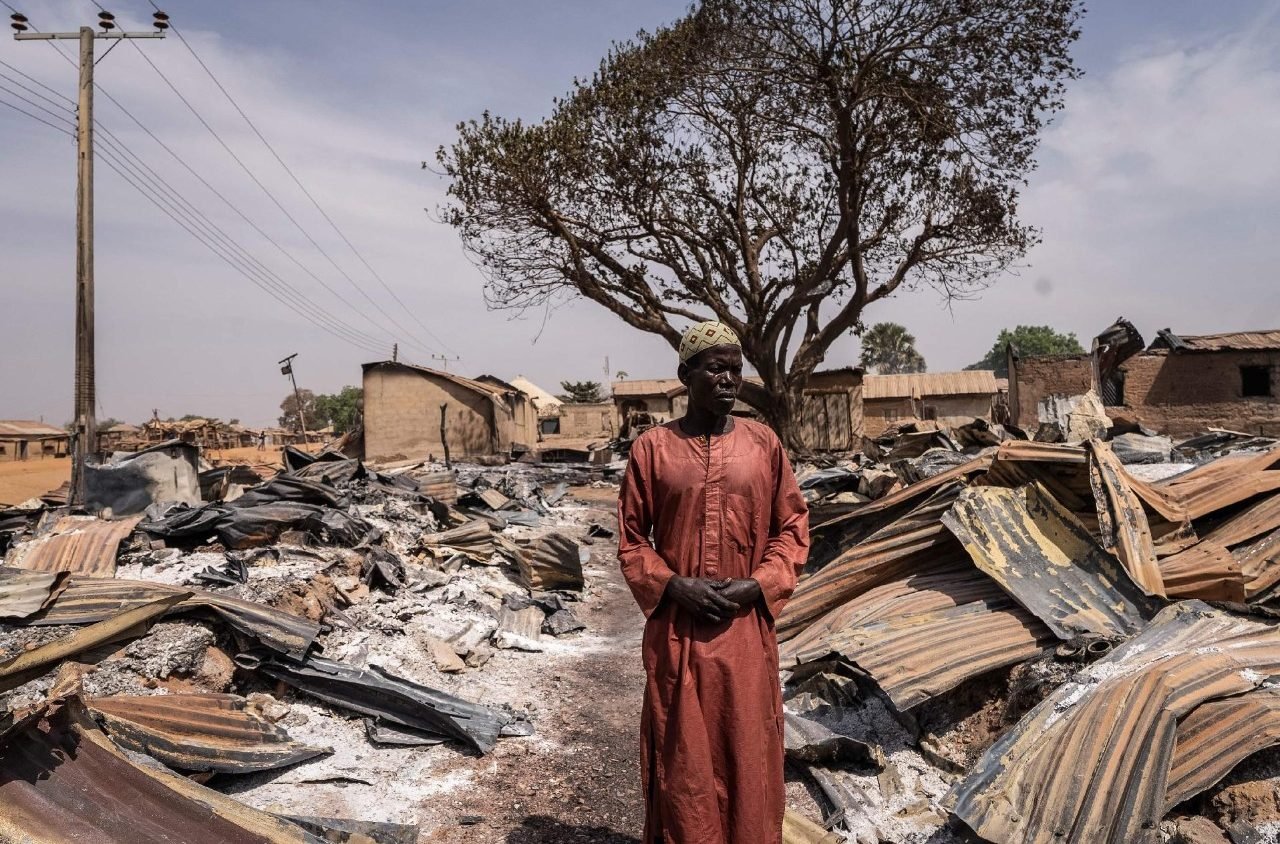
At least 29 people have been killed in a coordinated armed attack in northeastern Nigeria, underscoring the deepening security crisis in Africa’s most populous nation as authorities struggle to contain persistent violence in remote rural regions.
According to security officials, armed men launched a late-night assault on several villages, opening fire on residents and moving rapidly between settlements in a coordinated operation that lasted hours. Survivors described scenes of panic as families fled into nearby forests, while homes were left burning in the aftermath of the attack. The final death toll may rise as search and recovery efforts continue.
The Islamic State group later claimed responsibility for the attack through affiliated media channels, though Nigerian authorities have not independently confirmed the claim. Officials say investigations are ongoing to determine the exact identity of the attackers, who appear to have operated with significant mobility and tactical coordination.
The assault highlights the continuing volatility in Nigeria’s northeast, a region that has faced more than a decade of insurgency involving extremist factions, splinter groups, and criminal networks. Despite repeated military offensives and government claims of territorial recovery, rural communities remain highly exposed to sudden and often brutal raids.
Security analysts note that the pattern of attacks has evolved in recent years, with armed groups increasingly targeting isolated villages rather than holding territory. This shift has made it more difficult for conventional military operations to anticipate or prevent violence, particularly in areas with limited infrastructure and delayed emergency response.
Also Read; Tanzania Pushes Green Mineral Industrialisation Drive
The latest killings come at a politically sensitive moment, as Nigeria prepares for national elections scheduled for January. Security has emerged as a defining issue in the political landscape, with growing public frustration over recurring attacks, displacement, and the perceived inability of authorities to provide lasting protection.
In many affected communities, the impact of sustained violence extends far beyond immediate casualties. Farming activities have been repeatedly disrupted, contributing to food insecurity in a region that already faces environmental stress and economic hardship. Thousands of civilians have been displaced over the years, placing additional pressure on urban centers and humanitarian services.
Regional observers warn that the continued instability in northeastern Nigeria also carries broader implications for West Africa’s security architecture. Cross-border movements of armed groups and weapons have complicated containment efforts, while porous borders in the Lake Chad Basin continue to facilitate militant mobility.
International partners have repeatedly urged a more integrated approach combining military action with governance reforms, development investment, and community-level engagement. However, progress has been uneven, and rural insecurity remains a persistent challenge.