Joseph Isangura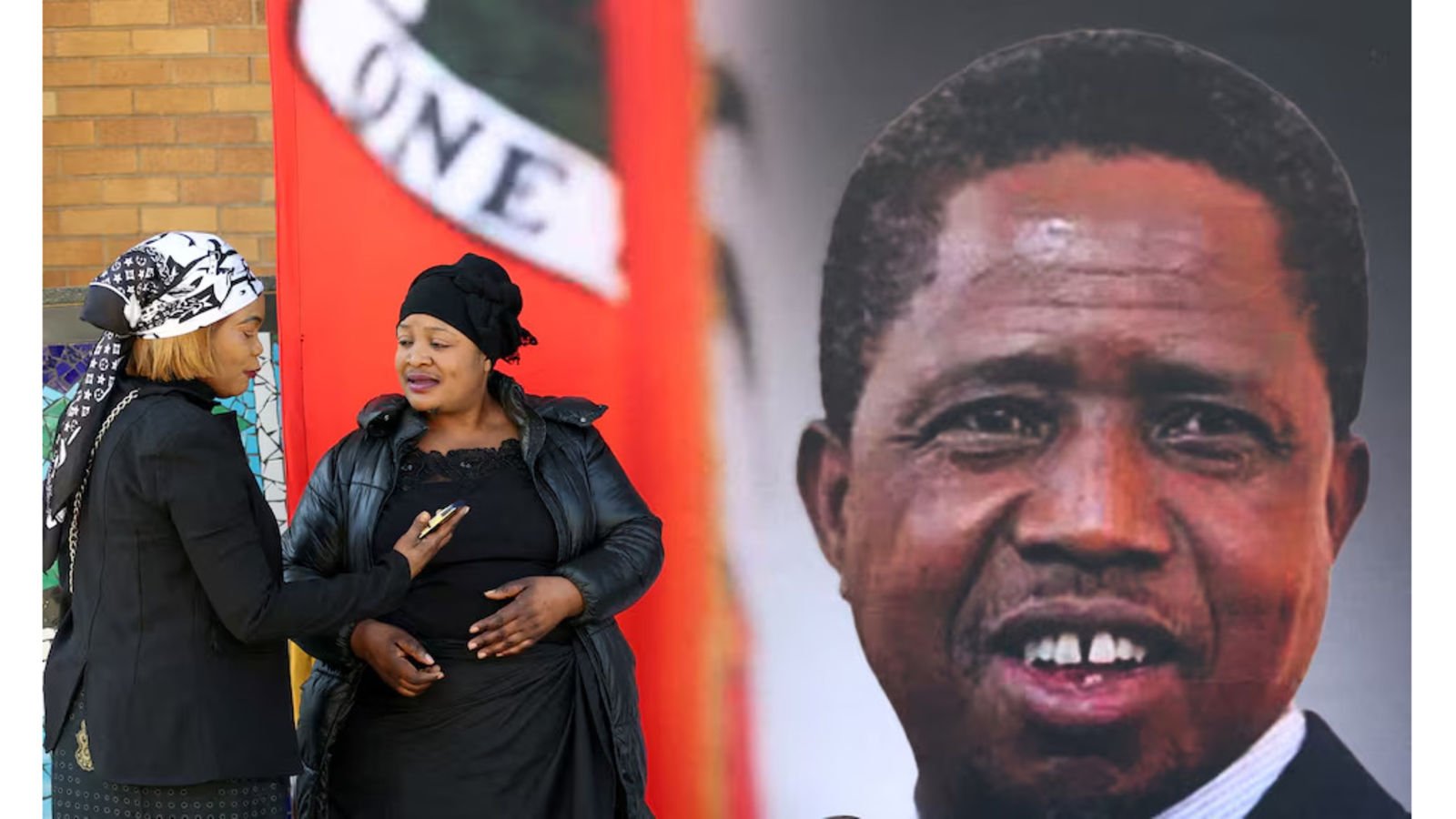
A legal and political standoff over the final resting place of former Zambian President Edgar Lungu has intensified after South Africa’s High Court issued an order blocking the transfer of his body to Zambia, deepening a dispute that has drawn regional and international attention.
The ruling, delivered in Pretoria, temporarily prevents the Zambian government from repatriating Lungu’s remains from South Africa, where he died on June 5, 2025, at the age of 68. The court directed that no movement of the body should take place until the matter is heard again on May 21, effectively pausing funeral arrangements that had already become a source of contention.
Lungu passed away at Mediclinic Medforum after suffering heart complications during surgery. His death marked the end of a prominent political career that saw him lead Zambia from 2015 to 2021, a period characterized by both infrastructure expansion and political polarization.
At the center of the current dispute is a fundamental disagreement between the Zambian government and Lungu’s family over how and where he should be buried. Authorities in Lusaka have insisted that, as a former head of state, Lungu is entitled to a full state funeral with burial at a designated national site reserved for past presidents. Officials argue that such honors are not only a matter of protocol but also reflect national unity and respect for public service.
However, members of Lungu’s family have strongly opposed this position, calling instead for a private burial. They have argued that funeral arrangements should remain a family matter, emphasizing cultural values, personal dignity, and the wishes of close relatives. This divergence has transformed what is typically a ceremonial process into a legal confrontation involving courts in South Africa.
The High Court’s intervention follows an earlier ruling that had allowed the repatriation of Lungu’s body to Zambia. That decision was subsequently challenged by the family, leading to the current suspension and ongoing legal proceedings. The case has raised complex questions about jurisdiction, particularly given that Lungu died outside his home country and is therefore subject to South African legal processes.
Legal experts note that the dispute highlights broader tensions between state authority and family rights, especially in cases involving high-profile political figures. While governments often claim responsibility for honoring former leaders through official ceremonies, families may assert moral and cultural authority over burial decisions.
Also Read; Africa Expands Trade Links as Regional Integration Accelerates
The situation has also drawn public attention across Southern Africa, where traditions surrounding death and burial are deeply significant. Analysts say the outcome of the case could establish an important precedent for how similar disputes are handled in the future, particularly when political status intersects with private family interests.
Beyond legal considerations, the standoff reflects lingering political sensitivities tied to Lungu’s legacy. His presidency remains a subject of debate within Zambia, and the handling of his burial has become, for some, an extension of broader national conversations about leadership, respect, and reconciliation.
As the May 21 hearing approaches, both sides remain firm in their positions. The Zambian government continues to advocate for a state-led process, while the family maintains its demand for a private farewell.
For now, the court’s order ensures that Lungu’s body will remain in South Africa, prolonging a dispute that has moved beyond personal grief into the realm of law, politics, and national identity.