MWE Correspondent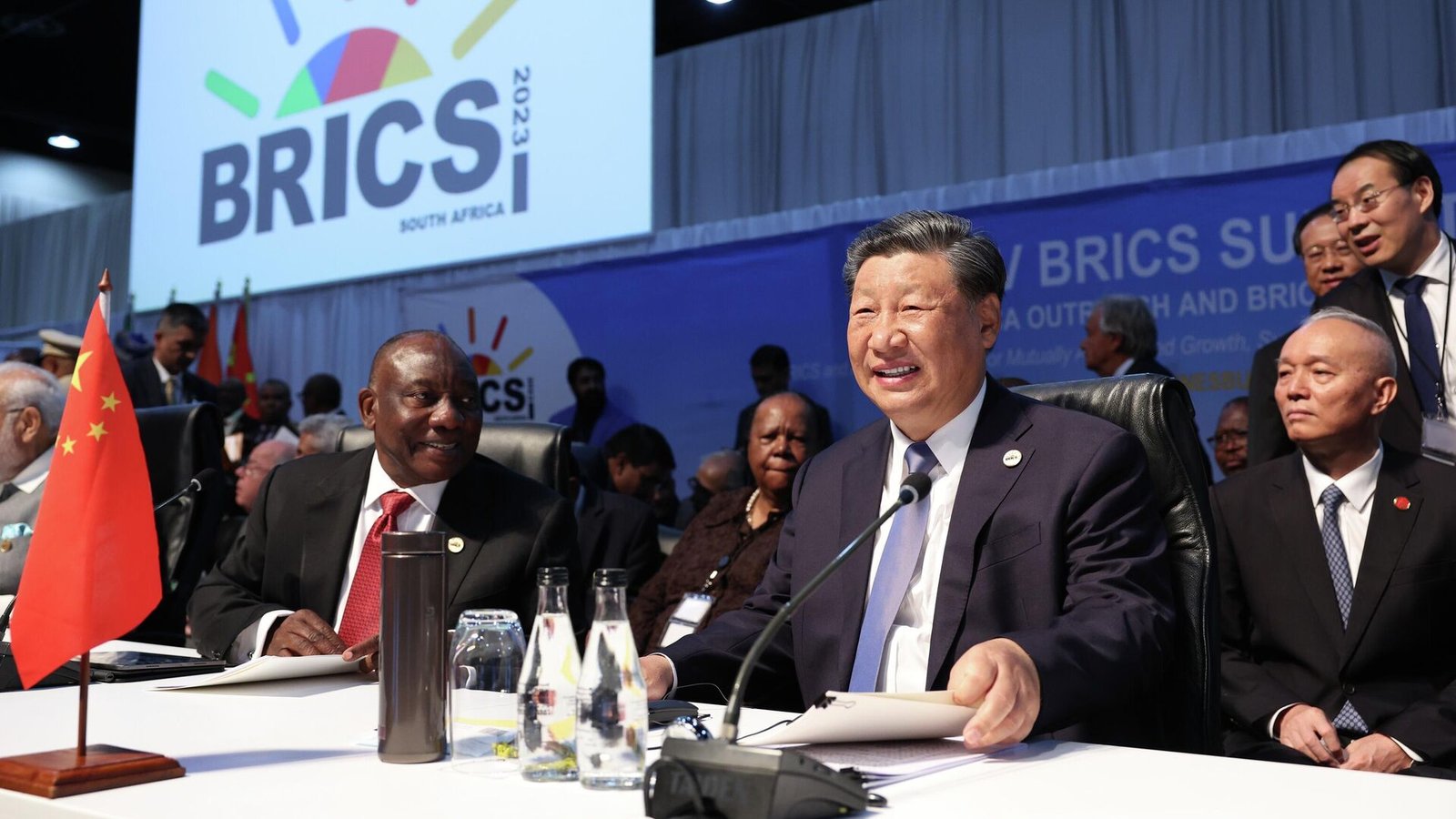
A quiet but significant shift is taking shape in the global economic order, and it is becoming harder to ignore.
The growing influence of the bloc is no longer just a political talking point it is increasingly shaping real conversations around trade, finance, and global decision-making power.
What began as a loose grouping of emerging economies is now evolving into something more structured, more coordinated, and more ambitious.
Recent developments show that BRICS is not only expanding its membership base but also deepening its economic cooperation agenda. With countries from different regions expressing interest in joining or strengthening ties, the bloc is gradually positioning itself as a broader platform for countries seeking a stronger voice in global affairs. This matters because it reflects a growing desire among emerging economies to participate more actively in shaping international systems that have long been dominated by traditional powers.
At the center of this transformation is a key issue: balance.
For decades, global financial systems have operated largely under frameworks influenced by Western institutions and currency structures. While these systems have supported global trade and growth, they have also created dependencies that many countries are now re-evaluating. The current shift is not necessarily about replacing existing systems, but about creating alternatives that offer more flexibility and representation.
That is where de-dollarization enters the conversation.
Also Read: Trade Corridors Gain New Strategic Momentum
Several BRICS members have increased efforts to promote trade using local currencies rather than relying entirely on the U.S. dollar. This does not mean the dollar is losing its global role overnight it remains the dominant reserve and trade currency. However, the growing interest in diversifying currency use reflects a strategic move to reduce exposure to external financial pressures and exchange-rate volatility.
This trend is gradual, but meaningful.
In practical terms, using local currencies in trade can lower transaction costs, reduce dependence on foreign exchange reserves, and improve financial stability during periods of global uncertainty. For many developing economies, this approach offers a way to strengthen economic sovereignty while still participating actively in global trade.
There is also a structural dimension to this shift.
BRICS countries collectively represent a significant share of the global population and an increasing portion of global economic output. As their economic weight grows, so does their influence. This is encouraging discussions around reforming global financial governance, including the roles of major institutions and how decision-making power is distributed.
That is where global governance becomes a central theme.
The current international system is built on institutions established decades ago, at a time when the global economic landscape looked very different. Today, emerging economies are larger, more connected, and more influential than ever before. The push for reform is therefore less about confrontation and more about alignment — ensuring that global systems reflect current realities rather than historical structures.
At the same time, cooperation within BRICS is expanding beyond currency discussions.
There is increasing focus on trade facilitation, infrastructure development, energy cooperation, and financial integration. These areas are critical because they provide practical pathways for strengthening economic ties. Instead of relying solely on declarations, the bloc is gradually building mechanisms that can support real economic activity.
That is where multilateralism plays a key role.
In a world where geopolitical tensions remain present, platforms that encourage cooperation among multiple countries are becoming more valuable. BRICS is positioning itself as one such platform — not as a replacement for existing systems, but as an additional layer that allows for broader participation and dialogue.
There are, of course, challenges.
BRICS members have diverse economic structures, political systems, and regional priorities. Aligning these differences into a unified strategy is not always straightforward. Progress may be gradual, and expectations need to remain realistic. However, the direction itself is what matters most — and that direction is becoming clearer.
The significance of this moment lies in what it represents.
Global power is no longer concentrated in a single direction. It is becoming more distributed, more dynamic, and more reflective of a wider range of economic actors. This does not signal instability. In many ways, it signals adjustment — a natural evolution as the global economy becomes more interconnected and diverse.
For observers, investors, and policymakers, the message is simple:
The global system is not being replaced overnight.
But it is being reshaped step by step.
And in that process, platforms like BRICS are moving from the margins toward the center of global economic conversation.