MWE Correspondent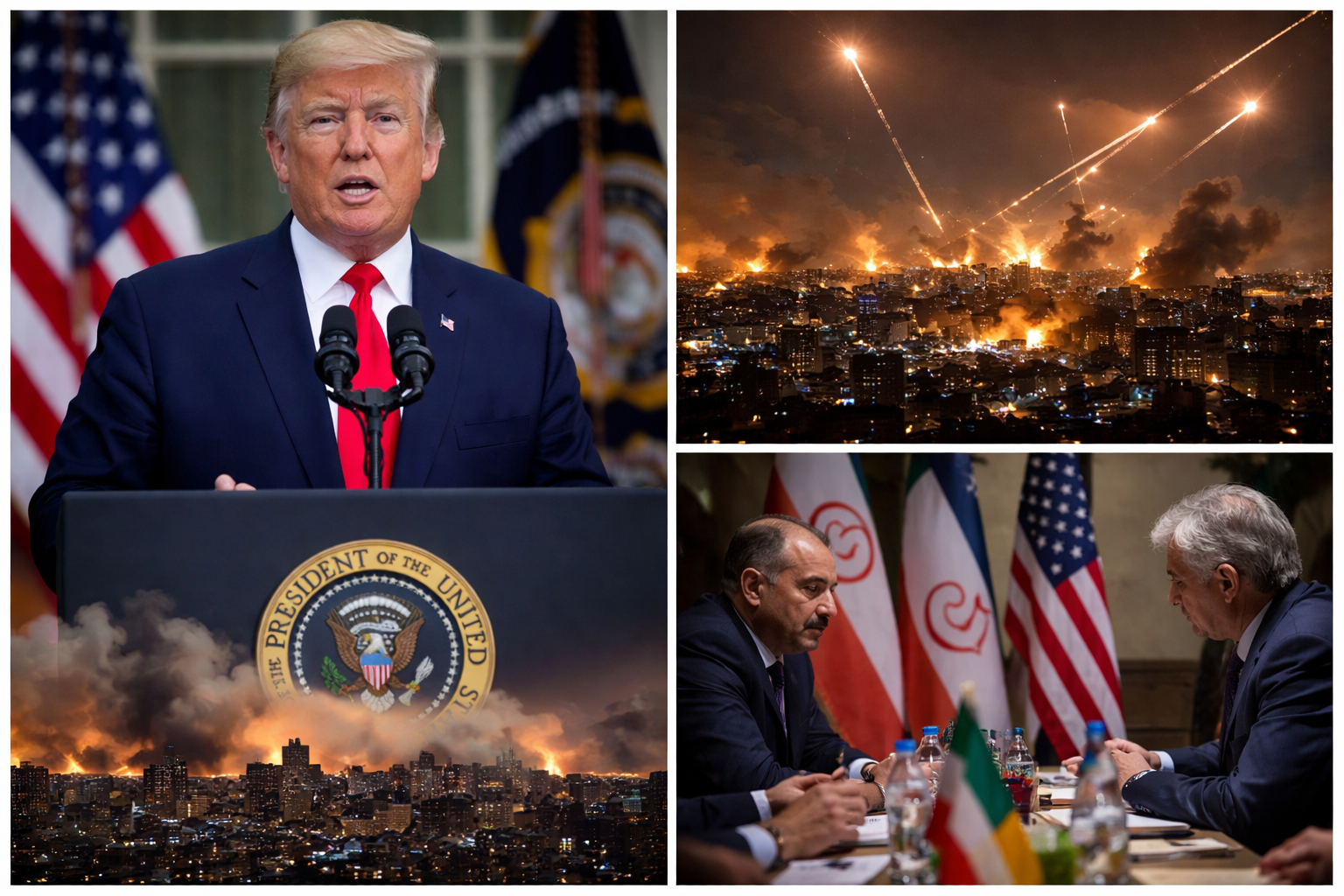
Even as missiles fly and tensions rise across the Middle East, a quieter and more delicate process is unfolding behind the scenes—one that could ultimately decide whether the conflict deepens or begins to ease.
The President of the United States, , has claimed that Iran is already engaged in discussions with Washington, despite Tehran’s public insistence that no formal negotiations are taking place. Speaking midweek, Trump suggested that Iranian leaders are reluctant to acknowledge these contacts openly, warning that internal political pressure could make such admissions dangerous.
On the other side, Iran’s Foreign Minister, , has taken a more measured tone. In a televised address, he confirmed that proposals and messages—primarily relayed through intermediary nations—are being carefully reviewed in Tehran. However, he drew a clear distinction: these exchanges, he emphasized, should not be interpreted as negotiations.
That difference in language reflects a deeper strategic reality. For decades, indirect communication has been a cornerstone of relations between and . From the era of the to the present conflict, backchannel diplomacy has often served as the only viable path forward when direct talks become politically sensitive.
Meanwhile, the war itself continues to intensify.
Recent strikes have targeted key Iranian military infrastructure, including missile production facilities and strategic industrial sites. Analysts estimate that a significant portion of Iran’s missile-launch capabilities has already been degraded, though the country retains enough capacity to sustain retaliatory attacks. In response, Iran has launched missiles and drones not only toward Israel but also toward strategic locations across the Gulf, signaling a widening regional confrontation.
Also Read; Africa Reclaims Trade Power Through Value Addition Strategy
The human cost is mounting. Independent assessments suggest that casualties within Iran have risen sharply since the conflict began, with thousands injured and critical infrastructure damaged. Yet, despite the pressure, the Iranian government has maintained internal control, organizing public demonstrations and reinforcing its political position domestically.
Regionally, the conflict is expanding. Armed groups aligned with Iran, including forces in Yemen, have entered the fray, targeting shipping lanes and raising concerns about global trade disruptions—particularly in vital corridors like the Red Sea.
Diplomatic activity, however, has not stopped. Several countries, including regional and international powers, are quietly working to mediate between the two sides. Proposals under discussion reportedly include limits on military capabilities, security guarantees, and potential frameworks for post-war compensation—an issue Iran has repeatedly insisted upon as a condition for any agreement.
Still, the gap between the two sides remains wide.
For Washington, the priority is to curb Iran’s missile and strategic capabilities. For Tehran, the focus is on sovereignty, security, and restitution for damages already sustained. These competing demands make any immediate breakthrough unlikely, but not impossible.
What makes this moment particularly significant is the coexistence of two parallel tracks: an escalating military campaign and a cautious diplomatic exploration. History has shown that even the most intense conflicts can pivot unexpectedly when dialogue—however indirect—gains momentum.
For now, the world is watching a conflict defined not only by what is said publicly, but also by what is carefully left unsaid.
Because in this war, as in many before it, the loudest explosions may not be the only forces shaping the outcome.