MWE Correspondent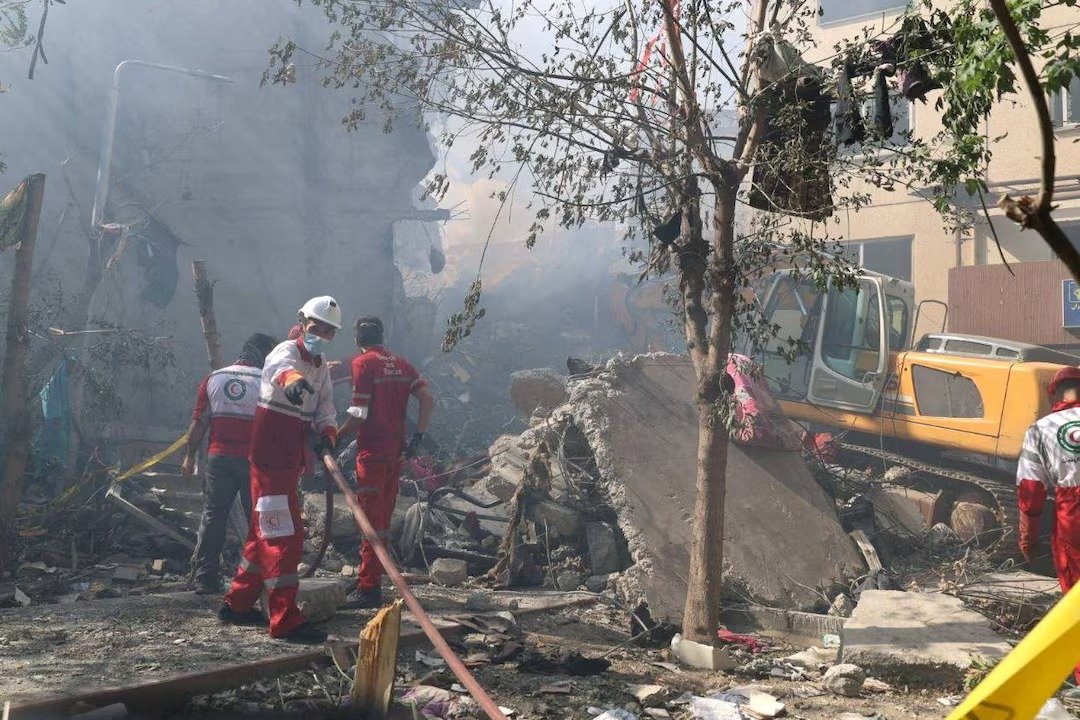
The conflict between Israel and Iran has entered a far more dangerous and expansive phase, with fresh overnight strikes targeting critical military infrastructure deep inside Iran, while retaliatory attacks and regional involvement continue to widen the war’s scope.
According to Israeli military briefings, the latest wave of airstrikes focused on missile production facilities in Tehran and a major naval weapons site in Yazd—described as one of Iran’s most strategic hubs for producing advanced explosives and maritime weaponry. These strikes are part of an intensified campaign aimed at crippling Iran’s long-range offensive capabilities and limiting its ability to sustain prolonged warfare.
Explosions were reported across northern Tehran as Israeli forces also hit temporary command centers, air defense systems, and weapons factories linked to Iran’s military structure. Analysts say the pattern of attacks reflects a calculated effort to dismantle not only Iran’s battlefield strength but also its broader defense-industrial network.
Evidence from military intelligence assessments suggests the strategy is already having a measurable impact. U.S. and allied estimates indicate that nearly one-third of Iran’s missile stockpile has been destroyed, while a further third has been severely damaged or rendered inaccessible due to repeated strikes on underground launch facilities. Additionally, more than 300 missile launchers have reportedly been neutralized, significantly reducing Iran’s strike capacity.
However, Iran has not remained passive. Despite reduced launch frequency, Tehran continues to fire missiles and drones at Israeli and allied targets, maintaining pressure across multiple fronts. In recent days, Iranian attacks have extended beyond Israel, striking sites in Gulf countries including Bahrain, Saudi Arabia, and the United Arab Emirates.
The war has now evolved into a broader regional confrontation. Yemen’s Iran-aligned Houthi forces have entered the conflict, launching missile and drone attacks toward Israel and threatening international shipping routes in the Red Sea. Their involvement raises serious concerns about global trade disruption, particularly as Iran tightens control over the Strait of Hormuz—one of the world’s most critical النفط corridors.
Also Read: Africa Reclaims Trade Power Through Value Addition Strategy
Economic warfare has also become a defining feature of the conflict. Israeli strikes have reportedly hit major Iranian industrial assets, including steel production plants believed to be linked to military financing networks. Experts note that targeting such infrastructure is designed to weaken Iran’s ability to sustain military operations over time.
Yet the humanitarian and geopolitical costs are escalating rapidly. Civilian areas in multiple countries have been affected, while injuries among U.S. troops and regional forces continue to rise. In Israel, recent missile penetrations have exposed vulnerabilities in air defense systems, with over 100 people reportedly injured in previous strikes.
Diplomatic efforts remain fragile. While back-channel negotiations are reportedly ongoing, military rhetoric from both sides suggests further escalation is likely. Israeli officials have openly warned that operations will intensify, while Iranian leaders have vowed to impose a “heavy price” for continued attacks.
Strategically, the conflict has already reshaped the balance of power in the Middle East. Iran’s missile output has dropped sharply—by some estimates over 90 percent since the early days of the war—yet its capacity for asymmetric retaliation remains intact.
What began as targeted strikes has now evolved into a multi-front war involving state and non-state actors, economic disruption, and global security risks. With energy routes threatened, alliances shifting, and military operations expanding, the crisis is no longer regional—it is a global flashpoint.