MWE Correspondent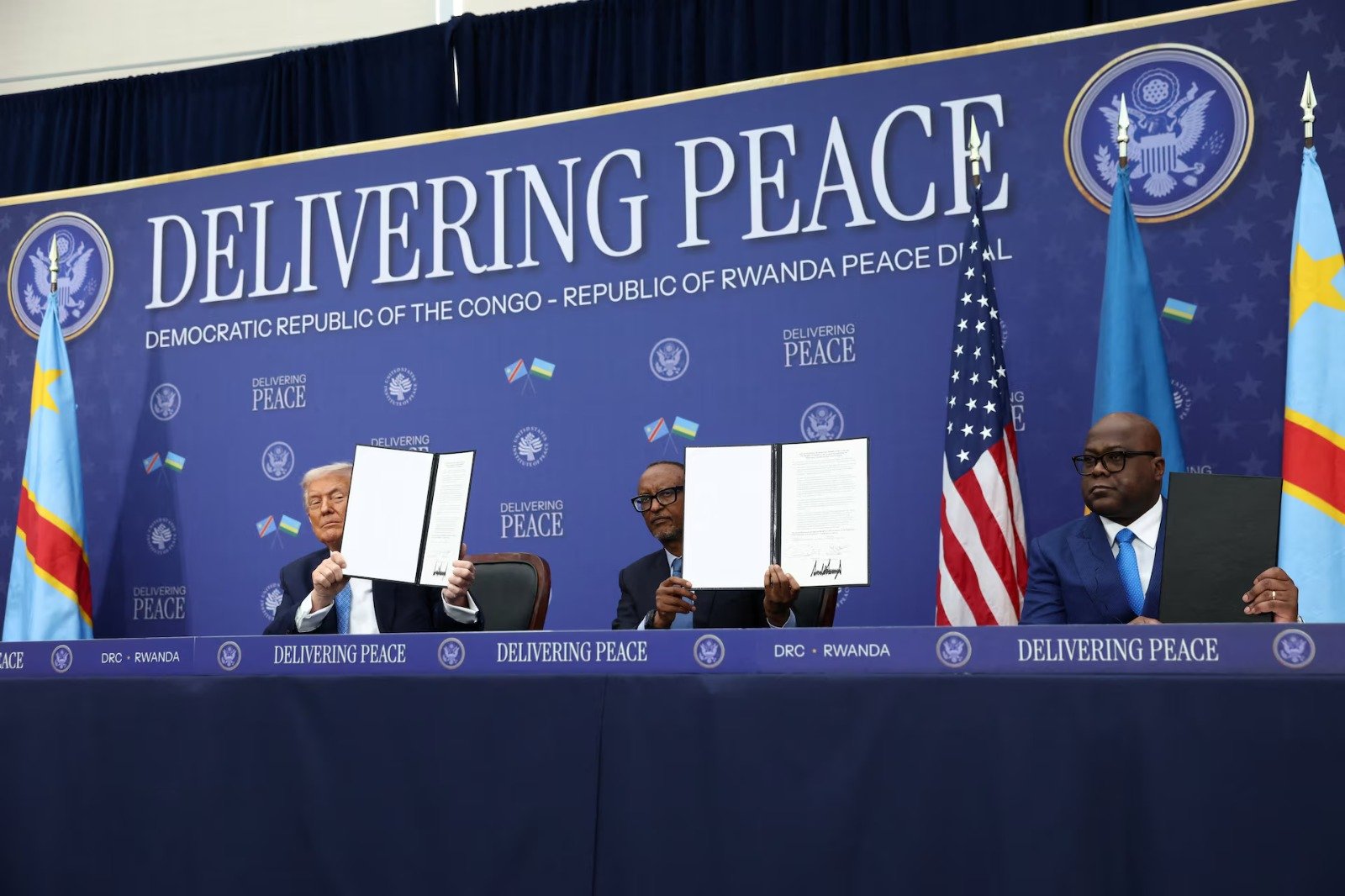
A fragile but significant diplomatic breakthrough has emerged as the Democratic Republic of the Congo and Rwanda agree to take urgent steps aimed at easing rising tensions and advancing a long-awaited peace process.
The agreement, reached amid ongoing clashes in eastern Congo, outlines commitments by both nations to respect territorial boundaries, address the presence of armed groups, and prioritize the protection of civilians caught in the conflict. While fighting continues in parts of the region, the latest development signals renewed political will to prevent further escalation.
Officials from both countries have indicated that the plan includes measures to reduce or withdraw military presence near sensitive border areas. This move is seen by analysts as a confidence-building step, designed to lower the risk of direct confrontation between the two neighbors, whose relations have been strained for years.
Eastern Congo has long been one of Africa’s most volatile regions, with dozens of armed groups operating across mineral-rich territories. The instability has not only displaced millions but also drawn in regional actors, complicating efforts to achieve lasting peace. Accusations between Kinshasa and Kigali over alleged support for rebel factions have further deepened mistrust.
The new commitments seek to tackle one of the core drivers of the conflict: the continued activity of rebel groups. By pledging to jointly address these armed factions, both governments are attempting to shift from confrontation to cooperation, although the path forward remains uncertain.
Regional observers note that similar agreements in the past have struggled to hold, often collapsing under the weight of competing interests and a lack of sustained enforcement. However, the current initiative appears to carry added urgency, given the growing humanitarian toll and increased international attention.
Also Read; “Allies Must Stand Firm Against Expanding Global Threats”
Beyond military considerations, the agreement also emphasizes the need to protect civilian populations. In recent months, reports of violence, displacement, and human rights abuses have intensified, placing additional pressure on leaders to deliver tangible results. Safeguarding communities remains a central challenge, particularly in areas where state authority is limited.
Diplomatic efforts to stabilize the region have gained momentum in parallel, with regional blocs and international partners encouraging dialogue and de-escalation. The renewed engagement reflects a broader recognition that the conflict in eastern Congo has implications not only for the two countries involved but for the wider Great Lakes region.
Historically, cycles of conflict in this part of Africa have demonstrated how quickly local tensions can evolve into broader regional crises. The interconnected nature of security, economic interests, and ethnic dynamics makes resolution particularly complex. As such, even incremental progress is viewed as a step in the right direction.
Despite the cautious optimism surrounding the agreement, significant challenges remain. The continued presence of armed groups, deep-rooted mistrust, and competing political priorities all pose obstacles to lasting peace. Implementation will be critical, and much will depend on whether both sides follow through on their commitments.
For now, the agreement represents a moment of opportunity—an attempt to shift from confrontation toward cooperation. Whether it marks the beginning of a sustained peace process or another temporary pause in a long-running conflict will depend on actions taken in the days and weeks ahead.
In a region where peace has often proven elusive, even a tentative step forward carries weight. The coming period will test not only the resolve of both nations but also the broader international community’s ability to support a durable and inclusive path toward stability.