Joseph Isangura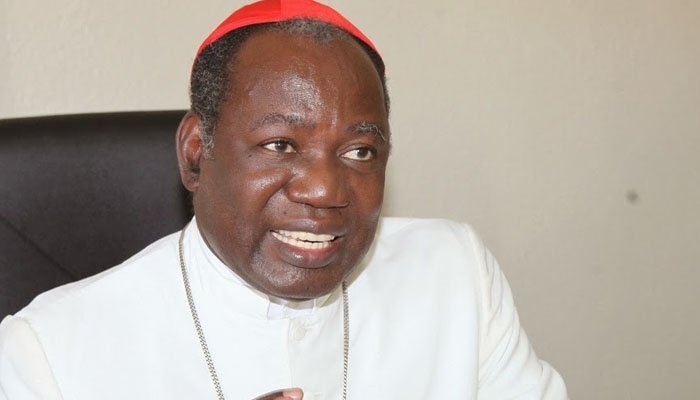
The death of Polycarp Pengo, the retired Archbishop of Dar es Salaam, has marked the end of one of the most influential religious careers in Tanzania and Africa, closing a chapter that spanned more than five decades of priesthood, episcopal leadership, and global Catholic service.
He passed away on the night of February 19, 2026, at the age of 81 while receiving treatment at the Jakaya Kikwete Cardiac Institute in Dar es Salaam, according to Church officials. His death has drawn tributes from across the world, with many describing him as a spiritual giant who helped shape both the national and international direction of the Catholic Church.
Born on August 5, 1944, in Mwazye village in Rukwa Region, southwestern Tanzania, Pengo’s journey into religious life began at an early age. He entered seminary training and was ordained a priest on June 20, 1971, by Bishop Charles Msakila. His academic path later took him to Rome, where he earned a doctorate in Moral Theology from the Pontifical Lateran University in 1977.
Upon returning to Tanzania, he dedicated himself to training future priests, teaching theology and serving as the first rector of Segerea Theological Seminary in Dar es Salaam. His leadership ability and intellectual strength quickly earned recognition within the Church hierarchy.
In November 1983, he was appointed Bishop of Nachingwea, marking his entry into episcopal leadership. Just two years later, he was transferred to serve as Bishop of Tunduru–Masasi, where he strengthened Church institutions and expanded pastoral services in southern Tanzania.
His rise continued in 1990 when he was appointed Coadjutor Archbishop of Dar es Salaam, positioning him to succeed Cardinal Laurean Rugambwa. On July 22, 1992, he officially became Archbishop, assuming leadership of Tanzania’s largest and most influential Catholic archdiocese during a time of major political and economic transformation.
Also Read; Africa Becomes Battleground for Critical Resource Race
His influence extended far beyond Tanzania when, on February 21, 1998, Pope John Paul II elevated him to the rank of Cardinal. The appointment placed him among the senior leaders of the global Church and gave him the responsibility of participating in papal conclaves. He was among the cardinal electors who took part in the historic elections that chose Pope Benedict XVI in 2005 and Pope Francis in 2013.
Cardinal Pengo also played a significant leadership role across Africa. From 2007 to 2013, he served as President of the Symposium of Episcopal Conferences of Africa and Madagascar (SECAM), where he helped coordinate Catholic bishops across the continent and contributed to discussions on social justice, peace, and development.
Throughout his ministry, he was known for his strong moral voice on social and ethical issues. He frequently emphasized the importance of family values, education, and personal responsibility, particularly in addressing major challenges such as poverty, conflict, and the HIV/AIDS epidemic. He encouraged solutions rooted in moral guidance, education, and community responsibility.
At the national level, he became widely respected for promoting peace and unity, especially during periods of political tension. His leadership helped strengthen the Church’s role in education, healthcare, and humanitarian work, benefiting millions of Tanzanians regardless of religious affiliation.
After serving as Archbishop of Dar es Salaam for 27 years, Pope Francis accepted his retirement on August 15, 2019. His successor, Archbishop Jude Thaddaeus Ruwa’ichi, took over leadership of the archdiocese, while Cardinal Pengo remained an important elder voice within the Church.
Even in retirement, he continued to participate in major religious events and offer spiritual guidance to younger clergy, reflecting his lifelong commitment to service.
His death has been met with an outpouring of grief and respect, with many faithful remembering him not only as a Church leader but also as a national moral figure whose influence extended across generations.
From humble beginnings in rural Tanzania to becoming one of the most senior Catholic leaders in the world, his life stood as a testament to faith, discipline, and dedication.
Though he is gone, his legacy remains deeply embedded in the Church he helped lead, the nation he served, and the millions of believers he inspired.