MWE Correspondent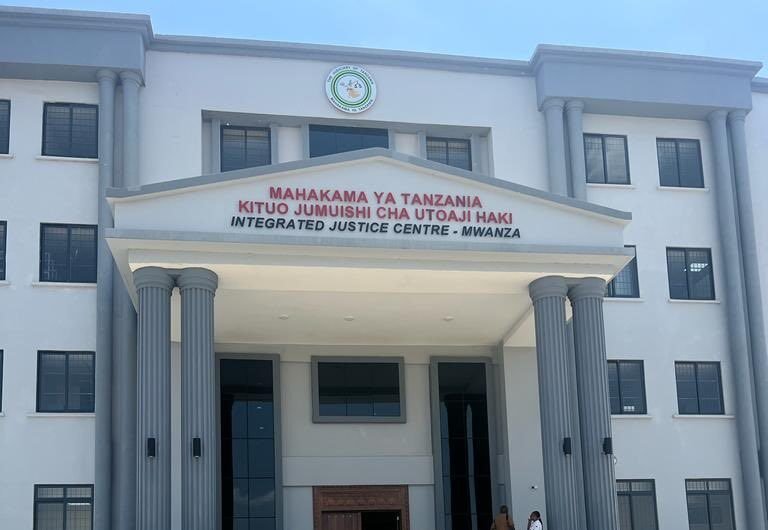
The High Court of Tanzania has delivered a landmark ruling, declaring that legal provisions allowing prosecution witnesses to testify in secrecy fail to uphold equal justice for all parties. The decision is widely seen as a victory for fairness in the courtroom and a reaffirmation of constitutional protections.
The case, brought forward by prominent advocate Godfrey Basasingohe, challenged Section 194 of the Criminal Procedure Act, which permits “hidden witnesses” in certain cases. A three-judge panel, comprising Judges Fahamu Mtulya, Kamana Stanley, and Wilbert Chuma, found that the law disproportionately favors the prosecution while denying equivalent procedural rights to the defence.
“Within 12 months from today, Section 194 must be amended by Parliament to reflect equal legal protection. Failure to do so will render the section void,” the judges ordered, emphasizing that no legal framework can compromise fundamental rights guaranteed under Articles 12(1) and 13(1) of the Constitution of Tanzania.
The ruling comes at a sensitive time for the Tanzanian judiciary, amid the ongoing high-profile treason trial of opposition leader Tundu Lissu. In that trial, several witnesses have testified anonymously, with only the prosecution and judges aware of their identities, while defence teams remain excluded. The court noted that such practices, if left unregulated, risk undermining confidence in the justice system.
Also Read; BRICS Expansion Reshapes Global Financial Landscape
Legal experts have hailed the decision as a turning point for Tanzania’s judicial process. “This is a critical step toward balancing the scales of justice,” said one Dar es Salaam-based constitutional lawyer. “It reinforces the principle that the rights of the defence must be protected equally, even in politically sensitive cases.”
Human rights organizations have also welcomed the ruling. Advocates say it strengthens transparency and accountability in criminal proceedings, particularly in cases involving serious political or national security issues. “Justice cannot be selective; it must be fair and impartial,” said a representative from a local NGO.
Parliament is now tasked with revising Section 194 to ensure that future legislation aligns with constitutional standards. Observers expect that lawmakers will consult legal experts, human rights organizations, and civil society to draft measures that balance witness protection with the accused’s right to a fair trial.
This decision is being described as a milestone in Tanzania’s legal history, signaling a shift toward stronger judicial safeguards. By reinforcing the principle of equality before the law, the court has set a precedent that could influence how high-profile and politically sensitive cases are handled for years to come.