MWE Correspondent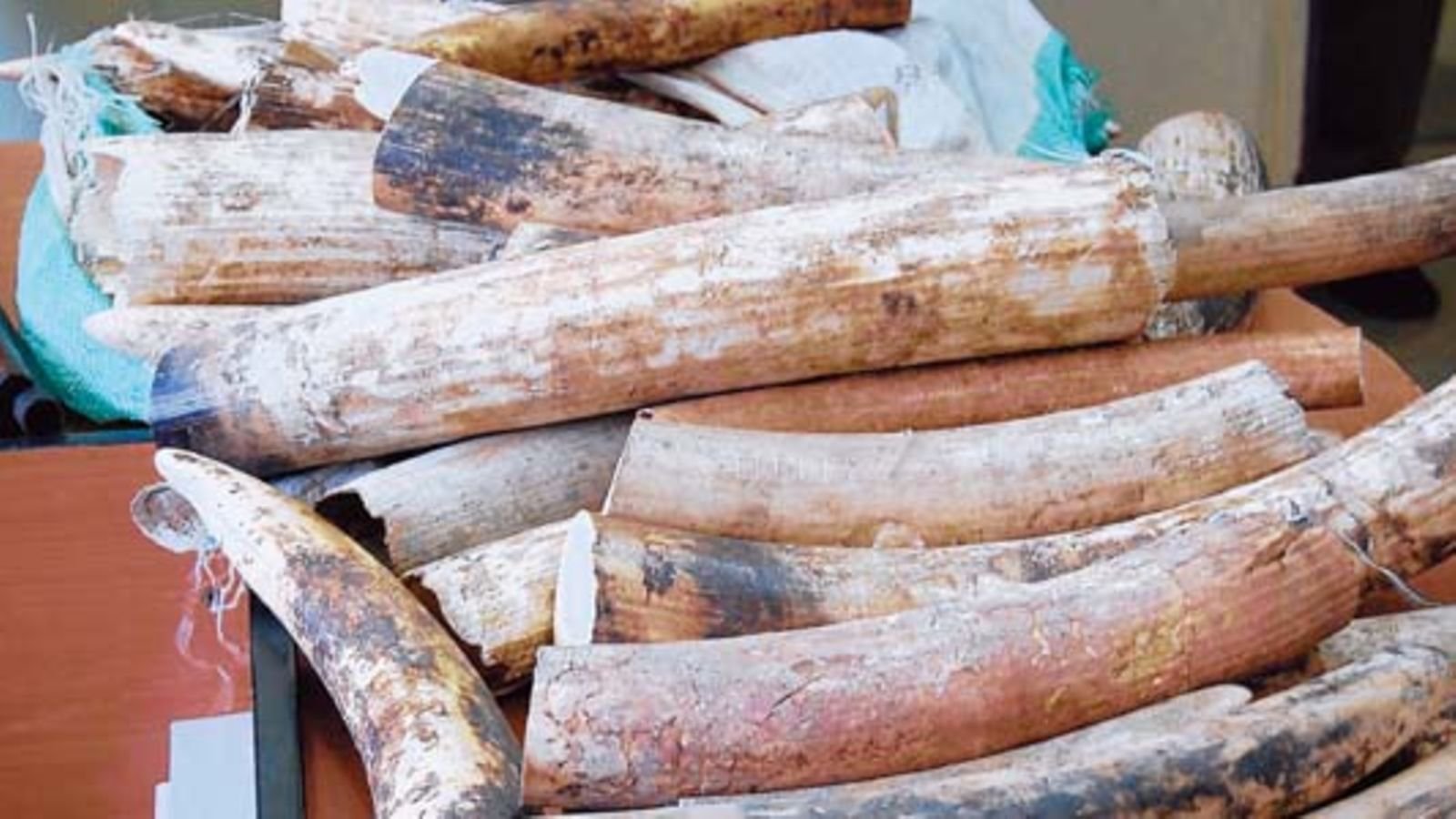
Two officers of the Tanzania People’s Defence Force (TPDF) and three civilians have appeared before Moshi Resident Magistrate’s Court, facing charges of economic sabotage over alleged possession of government-owned wildlife trophies valued at Sh591.3 million.
The case, brought before Senior Resident Magistrate Ally Mkama, is set for preliminary mention on January 9, 2025. Authorities allege that the accused were found in possession of 16 elephant tusks and 15 additional tusk pieces in the Sango area of Moshi District on October 21, 2025. According to the prosecution, the seized ivory represents the killing of twelve elephants, valued at approximately $240,000, or Sh591.3 million.
The accused officers, Sergeant Andrew Ndaga (Number MT.76601) and Staff Sergeant Chumu Rajabu (Number 76764), along with a civilian identified as Mzee Ally Mzee, are charged under Section 86(1) and (2)(b) of the Wildlife Conservation Act, revised in 2023, in conjunction with Sections 57(1) and 61(2) of the Economic and Organised Crime Control Act. These laws address illegal possession of state property and wildlife assets, as well as acts that threaten the country’s economic security.
Court documents state that the accused were allegedly in breach of Tanzanian law by possessing the ivory, which is considered a government trophy. Authorities stressed that illegal wildlife trade undermines both conservation efforts and the country’s economy. Experts point out that elephant populations in Africa are increasingly at risk due to poaching for ivory, a concern documented extensively in studies on elephant poaching.
“The tusks, which are property of the United Republic of Tanzania, are equivalent to twelve elephants that were killed, valued at $240,000, or Sh591.3 million, an act contrary to the law,” part of the charge sheet reads.
Also Read; Iran Leader Condemns Protests Amid Rising Political Tensions
Tanzania has emphasized its commitment to combat wildlife crime, warning that all individuals found in possession of protected species, regardless of status, will face the full weight of the law. The inclusion of TPDF officers among the accused has drawn attention to the importance of upholding legal and ethical standards within national security institutions.
Observers say that prosecutions under both the Wildlife Conservation Act and the Economic and Organised Crime Control Act highlight the financial and environmental impact of illegal ivory trade. Beyond threatening endangered species, ivory trafficking fuels organized criminal networks, undermining both national security and economic stability.
As preliminary hearings begin, all eyes will be on the court to see how evidence is presented and how justice is served. Conservationists and the public are closely monitoring the case, which underscores Tanzania’s ongoing struggle to protect its natural heritage while enforcing accountability across all sectors.
The case comes amid strengthened efforts by Tanzania to combat wildlife crime, protect endangered species, and ensure that the country’s rich biodiversity is preserved for future generations.