MWE Correspondent
The United States has expanded its security cooperation with Sahel nations as militant activity and instability in West Africa continue to challenge regional governance and development.
Washington’s renewed focus reflects growing concern over transnational threats that extend well beyond local borders.
In recent weeks, senior U.S. defense officials held a series of high-level discussions with representatives from Mali, Burkina Faso, and Niger to explore enhanced intelligence sharing, training programs, and logistical support for military units confronting extremist groups. These talks also included representatives from the U.S. Africa Command (AFRICOM) and the State Department’s Bureau of African Affairs.
U.S. officials emphasize that cooperation is grounded in mutual respect for national sovereignty and shared security interests. A senior adviser noted that the focus is on strengthening the capacity of local forces to respond independently to threats, rather than fostering prolonged foreign military presence.
For governments in the Sahel, which have recently asserted greater autonomy in shaping their security agendas, this approach provides an alternative to reliance on traditional Western troop deployments. Several Sahel capitals have previously expressed frustration with past interventions that they viewed as politically intrusive or ineffective in curbing insurgencies.
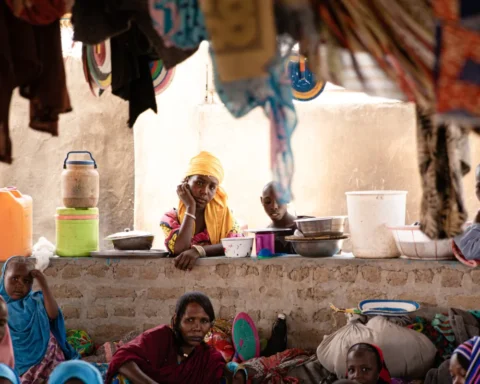
The Sahel region remains one of the most volatile security environments in the world, with extremist groups exploiting porous borders and socioeconomic grievances. Attacks by factions linked to al-Qaeda and the Islamic State have continued in rural communities, displacing families and undermining local governance.
U.S. support includes expanded training missions, counter-IED (improvised explosive device) expertise, and assistance in building rapid reaction forces. Washington is also exploring increased coordination with the Economic Community of West African States (ECOWAS) and the African Union to align security operations with broader regional objectives.
Analysts view Washington’s emphasis on capacity-building as a shift from direct combat involvement to a model that prioritizes partnered security ecosystems — where local forces lead operations with strategic support from external allies. This model was tested in recent months during coordinated operations in eastern Burkina Faso, where Sahelian forces, assisted by U.S. advisers, succeeded in disrupting insurgent logistics lines.
Critics warn that external support, regardless of form, must be carefully calibrated to avoid perceptions of undue influence or dependency. They argue that security cooperation should be embedded in broader political and development frameworks to address root causes of instability such as poverty, marginalization, and lack of economic opportunity.
For millions of civilians living in affected areas, the promise of stronger regional security partnerships offers hope for safer communities. But many remain cautious, recognizing that military support must be paired with meaningful governance reforms and economic investment.