MWE Correspondent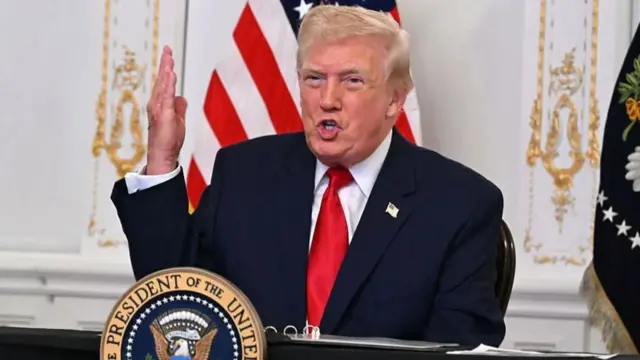
United States President Donald Trump has announced a sweeping new policy to suspend immigration from what he described as “all Third World countries”, a move likely to affect dozens of nations across Africa, Asia, and Latin America.
The announcement came just a day after an Afghan national was named as a suspect in a shooting that left two National Guard members dead in Washington, D.C.
In a post on his social media platform, the president said the migration pause would be permanent and aimed at giving the U.S. immigration system “time to fully recover.” He also pledged to terminate what he referred to as “millions of illegal admissions” under previous administrations. While the order did not specify which countries would be included, the term is widely used in political discourse to describe developing nations, most notably in Africa.
The decision marks the latest in a series of increasingly strict immigration measures under the Trump administration. Prior steps included a re-examination of green card applications from 19 countries the government deemed “of concern,” prompted directly by security fears following the Washington, D.C., attack. Legal experts caution that the new policy could disrupt established migration and refugee flows, with potentially serious consequences for vulnerable communities.
Critics argue the announcement relies on vague terminology and risks sweeping in entire continents under a broad label. Human rights groups have warned that it may limit asylum access, hinder family reunification, and leave refugees and migrants stranded in legal uncertainty. Many African governments have already expressed concern, emphasizing that the continent has long been a major source of skilled migrants, students, and people fleeing conflict or economic hardship.
Also Read; Africa Endorses Algiers Declaration to Boost Drug Production
The U.S. Citizenship and Immigration Services has indicated it will begin reviewing applications from affected countries, though specific guidance on implementation has yet to be released. Observers expect legal challenges to follow, with courts potentially blocking parts of the policy on grounds of constitutionality and adherence to human rights obligations.
Analysts note that the decision also carries economic and diplomatic implications. Migration has historically contributed to innovation, education, and cross-cultural exchange in the United States, and sudden restrictions may strain bilateral relations with affected countries.
For individuals and families hoping to move to the United States for work, study, or refuge, the announcement introduces immediate uncertainty. With regulatory details still pending, many are left in limbo, waiting to see whether legal challenges or policy revisions might alter the new restrictions.
The broader debate triggered by this policy reflects ongoing tensions in balancing national security, immigration management, and humanitarian obligations — a challenge that continues to resonate not only within the United States but across the global community. Observers stress the need to uphold refugee protections while managing immigration effectively.