MWE Correspondent
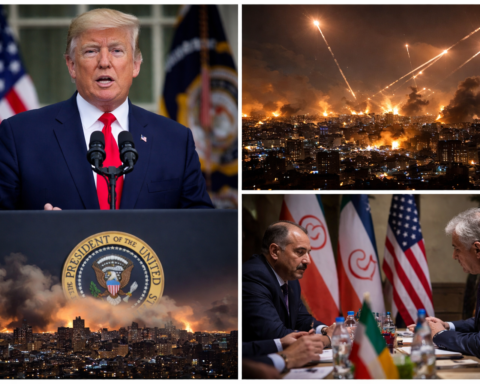
US President Donald Trump has issued a strong warning regarding Iran’s leadership succession following the reported killing of longtime Iranian leader Ali Khamenei in an air strike, a development that has intensified already fragile tensions between Washington and Tehran.
Speaking during remarks that quickly drew international attention, Trump suggested that any individual chosen to replace Khamenei would struggle to remain in power if Iran proceeds without what he described as approval from the United States. His comments come at a highly sensitive moment as Iran faces the prospect of appointing a new Supreme Leader for the first time in decades.
The position of Supreme Leader is the most powerful role in Iran’s political system. Established after the 1979 revolution that transformed the country into an Islamic republic, the office holds authority over major state institutions, including the armed forces, judiciary and key elements of national policy. Because of this influence, the process of selecting a successor carries major political and strategic implications both inside and outside Iran.
Under Iran’s constitutional system, the responsibility of choosing the Supreme Leader rests with the powerful clerical body known as the Assembly of Experts. This group of senior religious scholars is tasked with appointing and supervising the country’s highest religious authority. Historically, the body has made leadership decisions without any involvement from foreign governments.
Trump’s remarks have therefore sparked debate among international observers, with some analysts viewing the statement as an attempt to apply political pressure during a moment of uncertainty in Tehran. Others interpret the comments as part of the broader rivalry that has long defined relations between the United States and Iran.
Tensions between the two nations have persisted for decades, fueled by disputes over regional security, military influence and diplomatic power across the Middle East. The latest developments risk adding another layer of complexity to an already volatile relationship.
Also Read; Iran Rejects Surrender As Regional Strikes Intensify
Political experts note that leadership transitions in Iran often attract intense global scrutiny because of the country’s influence in regional affairs. Decisions made by a new Supreme Leader could shape Iran’s foreign policy, security posture and diplomatic engagement with major powers.
Despite the heightened rhetoric, Iranian officials have maintained that their political system remains stable and that the country’s constitutional process will guide the selection of the next leader. Authorities in Tehran have repeatedly emphasized that Iran’s sovereignty allows it to determine its own leadership without external interference.
For now, governments around the world are closely monitoring developments as Iran moves through one of the most significant political transitions in its modern history. The outcome of the succession process will likely influence not only Iran’s domestic politics but also the broader balance of power across the Middle East.