MWE Correspondent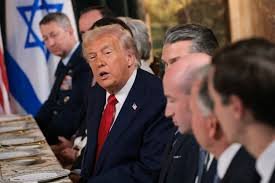
US President Donald Trump has issued a stark warning to Iran, urging Tehran to negotiate a nuclear deal or face consequences that, he suggested, would be significantly harsher than previous actions.
The exchange comes amid rising tensions in the Middle East and an increase in US military presence in the region.
Trump, writing on social media, called on Iran to “come to the table” and agree to a deal that eliminates nuclear weapons while remaining fair to all parties. He added, “Time is running out, it is truly of the essence!” The president reminded followers that his prior warning to Iran last year was followed by a military strike in June, signaling that the United States is prepared to take decisive action if diplomacy fails.
“The next attack will be far worse! Don’t make that happen again,” Trump said, reiterating that a US naval armada is en route to the Islamic Republic, heightening the sense of urgency.
Iran responded with equally strong rhetoric. Ali Shamkhani, an adviser to Supreme Leader Ayatollah Ali Khamenei, warned that any military action by the United States would trigger retaliation against the US, Israel, and allied nations. The warning was posted on the social media platform X, formerly known as Twitter.
Iranian Foreign Minister Abbas Araqchi also issued a stern statement on X, emphasizing that the country’s armed forces are “prepared—with their fingers on the trigger—to immediately and powerfully respond to any aggression.”
Also Read; Rwanda Challenges Britain Over Abandoned Asylum Agreement
Analysts note that the latest exchanges reflect the fragile state of global nuclear diplomacy and the ongoing volatility in the Middle East. The situation is further complicated by historical tensions following Trump’s withdrawal from the 2015 nuclear agreement, which had aimed to limit Iran’s nuclear capabilities in exchange for eased international sanctions.
The warnings from both Washington and Tehran underscore the high stakes involved and the potential for escalation if neither side moves toward compromise. International observers have called for renewed diplomatic engagement to avoid a military confrontation that could have far-reaching regional and global consequences.
Experts suggest that the key to de-escalation lies in multilateral negotiations involving major world powers, aimed at ensuring Iran’s nuclear program remains peaceful while addressing security concerns of the United States, Israel, and their allies.