MWE Correspondent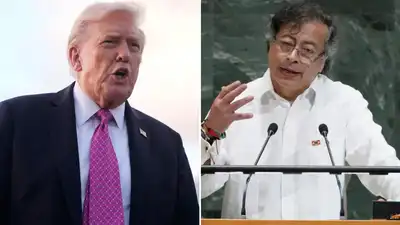
President Donald Trump’s recent comments describing Colombia as being “run by a sick person” have sparked diplomatic unease and renewed debate, as observers across Latin America and beyond seek to understand what his words could mean for future relations between Washington and Bogotá.
Although the statement did not outline any specific policy or action, its blunt tone alone was enough to place Colombia under heightened international scrutiny.
The remarks come at a moment when the United States is reassessing its global priorities, particularly its engagement with Latin America. For many analysts, President Trump’s language reflects growing frustration over regional security challenges, drug trafficking networks, and political shifts that Washington believes may undermine its strategic interests. Colombia, long viewed as a key U.S. partner in the region, is now being discussed in a context that suggests strain rather than close alignment.
Also Read: U.S. Claims Maduro Capture After Venezuela Operation
While no direct threat was made, some commentators quickly drew comparisons with earlier U.S. pressure campaigns in the region, especially toward Venezuela, where sanctions and diplomatic isolation have played a central role in shaping regional politics. These comparisons have fueled speculation, even though Colombia’s political system and economic structure differ significantly from those of its eastern neighbor.
In Bogotá, the reaction has been cautious but firm. Government officials and political leaders have rejected any suggestion that the country is unstable or incapable of managing its own affairs. They argue that Colombia’s internal political debates, while sometimes sharp, are a normal feature of a democratic society rather than evidence of institutional collapse. Authorities have also emphasized their continued commitment to cooperation with international partners on shared concerns such as security, trade, and development.
Foreign policy experts note that President Trump is known for his direct and often confrontational communication style, particularly on international issues. Supporters see this approach as a negotiating tactic designed to apply pressure, while critics warn that such rhetoric risks undermining trust and weakening long-standing partnerships. Even without concrete action, statements from a U.S. president can influence diplomatic relations, investor confidence, and public opinion across borders.
The broader regional context adds another layer of sensitivity. Latin America is facing economic uncertainty, social pressures, and evolving political identities, all of which shape how external comments are received. Any hint of a more assertive United States foreign policy toward the region tends to revive historical concerns linked to intervention and external influence.
For Colombia, the immediate challenge is to manage the situation without allowing rhetoric to escalate into lasting tension. Preserving open diplomatic channels while firmly defending national institutions will be critical in the days ahead.