MWE Correspondent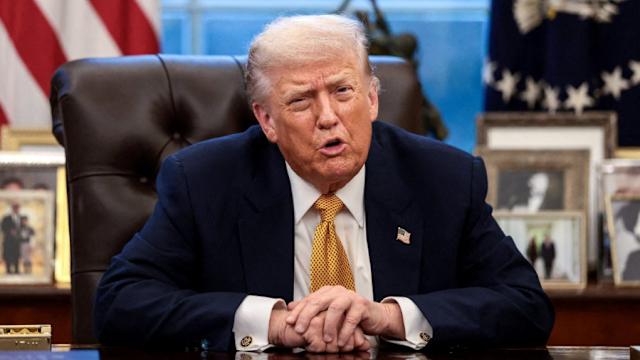
President Donald Trump has once again placed transatlantic relations under strain after issuing a fresh warning that links future trade penalties against Europe to his long-standing interest in Greenland, a move that has unsettled diplomats and markets alike.
In a statement shared on his social media platform, the US president said Washington is prepared to introduce new import tariffs on a group of European countries, arguing that the measures are necessary to protect American strategic interests. Under the proposal, an additional 10 percent levy would take effect from February 1 on selected goods from Denmark, Norway, Sweden, France, Germany, the Netherlands, Finland and Great Britain. Trump added that the rate would rise to 25 percent by June unless the United States is allowed to pursue an agreement to acquire Greenland.
The remarks have revived a debate that first emerged during Trump’s earlier term in office, when he openly expressed interest in buying the vast Arctic island. Greenland is an autonomous territory within the Kingdom of Denmark, but it holds growing importance because of its location in the Arctic, where melting ice is opening new shipping routes and access to valuable natural resources.
Trump has framed the issue in security terms, insisting that US ownership of Greenland is essential for national defense and long-term geopolitical stability. He has repeatedly argued that developments in the region could reshape global power dynamics, particularly as major powers increase their presence in the far north.
European governments, however, have firmly rejected any suggestion that Greenland could be sold. Officials in Copenhagen have stressed that the territory’s status is not negotiable, while Greenland’s own leadership has emphasized the principle of self-determination and the wishes of its population. Local leaders have been clear that Greenlanders do not want to become part of the United States.
Also Read; Museveni Declared Winner Of Uganda Presidential Election
The tariff threat has raised concerns within NATO, where unity is considered critical amid ongoing global security challenges. Several European diplomats fear that tying trade measures to territorial demands could further complicate relations between allies and weaken collective trust.
Economists have also warned of potential fallout if the tariffs are implemented. Europe remains one of the United States’ most important trading partners, and higher duties could disrupt supply chains, increase costs for consumers and invite retaliatory action. Analysts say such a scenario would add pressure to an already fragile global economy.
Beyond trade, the dispute highlights the growing strategic value of Greenland in the context of United States foreign policy. As competition intensifies in the Arctic, the island has become a focal point in discussions about security, resources and influence.
For now, there is no indication that negotiations over Greenland are imminent. European leaders are expected to rely on diplomatic channels to defuse tensions, but Trump’s uncompromising language suggests the standoff could persist. With the February deadline approaching, attention will remain fixed on whether dialogue prevails or whether the dispute escalates into a broader trade confrontation with global implications.