MWE Correspondent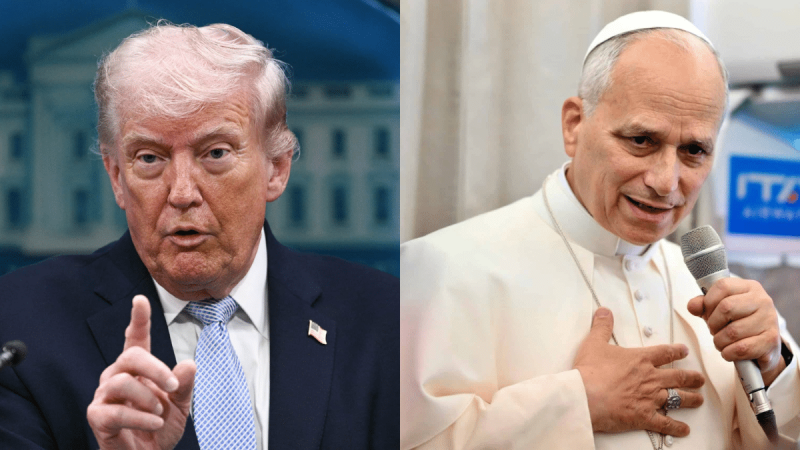
A sharp exchange between political and religious authority has drawn global attention after Donald Trump publicly criticized Pope Leo XIV over his call for an immediate halt to escalating tensions involving Iran.
The remarks have sparked a broader debate about the role of moral leadership in times of conflict and the limits of military power in shaping global stability.
In a strongly worded post shared on social media, Trump described the Pope as ineffective in addressing international security challenges. He accused the pontiff of being “weak on crime” and “poor in foreign policy,” urging him to reconsider his stance on the unfolding crisis. The former U.S. president’s comments come at a time when tensions surrounding Iran have intensified, with fears growing over potential military escalation and its wider consequences.
Central to Trump’s criticism was the issue of nuclear weapons. He asserted that global leaders must take a firm position against the possibility of Iran developing nuclear capabilities, arguing that any perceived tolerance could undermine international security. His remarks reflect a long-standing hardline position on Iran’s nuclear ambitions, which have been a source of diplomatic friction for years.
In a more controversial claim, Trump suggested that his time in the White House may have indirectly influenced leadership dynamics within the Vatican. He implied that the selection of a pope with American connections could have been motivated by a desire to strengthen ties with Washington. While such assertions remain unverified, they have added a political dimension to what is traditionally a deeply spiritual and independent process.
Pope Leo XIV, in his earlier address, did not mention Trump directly but issued a broader warning against what he described as the “illusion of unlimited power.” He cautioned that reliance on military force without ethical restraint risks fueling prolonged conflict and humanitarian crises. His message emphasized the need for diplomacy, dialogue, and a renewed commitment to peace, particularly in regions already burdened by instability.
Also Read; Global Power Alliances Quietly Rewire The System
The Pope’s position aligns with a long-standing tradition within the Catholic Church of advocating for peaceful resolution of conflicts. His remarks appear to challenge leaders who justify military action through strategic or ideological reasoning, including those who invoke religious narratives to support warfare. This has placed him at odds with figures who prioritize deterrence and military strength as primary tools of foreign policy.
Political analysts say the exchange highlights a growing divide between moral authority and state power in shaping international discourse. While religious leaders often appeal to universal values and humanitarian concerns, political figures tend to focus on national interests and security imperatives. This tension is not new, but its public expression at such a high level underscores the complexity of modern geopolitics.
There has been no formal response from the Vatican addressing Trump’s latest remarks, but observers expect the issue to remain a focal point in global discussions. The intersection of religion and politics, particularly during times of crisis, continues to influence how conflicts are perceived and addressed on the world stage.
As the situation surrounding Iran evolves, the contrasting positions of influential figures like Trump and Pope Leo XIV may shape both public opinion and diplomatic approaches. Whether calls for restraint will prevail over demands for decisive action remains uncertain, but the debate itself reflects the broader challenges of achieving peace in an increasingly divided world.