MWE Correspondent
The long-awaited revitalisation of the Tanzania–Zambia Railway Authority (Tazara) has officially moved into an active implementation stage, marking a major milestone for one of East and Southern Africa’s most strategic transport corridors.
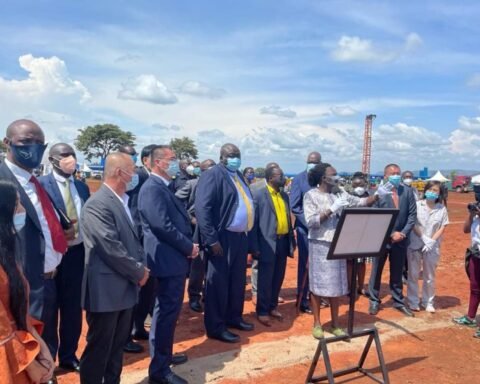
The development follows the mobilisation of heavy equipment, technical experts and operational resources by Tazara’s strategic partner, China Civil Engineering Construction Corporation, signalling a shift from planning to on-the-ground execution.
Tazara, which links Zambia’s mineral-rich Copperbelt to the Indian Ocean through the Port of Dar es Salaam, plays a critical role in regional trade and logistics. For years, the railway has struggled with ageing infrastructure, reduced capacity and operational inefficiencies, limiting its ability to meet growing demand for cargo and passenger transport.
In a statement released on Wednesday, Tazara Managing Director and Chief Executive Officer, Mr Bruno Ching’andu, said the start of mobilisation activities represents a decisive turning point in efforts to restore the railway to full operational strength. He noted that the programme, officially launched in November 2025, is now transitioning into a practical phase that will see phased rehabilitation works rolled out along key sections of the line.
“The revitalisation programme has now entered its active stage,” Mr Ching’andu said. “Our partner has begun mobilising equipment, technical personnel and logistical support, creating the necessary conditions for rehabilitation works to proceed in an orderly and structured manner.”
Under the arrangement, the Chinese state-run engineering firm is undertaking a comprehensive rehabilitation and operational overhaul of the railway through a $1.4 billion investment. The deal includes a 30-year concession that will see the partner manage operations while upgrading track infrastructure, rolling stock, signalling systems and support facilities.
The rehabilitation is expected to significantly improve the efficiency and reliability of the Tanzania–Zambia Railway, which was originally constructed in the 1970s as a symbol of Pan-African cooperation. Once complete, the upgraded railway is projected to reduce transit times, lower transportation costs and increase cargo volumes moving between landlocked Zambia and the Tanzanian coast.
Also Read; SHIA Leader Calls For Unity In Christmas Message
Officials say the revitalisation will also strengthen the role of the Port of Dar es Salaam as a regional logistics hub, benefiting neighbouring countries that rely on the port for imports and exports. Improved rail connectivity is expected to ease pressure on road networks while offering a more cost-effective and environmentally friendly alternative for bulk cargo.
Beyond infrastructure improvements, the programme is anticipated to create employment opportunities and enhance skills transfer through the involvement of local engineers and technicians working alongside international experts. Tazara has emphasised that capacity building and long-term sustainability are central to the project’s objectives.
Analysts view the revitalisation as a strategic investment in regional integration, particularly as African countries push to improve cross-border trade under frameworks such as the African Continental Free Trade Area. A reliable rail link between the Copperbelt and the Indian Ocean is seen as vital to supporting industrial growth, mineral exports and broader economic diversification.
While challenges remain, including the scale of rehabilitation required and the need for consistent coordination across borders, the commencement of active works has raised optimism among stakeholders. For Tazara, the move signals renewed hope that the historic railway can once again serve as a backbone of regional commerce.