MWE Correspondent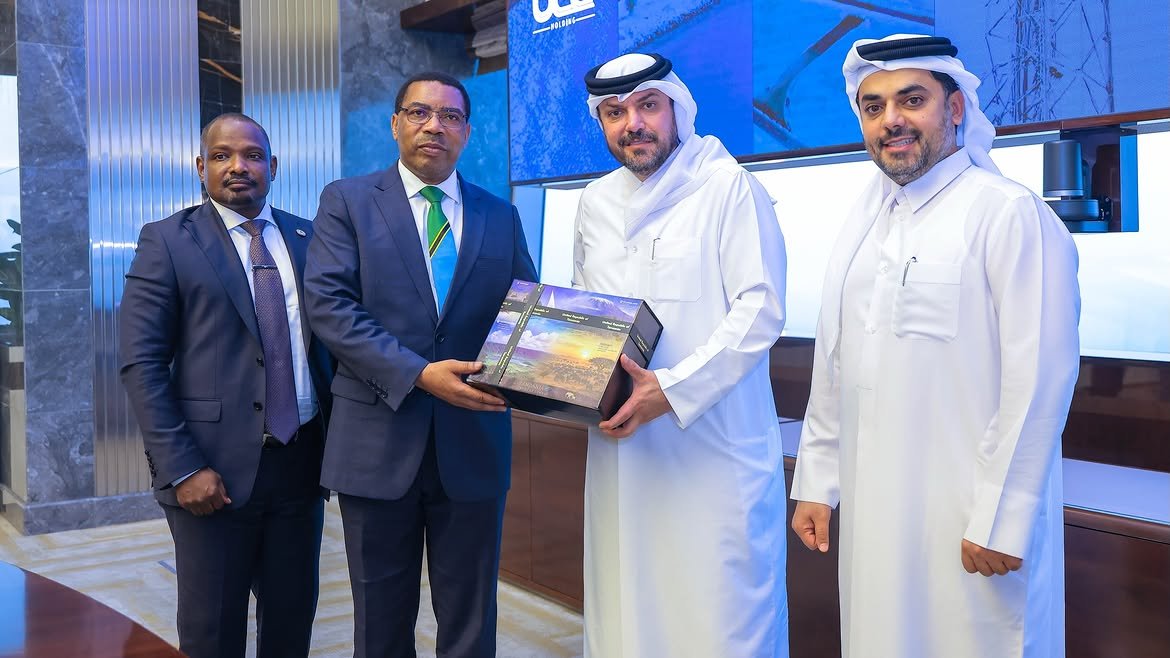
Tanzania and Qatar are seeking to deepen economic cooperation, with Prime Minister Dr. Mwigulu Nchemba highlighting opportunities that could expand investment, production and participation by citizens of both countries.
Dr. Nchemba said the two countries still have significant untapped economic opportunities that, if properly developed, could generate benefits for businesses and citizens in Tanzania and Qatar.
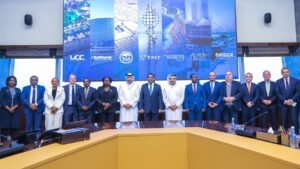
He made the remarks during a meeting with Ramez Al-Khayyat, President and Chief Executive Officer of Power International Holding (PIH), and senior executives of the company at its headquarters in Lusail, Doha.
The Prime Minister said Tanzania’s strategic position as a gateway to East, Central and Southern Africa, combined with Qatar’s position as a gateway to the Middle East and the Gulf Cooperation Council, creates opportunities for the two countries to expand their economic links.
He said the two sides had agreed that greater utilisation of emerging investment opportunities could increase the participation of citizens and businesses from both countries in productive activities.
“Tanzania as a gateway to East, Southern and Central Africa, and Qatar as a gateway to the Middle East and the Gulf countries, we agreed that if we take advantage of all the opportunities emerging, we will increase the participation of citizens from both countries,” Dr. Nchemba said.
The discussions also focused on investment opportunities aligned with Tanzania’s Development Vision 2050, which identifies strategic sectors intended to transform the country’s economy and increase productive capacity.
Dr. Nchemba thanked PIH for expressing interest in investing in sectors identified as priorities under the national development agenda.
Also Read: Aid or Market Creation?
He said the company’s interest presented an opportunity to move bilateral economic relations beyond diplomatic engagement towards concrete investments, production and job creation.
“We appreciate that this company has shown interest in investing in areas identified in Vision 2050, which we have also prioritised,” he said.
The Prime Minister directed relevant ministers, led by the Minister for Industry and Trade, to closely follow up on the proposed areas of cooperation to facilitate their implementation.
“We have agreed that the ministers present, led by the Minister for Industry and Trade, Honourable Kapinga, should closely follow up so that implementation begins immediately,” he said.
For Tanzania, the potential partnership comes at a time when the government is seeking to attract more private capital into strategic sectors while strengthening the country’s position as a regional production and trade hub.
PIH President and CEO Ramez Al-Khayyat told the Prime Minister that Power International Holding is a privately owned multinational company operating through about 400 subsidiaries and employing approximately 65,000 people across 26 countries.
The company already has operations or investments in several African countries, including Egypt, Libya, Morocco, Algeria, Mauritania and Rwanda.
Al-Khayyat also said PIH had reached agreements with Ethiopia for the construction of an international airport and with the Democratic Republic of Congo for the construction of a 400-kilometre road.
The scale of PIH’s operations across infrastructure and other sectors could provide Tanzania with an additional channel for attracting large-scale private investment, particularly if discussions translate into projects with measurable local economic benefits.
For Tanzania, the key issue will be how proposed investments are converted into productive capacity, employment, local procurement, skills development and technology transfer. The government’s decision to assign ministers to follow up on the discussions signals an attempt to move the engagement from investment interest towards implementation.
The Tanzania-Qatar discussions therefore place greater emphasis on turning strategic geographical advantages and private-sector interest into actual projects capable of contributing to Tanzania’s long-term economic transformation.