
 Hassan Magulumali
Tanzania has recorded significant progress in expanding access to clean cooking energy, with adoption rising from 6.9 per cent in 2021 to 28.6 per cent in 2025, Energy Minister Juma Homera has said, crediting President Samia Suluhu Hassan’s leadership for accelerating the country’s energy transition.
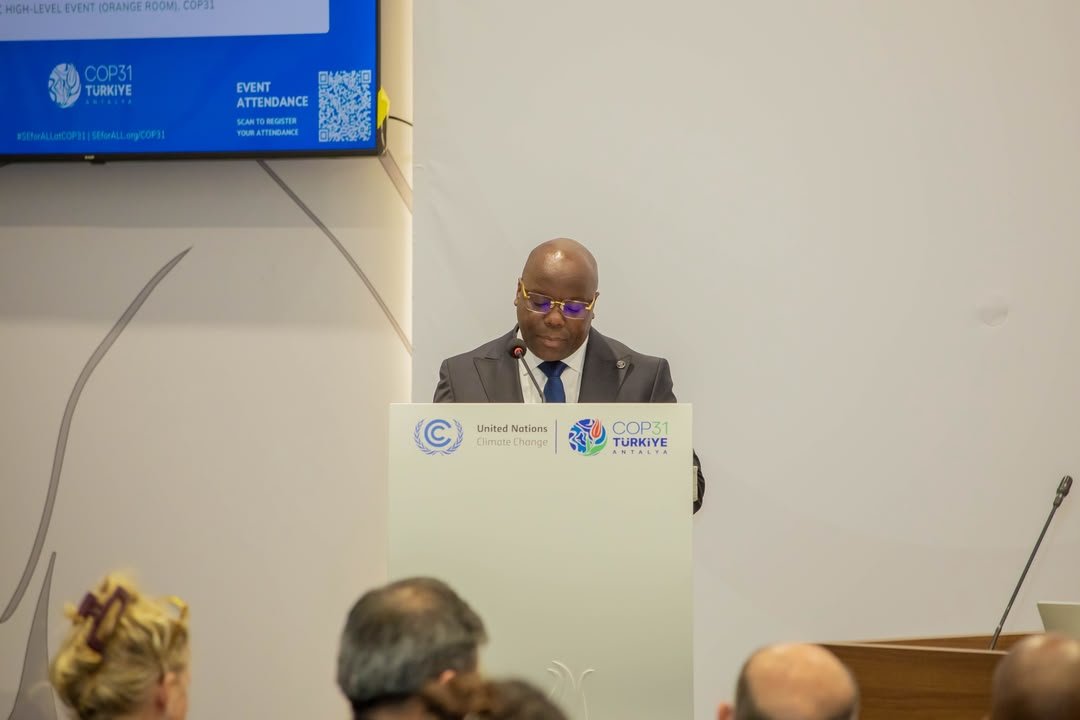
Homera made the remarks on November 11, 2026, while welcoming President Samia to a high-level meeting on Tanzania’s energy transition and the adoption of clean cooking solutions in schools and healthcare facilities, held on the sidelines of the 31st United Nations Climate Change Conference (COP31) in Antalya, Türkiye.
He praised Samia for placing clean cooking at the centre of Tanzania’s development agenda, saying the country’s progress had positioned it as an example for other African nations seeking to reduce dependence on traditional cooking fuels.
The increase in clean cooking adoption reflects implementation of Tanzania’s National Clean Cooking Strategy 2024–2034, which seeks to expand access to affordable and environmentally sustainable cooking technologies while reducing the health and environmental consequences associated with traditional fuels.
Tanzania has set a target of ensuring that 80 per cent of its population uses clean cooking energy by 2034, an ambition that requires significant investment in infrastructure, technology, distribution networks and public awareness.
Homera said the Ministry of Energy was preparing an ambitious programme to empower young people across the country to manufacture improved cookstoves, creating employment opportunities while expanding access to locally produced cooking technologies.
He also called on the Tanzania Electric Supply Company (TANESCO), the Rural Energy Agency (REA) and the Tanzania Petroleum Development Corporation (TPDC) to accelerate public education campaigns and expand the distribution of improved and electric cooking stoves.
The minister said stronger coordination among energy institutions would be essential in ensuring that clean cooking solutions reach households, schools and healthcare facilities, including communities that continue to rely heavily on firewood and charcoal.
Also Read: Scott Colom Makes History in Mississippi Senate Race
Traditional cooking fuels remain widely used in Tanzania, particularly in rural areas, where access to electricity, liquefied petroleum gas (LPG) and other modern energy alternatives can be limited by affordability and distribution challenges.
The reliance on firewood and charcoal contributes to deforestation, environmental degradation and household air pollution. Women and children are particularly exposed to smoke from traditional cooking methods, increasing the risk of respiratory and other health problems.
Expanding clean cooking technologies is therefore increasingly recognised as both an energy policy priority and a public health intervention, with potential benefits for environmental protection, household incomes and women’s economic participation.
The high-level meeting brought together government leaders, development partners and international institutions to review Tanzania’s progress, identify investment opportunities and strengthen cooperation in accelerating the country’s energy transition.
Particular attention was given to expanding clean cooking solutions in schools and healthcare facilities, where large-scale food preparation creates substantial demand for cooking energy.
For Tanzania, achieving the 2034 target will require addressing the cost of clean cooking equipment, ensuring reliable fuel supplies, strengthening local manufacturing and developing financing arrangements that make modern cooking technologies affordable to low-income households.
The discussions at COP31 also provided an opportunity for Tanzania to attract international partnerships and investment to support its clean energy ambitions.
The government is seeking to move beyond awareness campaigns towards wider adoption of practical cooking technologies, with young people, local manufacturers, public institutions and private investors expected to play an increasingly important role in the transition.


