
 MWE Correspondent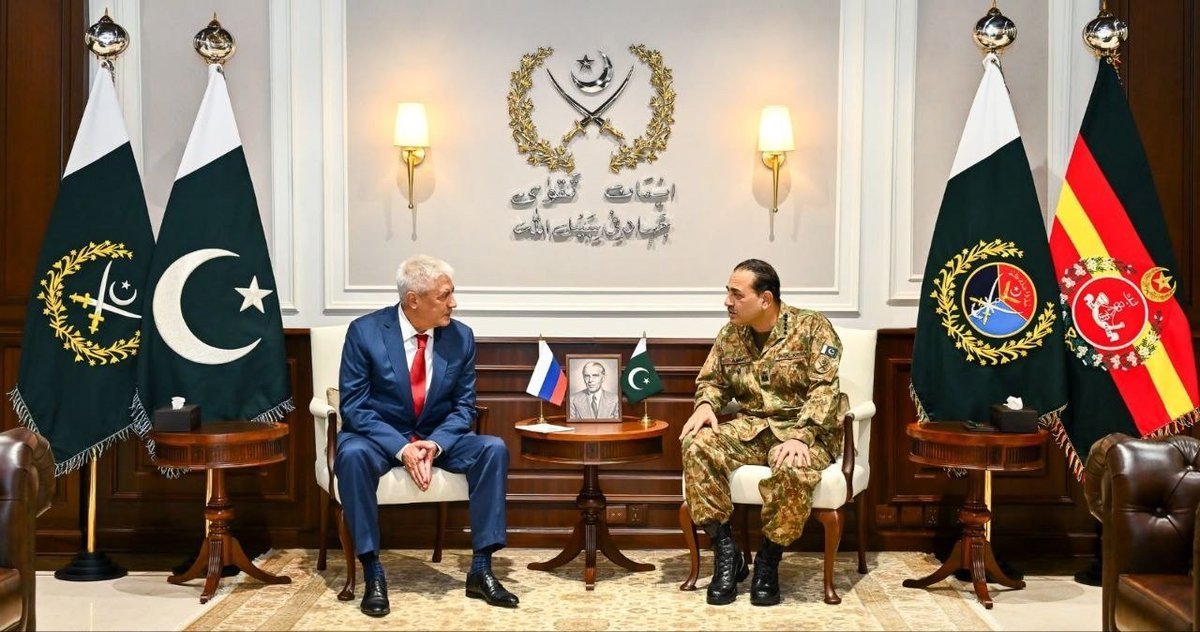
Russia and Pakistan are seeking to strengthen cooperation against organised crime following the signing of a memorandum of understanding (MoU), with analysts stressing that its success will depend on turning political commitments into practical legal and law-enforcement measures.
The agreement was signed during Russian Interior Minister Vladimir Kolokoltsev’s four-day official visit to Pakistan, which included meetings with senior political and security leaders.
Javed Hassan, a Pakistani analyst and former chairman of the Economic Advisory Group, said the memorandum was an important starting point but should primarily be viewed as a framework for future cooperation rather than evidence that joint enforcement mechanisms are already fully operational.
According to Hassan, the most significant practical steps would include finalising extradition and prisoner-transfer agreements and accelerating implementation of an existing readmission agreement.
Such arrangements could establish clearer legal procedures for transferring suspects and prisoners between the two countries, helping authorities address cases that cross national borders.
Organised crime frequently operates across international boundaries, making cooperation between law-enforcement agencies essential for investigating suspected criminal networks, exchanging information and pursuing individuals accused of offences in different jurisdictions.
Extradition agreements provide legal procedures through which one country may surrender a suspect or convicted person to another for prosecution or punishment, subject to applicable laws and safeguards.
Prisoner-transfer arrangements can establish procedures for transferring eligible prisoners between countries, while readmission agreements generally regulate the return of individuals who do not meet the conditions for remaining in a country
Also Read: Ukraine’s Patriot Missile Stocks Near Exhaustion
Hassan argued that progress on these agreements could reduce uncertainty and make it more difficult for suspected offenders to exploit differences between national legal systems.
However, the effectiveness of such arrangements would depend on their legal completion, implementation by relevant authorities and compliance with each country’s domestic laws.
The diplomatic significance of the visit was also reflected in Kolokoltsev’s meetings with Pakistan’s army chief, Prime Minister, interior minister and foreign minister.
Hassan said the engagement demonstrated that cooperation had attracted attention across several of Pakistan’s principal decision-making institutions rather than remaining confined to the interior ministry.
The involvement of Pakistan’s military leadership could be particularly relevant because the military has substantial influence over the country’s security and foreign-policy affairs.
Army Chief Asim Munir’s participation could help sustain institutional attention to the initiative, Hassan said, although high-level political backing alone would not guarantee successful implementation.
The next stage will require government agencies to establish clear responsibilities, develop practical procedures and demonstrate measurable progress in investigations and cross-border legal cooperation.
The memorandum comes as Russia and Pakistan continue to explore areas of cooperation beyond their traditional diplomatic and security engagements.
For Moscow, stronger law-enforcement partnerships can support efforts to address criminal networks operating across borders. For Islamabad, improved legal coordination could strengthen its capacity to investigate transnational offences and manage cases involving individuals moving between jurisdictions.
Nevertheless, the signing of an MoU does not automatically create new extradition powers or guarantee the transfer of suspects. Those outcomes depend on the terms of applicable agreements, legal requirements and decisions by the competent authorities.
The immediate test for both governments will therefore be whether they can complete the necessary legal arrangements and translate their commitments into routine cooperation between police, prosecutors and other relevant institutions.
As Hassan’s assessment suggests, the memorandum provides a framework for closer relations, but its long-term value will be measured by the concrete results achieved after the signing ceremony.