MWE Correspondent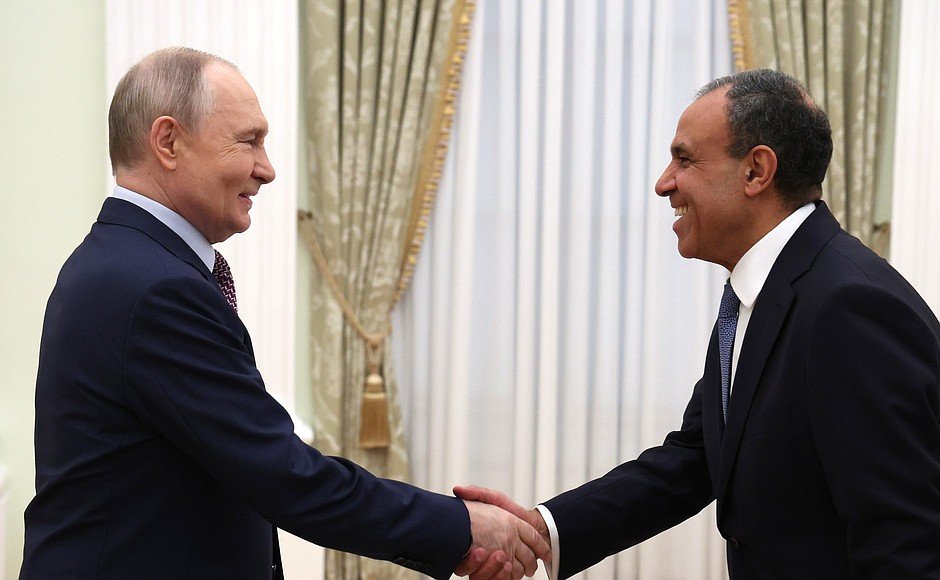
Russia is moving to deepen its strategic influence across Africa through a proposal that could reshape regional trade in food and fuel.
In one of the most important diplomatic signals of early 2026, President Vladimir Putin said Russia and Egypt could discuss creating a grain and energy hub in the North African country, a move that goes far beyond ordinary bilateral trade. If developed, the plan would place Egypt at the center of a wider logistics corridor linking Russian commodities to African and Middle Eastern markets at a time when global supply chains remain fragile and geopolitical rivalries continue to disrupt access to essential imports.
The proposal matters because Egypt is not just another buyer. It is the world’s largest wheat importer and already one of the most important destinations for Russian agricultural exports. Reuters reported that Egypt has bought about 7.6 million tons of Russian grain this season, roughly matching last year’s level, confirming that Russian wheat remains deeply embedded in Cairo’s food security strategy. Putin also emphasized that Russia’s strong harvest means Moscow sees no major difficulty in maintaining deliveries, a message clearly designed to reassure African and Arab partners that Russia can remain a stable supplier despite ongoing sanctions pressure from the West.
This is where the story becomes strategically important for Africa. A grain and energy hub in Egypt would not simply be about storage. It could become a distribution platform for wheat, fuel and possibly refined petroleum products moving into the continent more efficiently. Egypt’s location gives it unusual geopolitical value. With control over the Suez Canal and direct access to both Mediterranean and Red Sea trade lanes, Cairo already sits at one of the most important transport chokepoints in the global economy. If Russian grain and energy supplies are routed more systematically through Egyptian infrastructure, the result could be a new trade architecture that reduces delivery friction for import-dependent African states while strengthening Egypt’s own role as a regional gateway.
The timing also reflects a broader Russian strategy. Moscow has spent the last several years building alternative export channels in response to Western sanctions and financial restrictions. Instead of retreating, Russia has increasingly relied on commodity diplomacy—using wheat, fertilizers, energy and logistics partnerships to preserve global influence. In Africa, that approach has resonance because many governments care less about ideological alignment and more about dependable access to food, fuel and infrastructure support. For countries facing inflation, debt stress and currency weakness, a partner that can guarantee deliveries often matters more than a partner offering political lectures.
There is also a practical energy dimension. On the same day the Egypt hub proposal gained attention, Russia announced a temporary ban on gasoline exports by domestic producers until the end of July, aimed at stabilizing internal fuel supplies during the agricultural sowing season and amid higher global oil prices. Reuters noted that Russia exported nearly 5 million metric tons of gasoline last year, or around 117,000 barrels per day, showing the scale of its fuel sector. While the temporary restriction may appear contradictory, it actually highlights a more disciplined Russian approach: Moscow is balancing domestic stability while protecting strategic state-to-state commodity relationships where long-term geopolitical value is highest.
Also Read; Africa Reclaims Trade Power Through Value Addition Strategy
For Egypt, the proposal comes at a sensitive but potentially advantageous moment. The country is under real economic pressure from wider regional instability. Reuters recently reported that Cairo has slowed some fuel-intensive state projects for at least two months, cut government vehicle fuel allocations by 30%, and introduced temporary remote work measures as higher energy costs strain public finances. Egypt’s energy import bill has more than doubled since the outbreak of the current regional war, forcing authorities to take emergency measures. Yet this pressure also creates an incentive: by positioning itself as a commodity and energy industry hub, Egypt can turn crisis into leverage. Rather than remaining a vulnerable importer, it can become a transit and storage power with influence over regional flows.
That is especially important because the wider African economy remains exposed to external shocks. A joint report by U.N. agencies, the African Union and the African Development Bank warned this week that if the Middle East conflict drags on for more than six months, Africa could lose 0.2 percentage points of GDP growth in 2026. The same report found that the Middle East accounts for 15.8% of Africa’s imports and 10.9% of its exports, a reminder that disruptions in shipping, fertilizer and energy quickly ripple into African food prices and industrial costs. In this environment, any new logistics arrangement that improves access to grain and fuel becomes strategically significant, especially for governments trying to avoid social unrest linked to inflation.
Still, African governments should approach this opportunity with strategic discipline, not dependency. A Russian-linked hub in Egypt could help stabilize supplies, but if African countries simply remain end-buyers while foreign actors control storage, transport financing, insurance and pricing power, then the continent will again sit at the bottom of the value chain. That is why policymakers should push for stronger regional participation—joint procurement systems, local commodity reserves, African shipping partnerships, fertilizer blending capacity, and integration through the African Continental Free Trade Area. The real lesson is not to reject global powers, but to negotiate from strength and ensure that strategic infrastructure on African soil serves African resilience first.
For Russia, the Egypt proposal shows that Moscow continues to view Africa as a major arena in the emerging multipolar order. For Egypt, it is a chance to elevate its role from importer to gatekeeper. For the rest of Africa, the message is even bigger: in 2026, power is increasingly measured not just by armies or speeches, but by who controls grain corridors, fuel routes, storage hubs and trade chokepoints. If African leaders act wisely, this moment can become more than a headline. It can become part of a broader push for sovereignty, bargaining power and long-term economic security.