
 MWE Correspondent
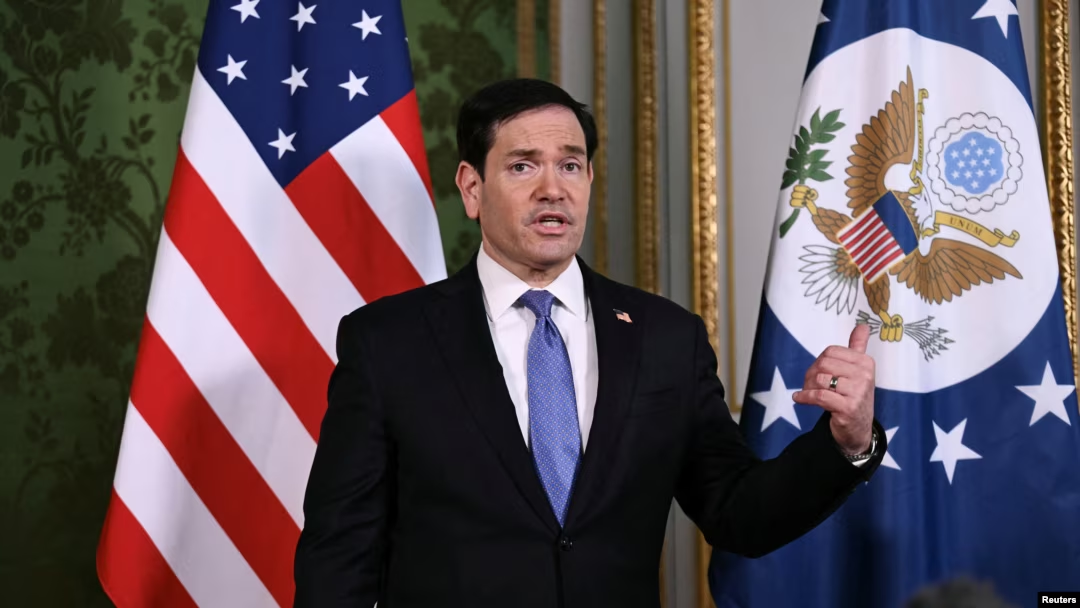
US Secretary of State Marco Rubio has said Washington’s economic pressure campaign against Iran is proving effective enough that President Donald Trump does not need to launch major military operations against Tehran.
Rubio made the remarks on November 10, 2026, while speaking to journalists in Paris following two days of meetings with foreign ministers from the Group of Seven (G7) countries.
He said economic sanctions and a US naval blockade were inflicting significant damage on Iran’s economy, particularly its ability to export energy and generate revenue through international markets.
“The economic pain that is being inflicted on Iran right now is extraordinary, and it compounds. It’s growing every day,” Rubio said.
He argued that Washington could achieve its objectives through economic pressure without necessarily returning to large-scale military strikes.
“We don’t need to conduct military strikes if we’re achieving the same objective through economic means and economic pressure. That’s not stalemate,” he said.
Rubio added that Iran had rarely faced such difficulties selling its energy resources in international markets, describing the economic campaign as a major source of pressure on Tehran.
His comments followed Trump’s decision to hold off on additional military strikes after receiving appeals from regional countries, including Qatar, which has played a role in diplomatic efforts between Washington and Tehran.
The US administration’s approach combines longstanding financial sanctions with maritime restrictions intended to limit Iran’s oil revenues, restrict its access to international trade and weaken financial networks associated with the Islamic Revolutionary Guard Corps (IRGC).
Also Read: Zelensky Seeks US Military Bases in Ukraine
The economic pressure has added to challenges facing Iran, including restrictions on oil exports, currency instability, inflation and difficulties accessing international financial markets.
However, the strategy has also raised questions about its long-term effectiveness, particularly whether economic pressure will persuade Tehran to change its nuclear and regional policies or instead deepen tensions.
Within the Trump administration, officials have reportedly held different views on how to approach the conflict. Some senior advisers favour maintaining economic pressure rather than resuming military operations, while Vice President JD Vance is reported to favour reaching a negotiated agreement with Iran.
Trump, meanwhile, has indicated that he does not currently believe a viable agreement with Tehran is possible, leaving the administration’s long-term diplomatic strategy uncertain.
The confrontation has also affected regional security and international energy markets, particularly around the Strait of Hormuz, a strategic shipping route through which a significant share of the world’s oil supply passes.
Any prolonged disruption to shipping through the waterway could affect global oil prices, international trade and energy-importing economies, including those in Africa.
Iran has historically rejected US pressure and maintained that it has the right to defend its sovereignty and pursue its national interests. Tehran has also criticised American sanctions and military restrictions, describing them as violations of its rights.
Rubio’s remarks suggest that Washington currently sees economic pressure as an alternative to another major military campaign, although the possibility of renewed military action has not been ruled out.
The developments highlight the growing use of economic sanctions, financial restrictions and control of strategic trade routes as instruments of geopolitical influence, with consequences extending beyond the immediate parties to the conflict.


