Joseph Isangura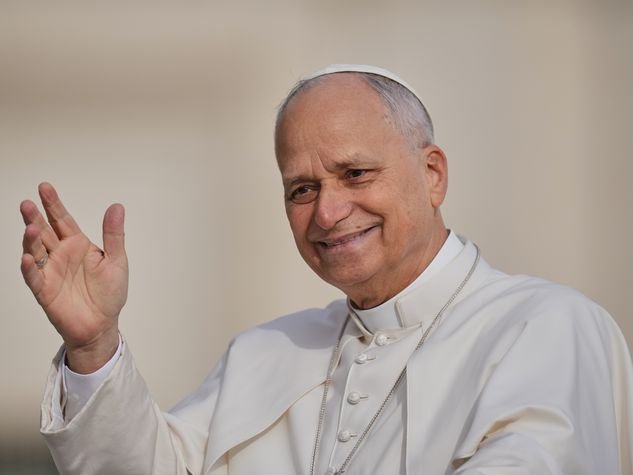
Pope Leo XIV has issued a strong and carefully worded warning to leaders around the world, urging them to stop using religion as a tool to justify conflict, political division, or extreme nationalism.
Speaking from the Vatican, the head of the Roman Catholic Church said such actions do serious harm to the true meaning of faith and represent a moral failure that goes against the will of God.
In his address, the Pope expressed deep concern over a growing global trend in which religious language is increasingly blended with political interests. He noted that in some countries, faith is being presented not as a source of peace or moral guidance, but as a means to stir anger, legitimize violence, or exclude those seen as different. According to the Pontiff, this misuse of belief turns religion away from its spiritual mission and transforms it into an instrument of power.
The Pope stressed that religion, at its core, exists to promote love, justice, and reconciliation. When leaders manipulate faith to defend war or division, he said, they are misleading believers and weakening the moral foundations of society. He warned that presenting hatred or exclusion as a form of patriotism is especially dangerous, as it can deceive ordinary worshippers into supporting actions that contradict fundamental religious teachings.
Without naming specific countries or individuals, Pope Leo XIV said both political figures and religious leaders carry a heavy responsibility. He explained that those who guide communities of faith must act with humility and truth, rather than bending sacred teachings to serve personal or national ambitions. In his view, using religion to inflame conflict is not only unethical but deeply offensive to God.
Also Read; Uganda Emerges as East Africa’s Gold Export Hub
The Pope also directed his message to ordinary believers, urging them not to remain passive. He encouraged them to question messages that promote violence or intolerance in the name of religion and to respond instead through peaceful action, dialogue, and solidarity with those who suffer as a result of conflict. Silence, he warned, can allow injustice to grow unchecked.
The remarks come at a time of heightened global tensions, where references to religion are often heard in debates over war, identity, and national sovereignty. Analysts say the Pope’s words reflect long-standing Catholic teaching on the separation between spiritual faith and political power, a principle that has guided the Church for centuries. His statement reinforces the idea that faith should be a moral compass, not a political weapon.
From the heart of the Vatican City, the Pope’s message reached a worldwide audience and sparked discussion across religious and diplomatic circles. Many observers see it as a call for renewed ethical leadership and a reminder that religion must never be used to justify bloodshed or division. As debates continue over the role of religion in politics, the Pope’s warning adds a powerful moral voice to the conversation.
For Pope Leo XIV, the message was clear and uncompromising: faith should unite people, not turn them against one another. In a world marked by growing polarization, he emphasized that true belief is measured not by loyalty to power or ideology, but by commitment to peace, human dignity, and religious freedom.