MWE Correspondent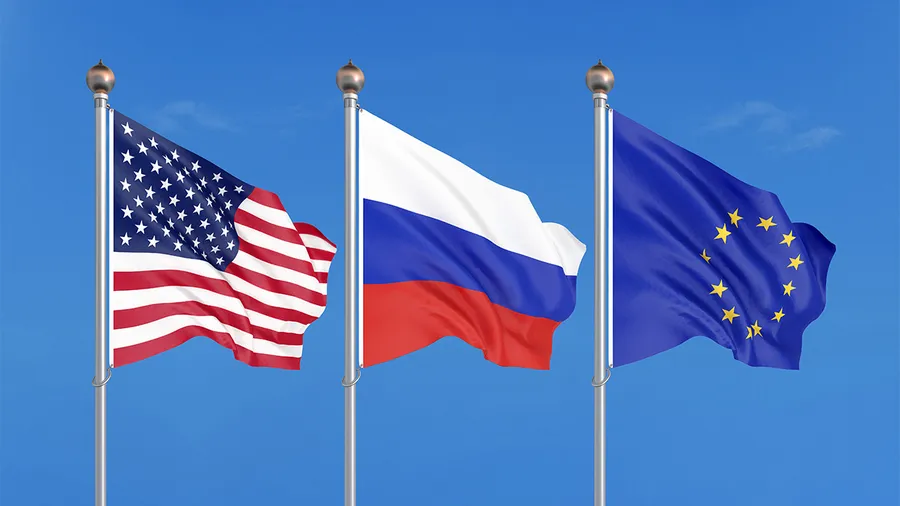
Even with tensions still high, one of the most important realities in global politics right now is that the Russia-Ukraine conflict has not closed the door on diplomacy.
In fact, early March developments show that peace efforts remain active, complex, and strategically important not only for Europe, but also for Africa and the wider Global South. While headlines often focus on military pressure or sharp political rhetoric, the deeper story is that Russia, the United States, Turkey, and European actors are all still operating inside a fragile diplomatic framework that could shape energy markets, sanctions policy, and the future balance between major powers. For African governments watching from a distance, this is not just a foreign war story. It is a live lesson in how major powers negotiate under pressure while protecting their own interests.
The clearest signal came on March 2, when Reuters reported that the Kremlin publicly said it remained in Russia’s own interest to continue peace talks with Ukraine, even as the process became more difficult after wider regional tensions in the Middle East disrupted schedules. Kremlin spokesman Dmitry Peskov said Moscow’s preference was still a diplomatic settlement, and Ukrainian President Volodymyr Zelenskiy also confirmed that a new round of U.S.-brokered talks had not been cancelled, even though the originally planned March 5–6 venue in Abu Dhabi was under reconsideration. That is a significant development because it shows that, despite friction and delays, neither side had completely walked away from the negotiating track. In serious diplomacy, that matters more than dramatic speeches.
What makes this moment especially important is the role of the United States. President Donald Trump has been pushing for a deal and remains central to the diplomatic architecture. Reuters reported in February that U.S. negotiators had discussed an ambitious goal of reaching a peace framework by March, though even officials familiar with the talks said that timeline was likely too optimistic because of major disagreements over territory and security arrangements. Still, the fact that Washington was actively discussing timelines, possible referendums, and future election sequencing with Kyiv shows how far the conversation had moved beyond emergency wartime diplomacy. This is no longer just about battlefield pauses — it is about designing a political endgame, however difficult.
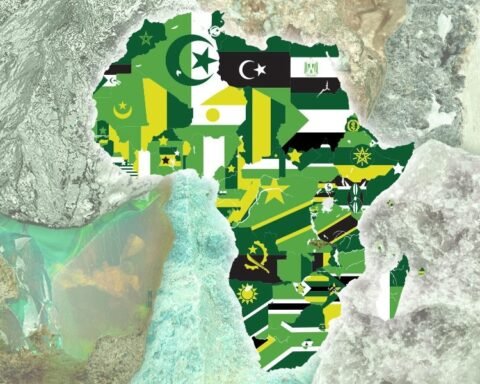
Also Read: Africa’s Mineral Power Redraws Global Strategic Competition
One of the most sensitive issues in those talks is the question of security guarantees. Any durable settlement depends not only on stopping immediate hostilities, but also on what happens after. For Ukraine, outside guarantees are viewed as essential for long-term stability. For Russia, the broader European security environment and territorial realities remain central. Reuters reported on March 25 that Ukrainian officials said U.S. proposals were being linked to difficult territorial concessions in the Donbas, while Washington was also discussing security commitments as part of a possible settlement package. That illustrates how peace diplomacy is now focused less on slogans and more on the hard architecture of future stability — the kind of details that often determine whether a ceasefire lasts or collapses.
Another major factor is Turkey’s rising importance as a mediator. Even though this became more visible after your publication date, it reinforces a trend already building in early March. Reuters later reported that Turkey formally told Russia it was ready to host the next round of Russia-Ukraine talks, and Zelenskiy separately said Ankara was prepared to host a trilateral meeting involving Russia, Ukraine, and the United States. That matters because Turkey has shown something African diplomats should study closely: it is possible to be connected to Western institutions while still preserving working access to Moscow. In a divided world, countries that maintain channels to multiple power centers often become more influential than countries that simply repeat one bloc’s language.
The wider geopolitical lesson is that this conflict continues to reshape alliances, but not always in simple ways. Western sanctions remain a major tool, yet they have also exposed the limits of economic coercion when a large power adapts through new trade routes, alternative payment systems, and energy realignment. This is why economic sanctions remain politically powerful but strategically mixed. They can pressure, isolate, and complicate trade — but they also push targeted countries to build parallel systems and deepen ties with non-Western partners. For African policymakers, that is an important lesson: sanctions do not only punish. They also accelerate the search for financial alternatives, regional trade structures, and new diplomatic alignments.
The impact on energy security is equally important. Since the start of the conflict, Europe has been forced to diversify away from old energy assumptions, while Russia has expanded energy relationships elsewhere. By early 2026, the war’s direct effect on oil and gas markets had become part of a wider global equation that includes OPEC+ decisions, shipping risks, and Middle East instability. That means the Russia-Ukraine file is no longer just a European war. It is one of several connected shocks influencing commodity prices, fuel access, and industrial planning. African exporters and importers alike have to read it that way.
There is also a deeper diplomatic lesson for Africa: the strongest countries are not always those that shout the loudest. They are often the ones that preserve flexibility. Russia has consistently insisted that diplomacy remains possible while defending its core interests. The United States has kept pressing for a negotiated structure even when timelines slipped. Turkey has made itself useful by staying available as a bridge. Europe continues to balance political principle with economic exposure. Every one of these moves shows that real-world diplomacy is rarely pure ideology. It is about leverage, patience, and timing.
That is why the idea of non-alignment deserves renewed attention in Africa — not as an old Cold War phrase, but as a modern survival strategy. African states facing pressure from rival powers over minerals, debt, military cooperation, or trade should not rush into emotional alignments. The better approach is to remain engaged with all sides, extract value from all sides, and protect sovereign decision-making above all else.
The Russia-Ukraine conflict is still difficult, painful, and unresolved. But early March developments show that diplomacy remains alive, and that matters. Peace efforts may be slow, uneven, and full of hard compromises, yet they continue to shape the future of Europe, the global economy, and the wider geopolitical order.
For Africa, the lesson is not to copy anyone blindly. The lesson is to understand that in a world of competing giants, the most successful states are those that keep channels open, read power clearly, and negotiate from a position of calm strategic discipline.