
 MWE Correspondent
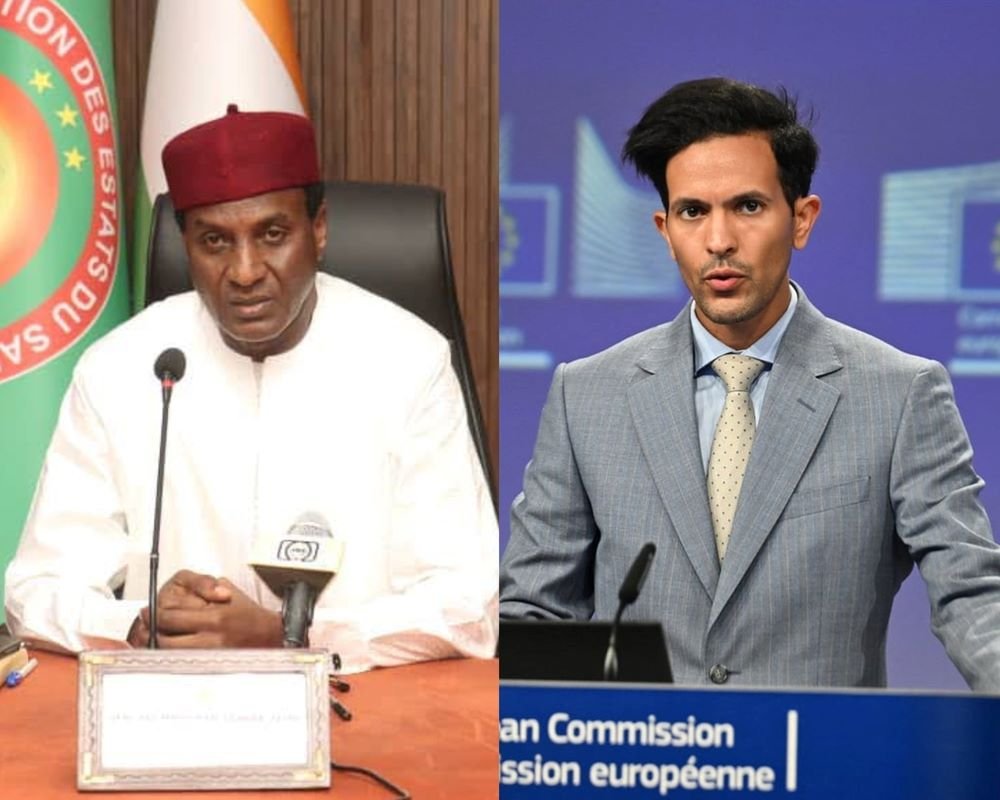
Niger has summoned the European Union’s acting chargé d’affaires in Niamey, demanding explanations over remarks by an EU spokesperson concerning military and security cooperation between Niger and Algeria, in a diplomatic dispute that has brought questions of national sovereignty and foreign interference back into focus in the Sahel.
The diplomat, Olai Voiomma, was summoned to the office of Prime Minister Ali Mahamane Lamine Zeine on November 9, following comments by EU foreign affairs spokesperson Anouar El Anouni questioning the scope, objectives and legal basis of Algeria’s deployment of military personnel to Niger under a bilateral cooperation agreement.
In a statement issued by Niger’s Ministry of Foreign Affairs on November 9 and published by the state-owned newspaper Le Sahel the following day, the government described the European remarks as “condescending and unacceptable”, accusing Brussels of attempting to interfere in decisions made independently by two sovereign African states.
Niamey argued that Niger and Algeria have the right to establish economic, security and military cooperation arrangements without seeking approval from external governments or institutions.
The government questioned the authority of the European Union to demand explanations about agreements between neighbouring countries that have voluntarily chosen to cooperate on issues affecting their shared security and regional development.
“Niger does not receive instructions from any country or institution. Not being a member of the European Union, it does not need Brussels’ permission to exercise its sovereignty,” the statement declared.
The government further demanded clarification over what it described as repeated and disrespectful interference by the European Union in the affairs of sovereign states.
Also Read:Samia Arrives in Türkiye for COP31 Climate Summit
The diplomatic disagreement centres on a military cooperation arrangement between Niger and Algeria that provides a framework for closer security collaboration.
In October 2026, the two countries signed a military cooperation protocol, followed by Algeria’s decision to authorise the deployment of military units to Niger. The arrangement forms part of efforts to strengthen bilateral security cooperation and address shared regional challenges.
On October 30, EU spokesperson Anouar El Anouni said Brussels was closely monitoring the deployment and was seeking clarification regarding its scope, objectives and legal basis.
The comments prompted criticism in both Niamey and Algiers.
Algeria’s state news agency, Algérie Presse Service (APS), reported on November 8 that authorised sources had rejected the suggestion that Brussels had formally requested explanations from the Algerian authorities.
The sources maintained that no official diplomatic inquiry or communication requesting clarification had been received regarding the bilateral military agreement.
Algeria’s position was that cooperation between the two countries falls within their sovereign rights and should not be subjected to external oversight.
Responding to the diplomatic controversy during a European Commission press briefing in Brussels on November 10, spokesperson Anouar El Anouni confirmed that EU diplomatic representatives in both Niger and Algeria had been summoned by local authorities.
He said such diplomatic procedures were established under the Vienna Convention on Diplomatic Relations.
On the substance of the disagreement, El Anouni said the European Union fully respected the sovereignty of both countries and had no intention of interfering in their bilateral relationship.
He also clarified that Brussels had not intended to request explanations from either Niger or Algeria regarding their bilateral commitments.
The EU spokesperson said the bloc wanted to maintain constructive relations with both countries through respectful dialogue aimed at promoting security, stability and prosperity in the Sahel.
The clarification represents an attempt by Brussels to contain the diplomatic dispute, although Niamey has maintained its demand for explanations over the earlier remarks.
The disagreement comes against the background of changing political and security relationships across the Sahel, where Niger, Mali and Burkina Faso have increasingly sought to redefine their international partnerships and security arrangements.
Niger’s relations with Algeria had previously experienced diplomatic difficulties following the destruction of a Malian drone by the Algerian military in April 2025. The incident contributed to the reciprocal withdrawal of ambassadors involving Algeria and countries of the Alliance of Sahel States (AES).
Relations subsequently moved towards normalisation, particularly following a visit to Algiers by Niger’s President, General Abdourahamane Tiani, in February 2026, during which he met Algerian President Abdelmadjid Tebboune.
The two leaders reaffirmed their commitment to strengthening cooperation in economic, energy and security matters.
The October military cooperation protocol marked another step in that rapprochement, providing a framework for expanded collaboration between the neighbouring countries.
For Niger, the latest dispute is therefore not simply about comments from a European spokesperson but also concerns the broader principle that African states should retain the authority to determine their security arrangements and international partnerships.
The issue also raises questions about the relationship between legitimate international scrutiny of security operations and the sovereign right of states to conclude bilateral agreements.
While governments remain subject to international law and obligations concerning the protection of civilians, the legality of cooperation agreements and the conduct of military operations, the existence of such obligations does not automatically give an external institution authority to approve or reject bilateral arrangements.
The latest diplomatic exchange highlights the continuing tension between European engagement in the Sahel and the sovereignty priorities of governments in the region.
For Niamey, the position is that partnerships with Algeria and other international actors must be determined by Niger’s national interests rather than external approval. For Brussels, the stated position is that its engagement is intended to support regional stability while respecting the sovereignty of both countries.
How the two sides manage the disagreement could have implications for future diplomatic engagement, particularly as Niger and its neighbours continue to reshape their security partnerships and regional cooperation.


