MWE Correspondent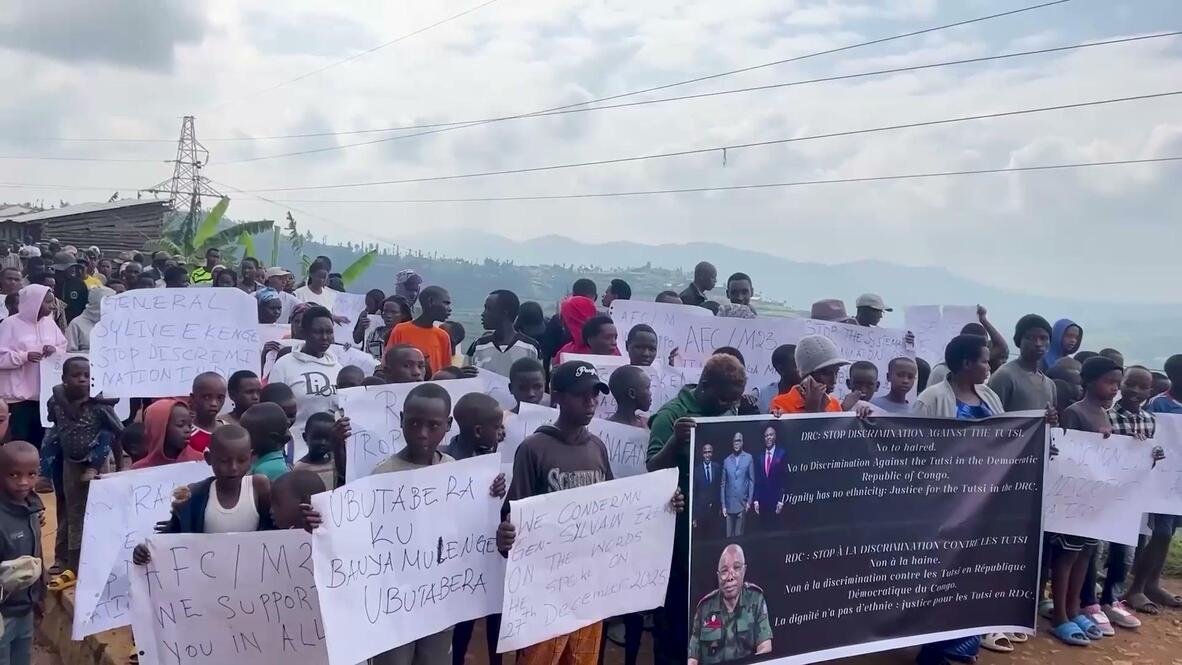
Congolese refugees living in Rwanda have renewed their appeal to the international community, calling for firm action against what they describe as persistent hate speech targeting Tutsi communities and the Banyamulenge in the Democratic Republic of the Congo.
The appeal was made in Kigali on Wednesday, January 7, when representatives of the refugee community submitted a formal letter to several foreign ambassadors accredited to Rwanda. The move came just over a week after Major General Sylvain Ekenge was suspended from his position as spokesperson of the Congolese armed forces following remarks that sparked controversy and concern among human rights observers.
Refugee leaders welcomed the suspension but stressed that it should not be seen as the end of the matter. According to them, inflammatory language against specific communities has become increasingly common in public debates and online platforms, creating an environment of fear and mistrust. They warned that when such rhetoric goes unchallenged, it often leads to real violence on the ground.
Also Read: Anti-Graft Agency Clarifies Cash Seizure Amount
Many of the refugees now living in Rwanda fled from eastern Congo, a region that has endured years of instability driven by armed conflict, political tensions, and ethnic divisions. They say that words of hatred have frequently preceded attacks on civilians, forcing families to abandon their homes and seek safety across borders. Rwanda currently hosts thousands of Congolese refugees who continue to follow events in their homeland with deep concern.
In their letter to diplomats, the refugees urged foreign missions to publicly condemn hate speech and to press Congolese authorities to take legal action against individuals who incite ethnic hostility. They emphasized that accountability is a key step toward preventing further violence and rebuilding confidence among communities, noting that silence can easily be interpreted as acceptance.
The situation of the Banyamulenge community was highlighted as especially sensitive. The group, largely based in South Kivu province, has long reported discrimination and targeted attacks linked to questions of identity and belonging. Refugee representatives said misunderstandings and political manipulation surrounding the community have worsened tensions and placed civilians at greater risk.
Diplomatic sources in Kigali confirmed receipt of the refugees’ letter but did not issue immediate public comments. Analysts note that international engagement has often played an important role in shaping responses to human rights concerns in the Great Lakes region, particularly during periods of heightened political and security tension.
For the refugees, the appeal is driven by hope that sustained international attention can help curb dangerous rhetoric and reduce violence. Many say they long for a future in which peaceful coexistence is possible and displacement is no longer a way of life.