MWE Correspondent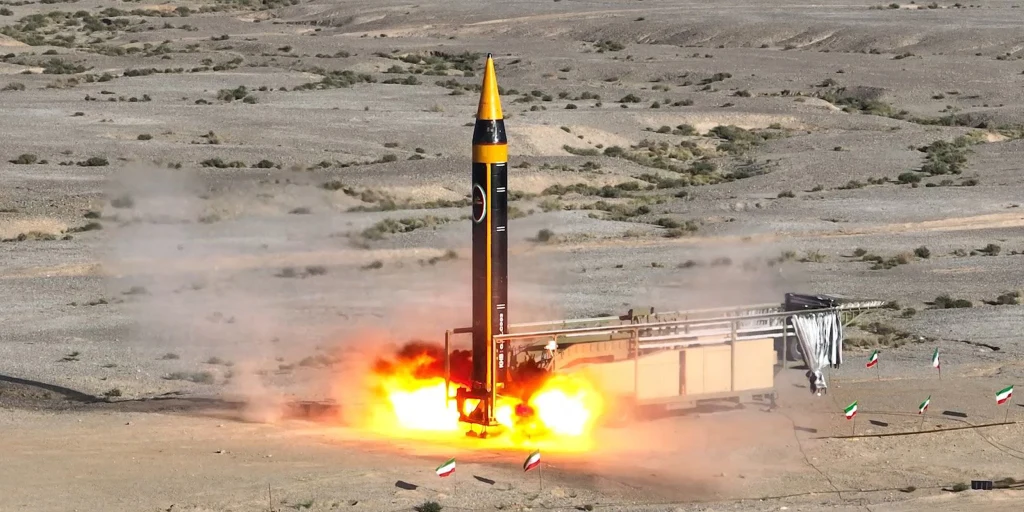
Iran’s latest ballistic missile, known as the Khorramshahr-4 or Kheibar, is quietly becoming one of the most closely watched weapons in today’s shifting global security landscape.
Military experts say the missile reflects years of steady development and highlights how seriously Iran is investing in its long-range defense capabilities.
According to defense analysts, the Khorramshahr-4 can travel as far as 2,000 kilometers. This means it has the theoretical ability to reach targets across much of the Middle East, a region where tensions and rivalries have shaped military planning for decades. The missile’s range alone places it among the more strategically significant systems currently known to exist in the region.
What makes the missile particularly notable is not just how far it can travel, but also how much it can carry. Reports suggest it can transport a payload weighing up to 1,500 kilograms. That level of capacity gives it the potential to cause serious damage to hardened or strategic targets if ever used in war. Military specialists explain that the combination of long range and heavy payload is what gives such systems their deterrent value — the idea that their mere existence can discourage potential enemies from taking aggressive action.
The Khorramshahr-4 uses liquid fuel, a technology that has been around for decades but has also been refined over time. Traditionally, liquid-fueled missiles required lengthy preparation before launch, making them more vulnerable to detection. However, newer improvements are believed to have reduced preparation time, allowing for quicker deployment if needed.
Also Read; Africa Becomes Battleground for Critical Resource Race
Once fired, the missile travels high into the atmosphere before descending rapidly toward its target. During this final phase, it reaches extremely high speeds, which makes interception much more difficult. Defense experts say this speed is one of the key challenges facing modern missile defense systems around the world.
Much of Iran’s missile program is overseen by the powerful Islamic Revolutionary Guard Corps, a branch of the country’s armed forces that plays a central role in strategic defense. Iranian officials have repeatedly stated that their missile program is purely defensive, intended to protect the country rather than threaten others.
Still, the missile’s existence has drawn attention far beyond Iran’s borders. Security observers say weapons like the Khorramshahr-4 influence how countries think about defense, alliances, and future conflicts. Even without being used, such systems can shape political decisions and military strategies.
For many analysts, the Khorramshahr-4 represents more than just a weapon. It is a signal of technological progress, national ambition, and the continuing importance of missile power in modern geopolitics. As global tensions evolve, developments like this will likely remain at the center of international security discussions for years to come.