Joseph Isangura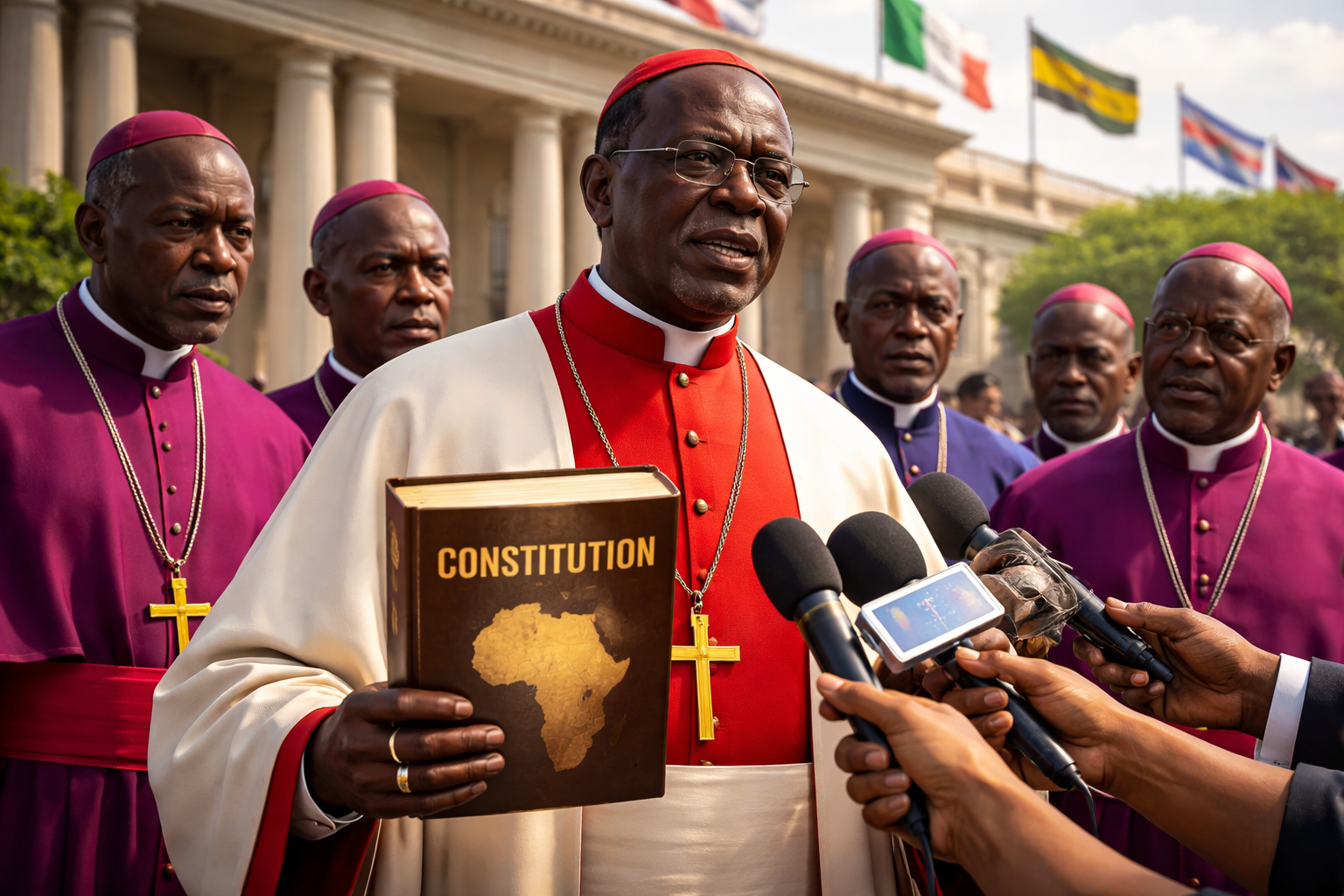
A fresh warning from the Catholic Church in the Democratic Republic of the Congo has reignited debate across Africa over the delicate balance between political power and constitutional order, as religious leaders step forward to caution governments against reforms that could destabilize already fragile states.
The latest intervention comes as the Church—one of the most influential institutions in Congo—raises concern over potential constitutional changes. With nearly half of the population identifying as Catholic, the Church’s voice carries both moral authority and political weight, shaping public discourse in ways few institutions can.
For decades, the Catholic Church has played a decisive role in Congo’s political evolution. It has mediated national crises, supported democratic transitions and even organized civic mobilization when governance structures faltered. During past political standoffs, Catholic-led networks helped sustain pressure for elections and reforms, reinforcing its position as what analysts often describe as the country’s “most trusted national institution.”
The current warning, however, reflects a broader continental trend—one where religious institutions are increasingly stepping into governance debates, particularly when constitutional changes are perceived as politically motivated.
Across Africa, the Catholic Church has grown into a major social and political actor. Today, the continent is home to more than 265 million Catholics, accounting for a significant share of global Catholicism and underscoring the Church’s expanding influence in public life.
In Congo, this influence is deeply institutional. Beyond religious practice, the Church operates vast education and health networks, historically educating a majority of the population at primary level. This embedded presence explains why its warnings are often viewed not as political interference, but as interventions grounded in social responsibility.
The question now emerging is whether such interventions signal a new phase in Africa’s governance landscape.
In countries like Tanzania, while the Catholic Church maintains a strong moral presence, its engagement with constitutional matters has traditionally been more measured—often expressed through calls for national unity, dialogue and respect for legal frameworks rather than direct confrontation. This contrast highlights the diversity of church–state relations across the continent, shaped by history, political culture and institutional strength.
Also Read: Africa’s Resource Awakening,From Extraction to Economic Power”
Scholars of Church–state relations note that Africa presents a unique model, where religious institutions are neither fully separate from the state nor entirely absorbed into it. Instead, they operate as parallel moral authorities, capable of influencing governance while remaining outside formal political structures.
This hybrid role has proven particularly significant in times of crisis. From South Africa’s anti-apartheid struggle to democratic transitions in West and Central Africa, religious leaders have often acted as mediators, watchdogs and voices of accountability.
Yet, this influence is not without controversy.
Critics argue that religious institutions risk overstepping their mandate when engaging directly in constitutional debates. Supporters, however, counter that in contexts where institutions are weak, such voices provide necessary checks on power.
In Congo, the stakes are especially high. Ongoing insecurity in the eastern regions, combined with political tensions, has created a volatile environment where even minor constitutional shifts could trigger wider instability.
That is why the Church’s warning resonates beyond Kinshasa.
It speaks to a broader African dilemma: how to reform political systems without undermining stability; how to exercise power without eroding trust; and how to balance sovereignty with accountability.
As debates continue, one reality is becoming clear—Africa’s future will not be shaped by political actors alone. Moral institutions, particularly those with deep societal roots, will remain central in defining the boundaries of power.
In this evolving landscape, the message from Congo is both a warning and a reflection of a wider continental awakening: that constitutions are not merely legal documents, but foundations of national stability—and altering them carries consequences that extend far beyond politics.