MWE Correspondent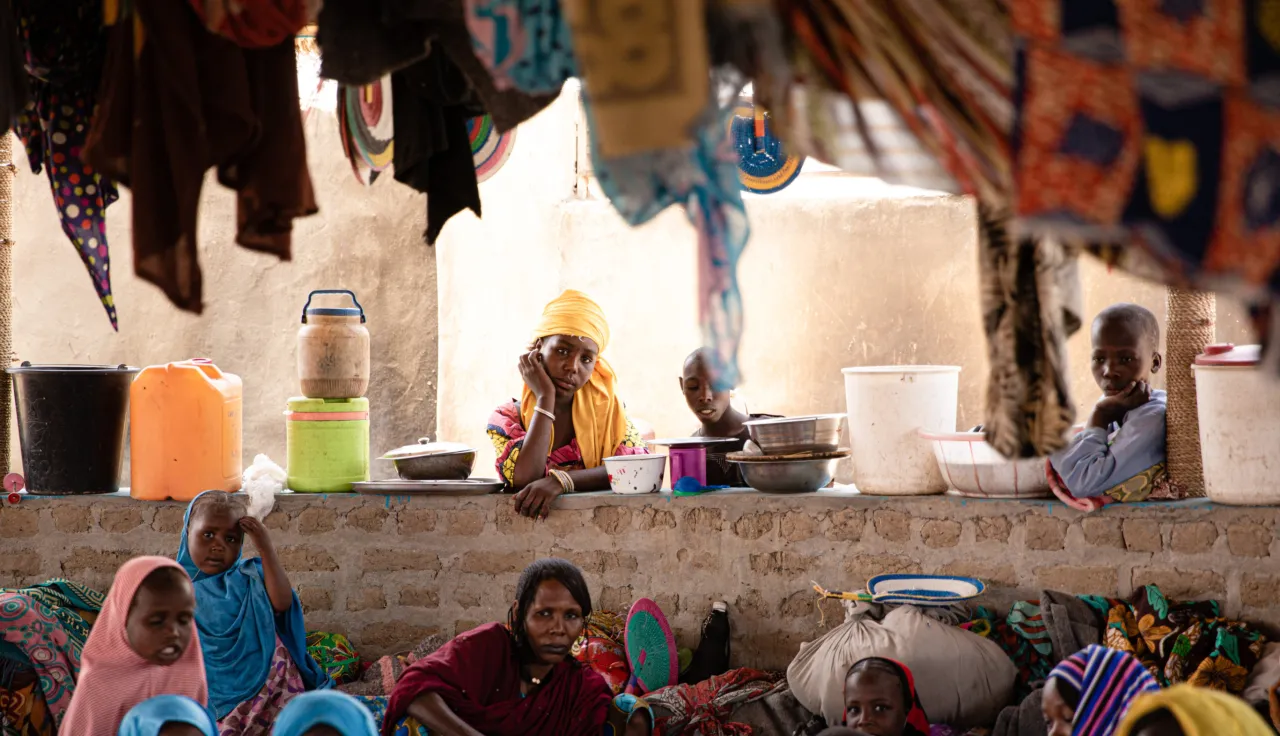
Africa’s next major economic pressure may not begin in financial markets or government bond yields. It may begin in food markets quietly at first, then painfully.
Fresh international warnings released this week show that rising energy and fertilizer costs linked to the Middle East conflict are now feeding directly into global food insecurity concerns, and for Africa, that is a far more serious signal than many headline readers may realize. On a continent where food inflation can quickly become a social, political, and fiscal issue, this is the kind of development governments cannot afford to underestimate.
The warning has grown stronger because several major international institutions are now pointing in the same direction. A new joint alert issued on April 8 by the International Monetary Fund, the World Bank, and the U.N. World Food Programme made it clear that sharp increases in oil, gas, and fertilizer prices are already raising the risk of higher food prices and wider food insecurity, especially in low-income, import-dependent economies. That matters deeply for Africa because many countries across the continent fit that exact profile: vulnerable to imported energy costs, exposed to fertilizer supply disruptions, and still operating with limited fiscal space.
This is not yet a full food crisis. But it is the kind of early-stage warning that often appears before one.
The most important thing to understand is that food inflation does not always begin in the food aisle. It often begins with energy and farm inputs. When oil prices surge, transport becomes more expensive. When fertilizer prices rise, planting becomes more expensive. When shipping routes become unstable, supply chains become slower and more uncertain. By the time the effect reaches local markets, the original cause may seem far away — but the pain is very real.
That is why the real issue now is food inflation.
Fresh U.N. food market data released last week showed that the global FAO Food Price Index rose 2.4% in March from February, marking a second straight monthly increase. The strongest pressure came from vegetable oils, which climbed 5.1%, while the broader rise was linked heavily to higher energy and fertilizer costs. For Africa, that trend is especially important because it shows that the price pressure is no longer theoretical. It has already begun moving through the global system.
And the deeper risk may still be ahead.
The current supply picture for cereals remains relatively stable, which is helping to cushion the immediate impact. But that stability may not last if fertilizer costs remain elevated for too long. Farmers facing expensive inputs often make difficult choices: use less fertilizer, plant smaller areas, delay planting decisions, or shift to lower-input crops. Those decisions do not always hurt immediately. Sometimes the real damage appears later, in weaker yields, tighter local supply, and stronger upward pressure on staple prices. That is why food inflation can behave like a slow-moving wave — quiet at first, then suddenly much more visible.
This is where fertilizer becomes one of the most important economic words in Africa right now.
Many African countries remain heavily dependent on imported fertilizer, and disruptions linked to the Gulf shipping route are making that dependence more dangerous. A large share of global fertilizer trade moves through strategically sensitive maritime corridors, and any prolonged disruption can raise prices sharply. For smallholder farmers in East, West, and Southern Africa, that matters directly. Fertilizer is not just a commodity. It is productivity. It is harvest quality. It is food availability months later. And when fertilizer becomes too expensive, the effects can eventually be felt by both farmers and urban consumers.
This is why governments should stop treating this as a distant global story. It is already becoming a domestic policy challenge.
Countries that wait until food prices spike visibly may respond too late. The smarter approach is early preparation: secure fertilizer imports where possible, expand local blending capacity, improve strategic grain planning, reduce transport bottlenecks, and protect the most vulnerable households through targeted support rather than broad, fiscally damaging subsidy programs. Ministries of agriculture, finance, and trade should be coordinating now — not later.
Read More :Aid Cuts Deepen Africa’s Debt Pressure
There is also a broader structural lesson here. Africa’s repeated exposure to global food shocks shows why agricultural resilience is no longer optional. A continent with vast arable land should not remain so vulnerable to imported input shocks every time global conflict disrupts trade. That means investing more seriously in domestic fertilizer production, irrigation, storage systems, rural logistics, seed quality, agro-processing, and intra-African food trade. Food security is not only about emergency response. It is about building systems that can absorb external shocks without collapsing into inflation and shortage cycles.
There is still time to avoid the worst-case scenario. Current global cereal supplies are helping prevent an immediate crisis, and that is an important buffer. But buffers are not guarantees. If conflict-driven supply disruptions persist, fertilizer remains expensive, and energy costs stay high, Africa could find itself facing a more difficult food environment later this year and into the next agricultural cycle.
The warning from this week is therefore simple, but serious: food pressure is building beneath the surface.
And for Africa, the countries that act earliest — not the ones that react loudest — will be the ones that protect both stability and livelihoods when that pressure finally reaches the market shelf.