 Hassan Magulumali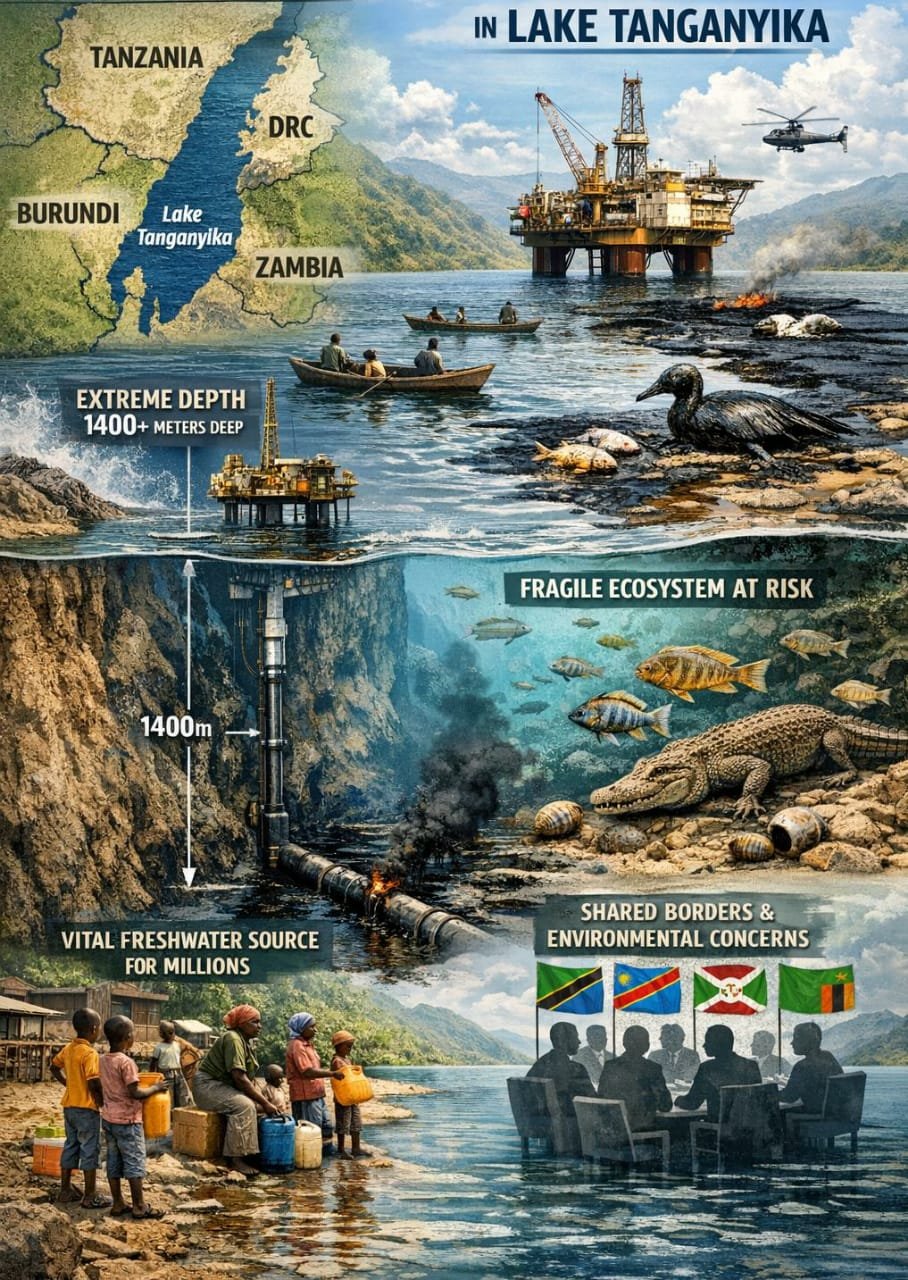
Experts Warn of Risks in Oil Exploration on Lake TanganyikaTanzania’s decision to open the door for potential oil exploration in Lake Tanganyika has sparked intense debate among environmental experts, scientists, and development stakeholders about the risks to one of the world’s most fragile ecosystems.
Lake Tanganyika, shared by Tanzania, Democratic Republic of the Congo, Burundi, and Zambia, is one of the largest freshwater lakes on the planet. It holds approximately 17% of the world’s freshwater and is home to more than 1,500 species, many of which are found nowhere else.
Over 10 million people rely on the lake for fishing, drinking water, transportation, and other economic activities.
Proponents of oil exploration argue that it could attract significant investment into Tanzania’s energy sector, boost government revenue, and reduce dependence on imported fuel.
However, many environmental scientists warn that exploration or extraction in the lake could pose serious challenges that may make such projects extremely risky or even unfeasible.
Also Read: Tanzania Says Middle East Crisis Not Harming Fuel Sector
Key reasons include:
1. Extreme depth: Lake Tanganyika reaches depths of over 1,400 meters, making both exploration and extraction technologically complex and extremely expensive.
2. Fragile ecosystem: Even minimal oil spills or chemical leaks from exploration can devastate the lake’s unique aquatic species, many of which are endemic and cannot survive elsewhere.
3. Vital freshwater source: The lake provides drinking water for millions. Pollution could endanger public health and destroy the livelihoods of communities dependent on fishing.
4. Shared governance: Since the lake is bordered by four countries—Tanzania, Democratic Republic of the Congo, Burundi, and Zambia—any large-scale economic activity would require regional agreement and rigorous environmental assessments.
Experts also note that the lake’s slow water turnover means any contamination could persist for decades, causing long-term ecological and socio-economic damage.
Given these factors, analysts say the greatest challenge for the government is balancing potential economic gains from energy development with its duty to protect one of the world’s most critical freshwater resources and its unique biodiversity.