MWE Correspondent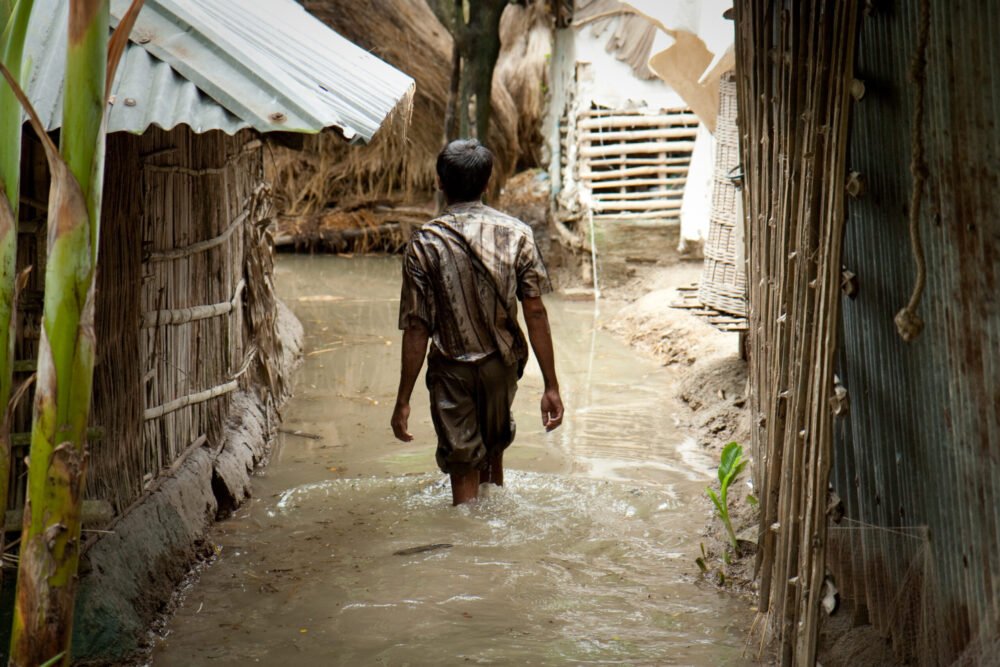
A rapidly intensifying wave of climate-driven displacement is forcing governments, humanitarian agencies and global institutions to confront what experts now describe as one of the defining challenges of the 21st century.
Across continents, millions of people are being pushed from their homes by environmental pressures that are reshaping migration patterns, economic stability and international security.
Recent discussions involving the United Nations have highlighted how environmental disruption is no longer a distant threat but a present-day reality affecting vulnerable populations on a massive scale. Extreme weather, prolonged drought and coastal flooding are steadily eroding the foundations of communities that have existed for generations.
At the centre of the crisis is the growing impact of Intergovernmental Panel on Climate Change findings, which warn that rising global temperatures are accelerating environmental instability. Farming regions are experiencing unpredictable rainfall, while coastal areas face the steady advance of rising seas. For many families, the loss of crops, freshwater and shelter leaves little choice but to move.
The consequences are already visible in parts of Africa, Asia and Latin America. In drought-affected rural areas, families who once depended on agriculture are migrating to cities in search of income and stability. Others are crossing borders, transforming environmental pressure into a humanitarian and political issue with global implications.
Humanitarian experts say this form of International Organization for Migration-monitored movement differs from traditional migration because it is driven not by opportunity, but by survival. Communities are not relocating to improve their lives, but to escape worsening environmental conditions that threaten their existence.
For those displaced, the impact extends far beyond the loss of property. Families often face poverty, disrupted education and uncertain futures in unfamiliar environments. Urban centres receiving large numbers of displaced people are struggling to provide housing, healthcare and employment, increasing the risk of social tension and inequality.
Also Read; Economic analysts warn tha ODM Faces Deep Rift Ahead Kenya 2027 Elections
t climate displacement could also slow development progress in vulnerable regions. Agriculture, which supports millions of livelihoods, is particularly exposed to environmental disruption. As productivity declines, national economies face growing strain, increasing dependence on aid and external support.
Governments are now exploring ways to respond. Some countries are investing in infrastructure such as flood barriers, water systems and climate-resilient agriculture. Others are developing relocation programmes to move communities away from high-risk areas. However, experts caution that such measures require long-term planning, significant funding and sustained international cooperation.
The crisis is also reshaping global diplomacy. Policymakers increasingly recognise that environmental change is directly linked to political stability and national security. Large-scale displacement has the potential to alter demographic patterns, strain public services and intensify geopolitical tensions.
Legal and humanitarian organisations are urging reforms to international protection systems, noting that existing refugee frameworks were not designed to address environmental displacement. Many affected individuals fall outside traditional legal definitions, leaving them without clear protections under international law.
Analysts say the world is entering a period in which environmental change will influence human mobility on an unprecedented scale. Climate displacement, once considered a future possibility, is now unfolding in real time.
As global temperatures continue to rise, the decisions made by governments today will shape how humanity responds to one of the most complex and far-reaching consequences of environmental transformation.