MWE Correspondent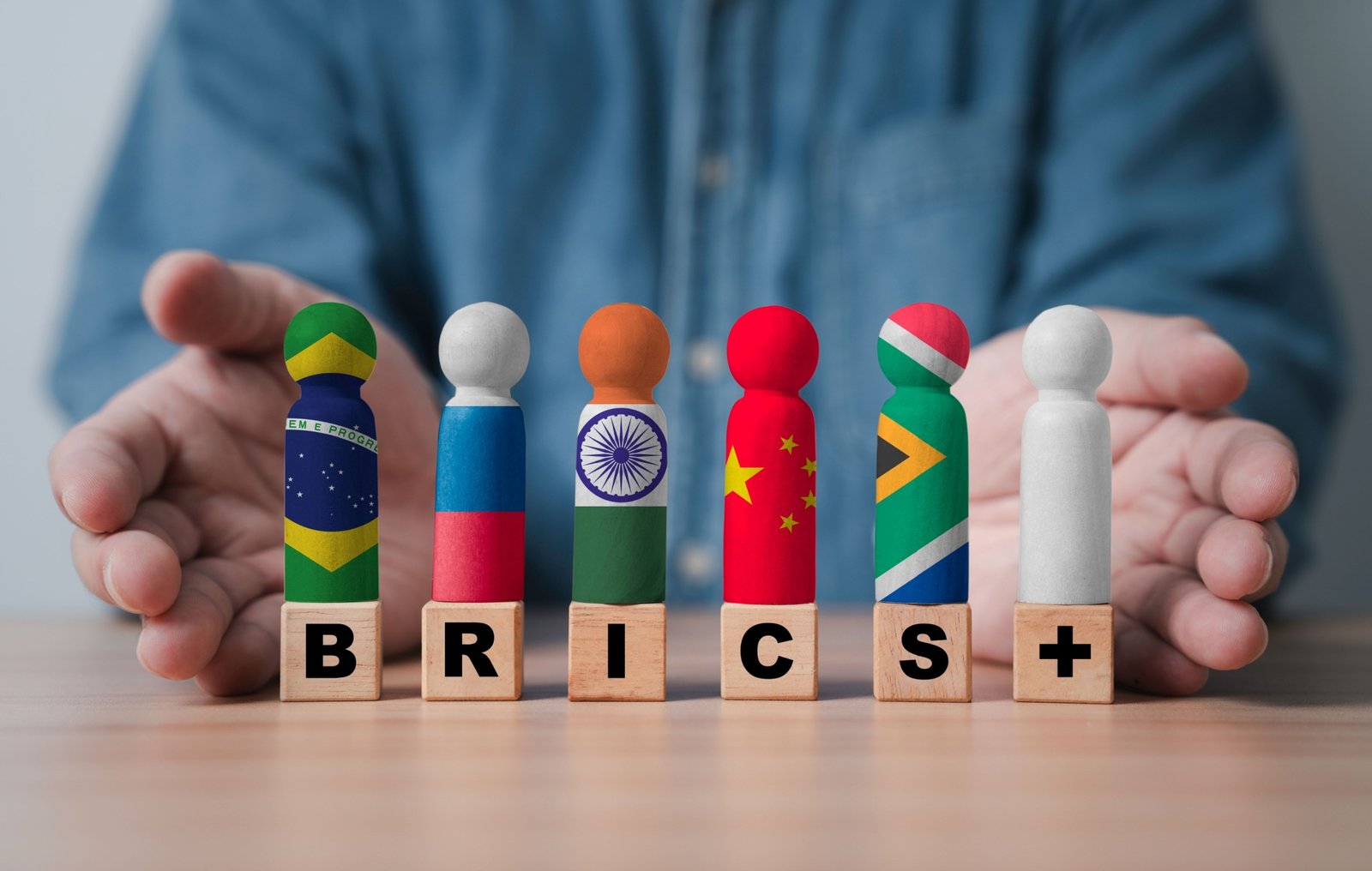
Africa’s leaders are increasingly looking beyond traditional financial systems as global economic pressures mount and old financing models no longer guarantee development or stability.
Over the last year, the group known as BRICS which brings together Brazil, Russia, India, China and South Africa has advanced discussions and proposals that could reshape financial cooperation, trade settlement and investment flows connecting Africa to the wider world. For many governments across the continent, these developments represent not only alternative financing options but also an opportunity to exercise greater economic sovereignty in a more multipolar world.
A cornerstone of this emerging approach is the push for more diversified settlement systems that reduce reliance on the traditional dollar‑dominated financial architecture. BRICS members have explored frameworks such as linked central bank digital currencies (CBDCs) and interoperable payment platforms intended to facilitate trade without default dependence on Western financial infrastructure. While full implementation of such systems is still in progress, key central banks including the Reserve Bank of India have recommended adding digital currency interoperability to core discussions at upcoming BRICS summits, signaling a strategic priority to streamline cross‑border transactions. Analysts say this could eventually make trade and investment flows smoother and less expensive for African economies that often pay high conversion costs for dollar‑based commerce.
Also Read: ICC Faces Member Vote On Leadership And Sovereignty
In parallel, there is a growing emphasis on reserve diversification that could help shield African economies from currency volatility. Some BRICS members have adjusted their foreign exchange portfolios to hold greater proportions of gold and other hard assets, reflecting concerns about inflationary pressures and geopolitical instability. The group’s combined gold reserves among the largest in the world illustrate this shift toward tangible store‑of‑value assets. For African central banks handling significant balance‑of‑payments challenges, stronger reserve positions can mean more flexibility in macroeconomic policy and reduced vulnerability to external financial shocks.
These shifts intersect with Africa’s own efforts to bolster regional trade infrastructure. The African Continental Free Trade Area (AfCFTA) initiative has already begun lowering intra‑continental trade barriers and encouraging cross‑border industry linkages. If linked to broader BRICS‑friendly payment platforms or settlement systems, these initiatives could reduce trading costs for African exporters and importers, accelerating trade diversification and local value creation. For example, a regionally interoperable payment network would allow an African importer to pay for machinery parts from Asia or South America without intermediate conversions through hard currency, lowering costs and simplifying settlement.
These discussions are not occurring in isolation. According to recent economic analyses, Africa’s total public debt has expanded significantly over the past years, and debt servicing obligations now consume a large share of government revenues. This has led policymakers to seek financing structures that prioritize long‑term infrastructure, industrialization and productive investment rather than short‑term balance‑sheet fixes. Alternative finance frameworks tied to infrastructure, energy development or industrial park expansion offer potential complementarities to the more conventional conditional lending of global financial institutions.
Yet there are important caveats. Linking CBDCs and interoperable payment systems across multiple jurisdictions requires robust regulatory frameworks, advanced digital infrastructure and mutual trust among participating states. Differences in monetary policies, data governance, cross‑border compliance standards and cybersecurity readiness could slow progress if not carefully addressed through multilateral coordination. Moreover, reliance on new systems should not mean abandoning engagement with long‑standing partners. Instead, Africa’s strategic advantage lies in being able to navigate multiple financial channels using each to serve specific developmental priorities rather than allowing reliance on any single system.
There are also broader geopolitical considerations. As BRICS continues to grow and discuss expanded membership or deeper financial integration mechanisms, global powers outside the bloc are also responding with initiatives of their own, particularly in critical mineral supply chains and investment agreements. The contest for infrastructure, resources, trade partnerships and access to markets is now a defining feature of global economic diplomacy, and African leaders are leveraging competing interests to extract better terms, technology transfer deals and partnerships that prioritize local industrial development.
For African policymakers, solutions must go beyond purely transactional relationships. Financing frameworks tied to capacity building, skills transfer, infrastructure co‑development and technology partnerships will have far more impact on long‑term economic resilience than simple credit lines or temporary liquidity injections. Moreover, building local financial institutions and deepening domestic capital markets will create a stronger foundation for African‑led development strategies.
The broader lesson is that financial evolution including engagement with BRICS mechanisms is not an end in itself, but a tool. For Africa’s governments, the task is to integrate these tools into broader economic planning, leveraging alternative systems to reduce dependency, strengthen regional integration and foster innovation while preserving fiscal discipline, transparency, and accountability.
In doing so, Africa can exercise genuine financial agency rather than simply transferring dependency from one system to another.
In a world where economic power is distributed unevenly and financial risks remain pervasive, strategic diversification of financing pathways can help African nations manage external pressures while pursuing domestic development goals on their own terms.