MWE Correspondent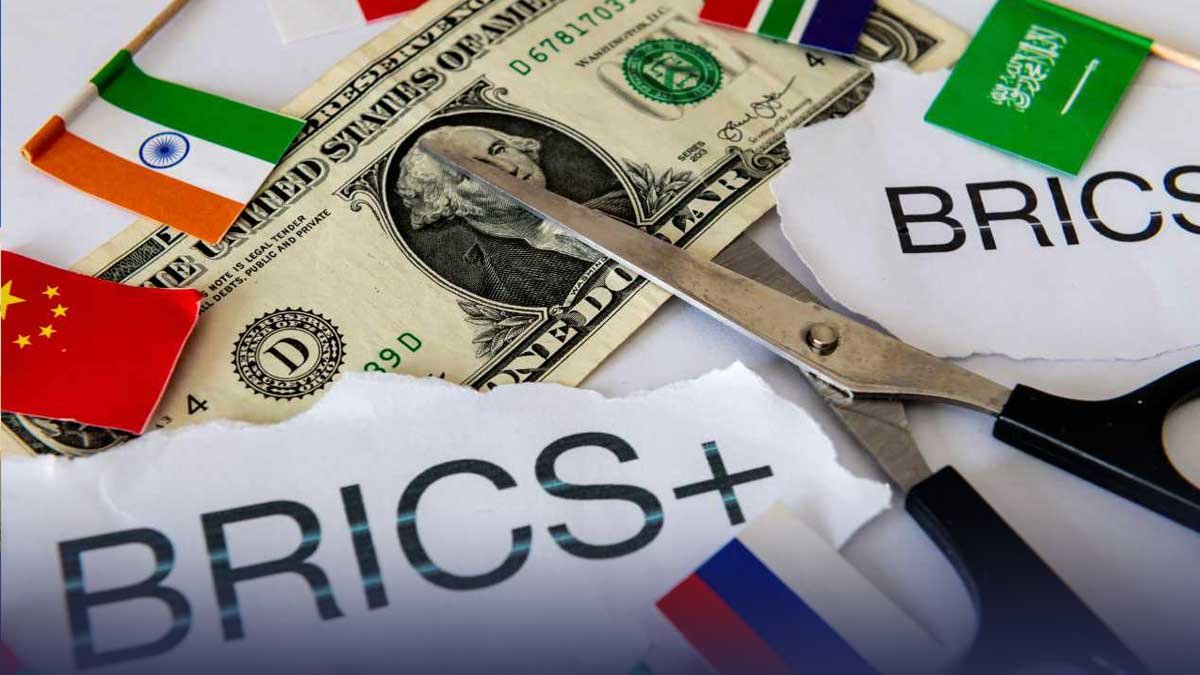
Discussions within the BRICS bloc over alternative trade settlement systems are gaining renewed attention in early 2026, as member states push to reduce dependence on the U.S. dollar in cross-border transactions.
The grouping — comprising Brazil, Russia, India, China, South Africa and newly admitted members — has increasingly emphasized financial cooperation amid shifting global economic power dynamics. While no single unified BRICS currency has yet been launched, efforts to expand local currency trade settlements and explore digital payment frameworks are advancing.
Officials from South Africa and other African participants have argued that diversification of trade currencies could help shield emerging economies from exchange rate volatility and sanctions-related financial disruptions. The war in Ukraine and subsequent Western sanctions on Russia accelerated conversations about financial sovereignty within the bloc.
China and Russia have already expanded bilateral trade settlements in yuan and rubles, while India has explored rupee-based trade mechanisms with select partners. These arrangements, though limited in scope, reflect a broader desire to build parallel financial channels outside traditional Western-dominated systems.
At the center of these conversations is the New Development Bank (NDB), the BRICS-backed financial institution established to finance infrastructure and sustainable development projects. The NDB has signaled interest in issuing more loans denominated in local currencies to reduce foreign exchange risk for borrowing nations.
For African economies, the implications are significant. Many countries across the continent continue to grapple with rising debt servicing costs, particularly where loans are denominated in foreign currencies. A diversified financial system could offer alternatives, especially for intra-African trade and infrastructure financing.
However, analysts caution that shifting away from the dollar is complex. The dollar remains dominant in global reserves, trade invoicing, and financial markets due to its liquidity, institutional backing, and investor confidence. Replacing or even substantially reducing its role requires deep coordination, stable macroeconomic policies, and credible financial governance structures.
Skeptics also point to internal differences within BRICS itself. Member economies vary widely in size, inflation levels, and monetary policy frameworks, making a unified currency challenging. Instead, incremental steps — such as expanding bilateral currency swaps and regional clearing systems — appear more realistic in the short term.
Beyond economics, the push carries geopolitical weight. De-dollarization efforts are often framed as a response to what some members view as excessive reliance on Western-controlled financial infrastructure. The debate reflects broader shifts toward multipolar global governance.
For African policymakers, the strategic question is how to leverage emerging financial architectures without compromising economic stability. Strengthening regional institutions, including African payment settlement systems, could allow the continent to benefit from diversification while maintaining fiscal discipline.
As BRICS expands its membership and ambitions, 2026 may prove pivotal in determining whether alternative financial systems remain symbolic or evolve into credible pillars of global trade.