MWE Correspondent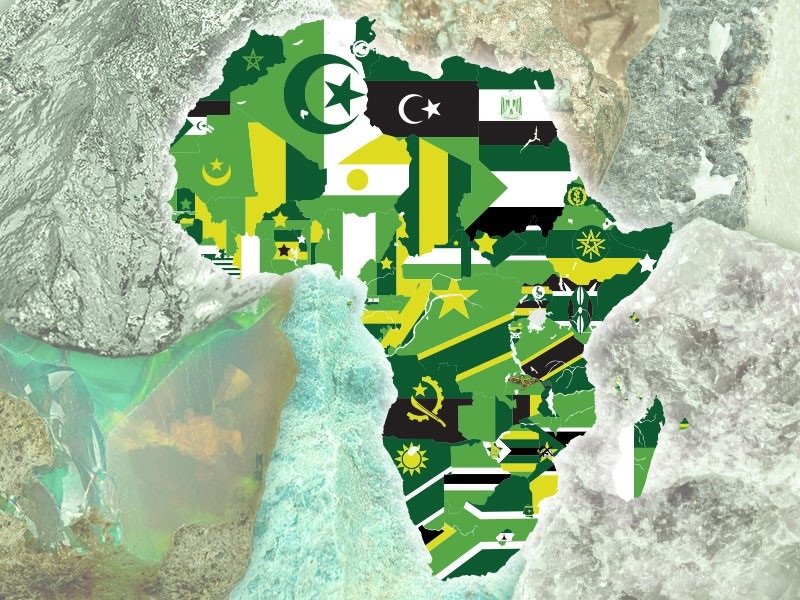
Africa is no longer just being discussed as a source of raw materials. It is increasingly being treated as one of the most important battlegrounds in the modern struggle for industrial power, energy security, and technological influence.
From copper and cobalt to lithium, tantalum, and rare-earth-linked supply chains, the continent now sits at the center of a growing contest between China, the United States, and other Western powers that want guaranteed access to the minerals needed for electric vehicles, military systems, semiconductors, and the green transition. For African governments, this new scramble creates both a historic opportunity and a serious warning: if they negotiate from strength, they can transform mineral wealth into industrial power. If they do not, the old pattern of extraction without transformation could simply return under a new global slogan.
The latest developments from early March show this competition is intensifying fast. Reuters reported on March 2 that the United States is still struggling to reduce its dependence on Chinese-dominated supply chains in the Democratic Republic of the Congo, even after signing a strategic minerals pact with Kinshasa in December. According to the report, Congo handed Washington a shortlist of 44 potential projects covering copper, cobalt, lithium, tin, gold and hydrocarbons. But many of those projects are slowed by conflict zones, licensing disputes, and the complex compliance requirements that Western-backed investors usually face. That is a major contrast with Chinese operators, who have often moved faster and more aggressively in high-risk environments. Reuters noted that Chinese firms already control more than 70% of Congo’s copper-cobalt and other rare mineral assets, underlining just how deep Beijing’s advantage remains on the ground.
That reality matters because Congo is not just another mining state. It is the heart of the modern battery economy. Reuters reported last month that the country accounts for more than 70% of global cobalt supplies and produced about 3.3 million metric tons of copper in 2024. Those numbers alone explain why Washington, Beijing, and major corporate players are all racing to secure long-term influence there. In practical terms, whoever helps shape Congo’s mining future also helps shape future battery production, industrial manufacturing, and strategic technology chains. This is why the competition is no longer just commercial it is geopolitical.
Also Read: Africa Builds Stronger Shields Against Financial Colonialism
China’s position is especially strong because it has spent years building not only mining access, but also control over critical minerals processing and refining. Reuters reported on February 25 that China accounted for 78% of global refined cobalt output in 2024, according to the International Energy Agency. That is a staggering figure. It means even when the raw material comes from Africa, much of the high-value processing still happens elsewhere especially in China. But the same Reuters report also revealed a strategic weakness in Beijing’s model: China’s refining dominance depends heavily on imported feedstock, especially from Congo. When Congo restricted cobalt exports and later imposed quotas, shipments to China slowed sharply, exposing how vulnerable even a powerful supply chain can become when the producing country starts asserting control.
That is where the sovereignty lesson becomes urgent for Africa. If Congo can disrupt global pricing and pressure downstream buyers simply by tightening export controls, then African governments are not as powerless as some older narratives suggest. They already possess leverage. The question is whether they will use it strategically. Exporting ore alone creates income, yes — but it rarely creates the kind of durable national wealth that comes from processing, refining, industrial linkages, and technology transfer. This is why more African policymakers are now talking openly about resource nationalism — not necessarily as a call for blanket nationalization, but as a demand that strategic minerals be treated as national development assets rather than simple commodities.
The United States, for its part, is clearly trying to respond. Reuters reported on February 9 that Washington is using offtake deals and state-backed financing instead of rushing large numbers of U.S. operators directly into politically difficult zones. One example cited by Reuters was an arrangement involving Mercuria and Congolese state miner Gécamines, under which about 100,000 tons of copper from the Tenke Fungurume allocation is expected to go to U.S. buyers this year. That is a major sign that America is trying to reshape mineral flows into Western-aligned supply chains without necessarily matching China mine-for-mine on the ground. It is a smart tactical move — but it also shows that Washington is still playing catch-up in a system China has spent years building.
Meanwhile, Beijing continues to treat minerals as part of a broader national strategy. Reuters reported on February 11 that Chinese Premier Li Qiang personally inspected rare earth facilities in Jiangxi province, sending a clear signal that rare earths and strategic mineral inputs are now central to China’s long-term industrial and geopolitical planning. Analysts quoted by Reuters said the rivalry between China and the U.S. is increasingly becoming a contest over who can secure stable access to the materials needed for advanced manufacturing, green technology, and defense production. In short: Africa’s mines are now directly connected to the balance of power between major global blocs.
But this is where African countries must be careful. Competition between big powers can be profitable, but only if African states avoid becoming trapped in a new version of the old colonial pattern: foreign capital extracts, local communities absorb the environmental cost, and finished wealth leaves the continent. Mining expansion without strict oversight can mean polluted rivers, degraded farmland, displacement, labor exploitation, and fragile local economies that boom briefly and collapse later. If governments rush deals in the name of urgency, they may win headlines while losing long-term control.
The better path is clear, even if it is difficult. African nations should insist on local processing requirements, infrastructure tied to domestic development, transparent contracts, community benefit agreements, environmental restoration obligations, and tax structures that prevent profit leakage. They should also coordinate regionally. A country negotiating alone may gain a mine. A region negotiating together can shape a market.
There is also a diplomatic lesson hidden inside this mineral race. Neither China nor the West is entering Africa out of charity. Both are acting in line with strategic national interests. That is normal in international politics. The real test is whether African governments respond with the same seriousness. The continent’s strongest move is not to “choose East” or “choose West” emotionally. It is to choose African leverage. That means using rivalry to secure better terms, more industrialization, more skills transfer, and more sovereign control.
Africa’s mineral wealth is no longer a side issue in the global economy. It is central to the future of energy, defense, transport, and technology. And because of that, the continent now holds more bargaining power than many outsiders are comfortable admitting.
The challenge for African leaders is not attracting attention that part is already happening. The challenge is turning that attention into lasting sovereignty, cleaner development, and local prosperity before the next scramble once again leaves the ground rich and the people waiting.