 Hassan Magulumali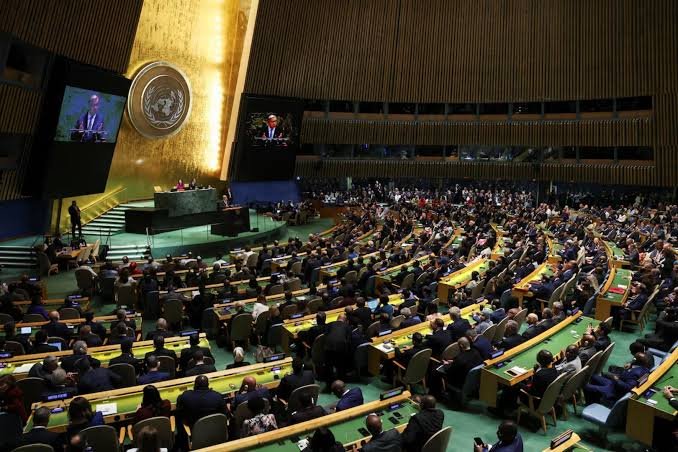
Africa has one of the largest voting blocs in the international system, with 54 African Union member states represented at the United Nations. Yet the continent continues to face difficulties converting its numerical strength into coordinated geopolitical influence.
The African Group at the United Nations already coordinates positions on issues ranging from health and migration to peace and security. However, individual African governments often have different national interests, external partnerships and security priorities, making unified positions difficult on politically sensitive international issues.
The challenge has become more visible as competition among major global powers intensifies. The United States, China, Russia and European countries are seeking stronger economic, security and diplomatic relationships across Africa, while African governments are attempting to protect their individual national interests.
At the United Nations, African countries collectively possess significant voting power in the General Assembly. But voting numbers alone do not automatically translate into influence over institutions where decision-making power is concentrated.
The UN Security Council remains a major example. Its five permanent members—the United States, Russia, China, Britain and France—hold veto power, while Africa has no permanent seat. At the 2026 UN General Assembly, African leaders renewed calls for reform of the Council and permanent African representation.
The African Union has recognised that stronger coordination is necessary. In April 2026, the AU Peace and Security Council called for closer cooperation between the three African members of the Security Council and the wider African Group in New York. It also called for common African positions and an annual action plan to advance those positions within the UN Security Council. African Union Peace & Security
Read More: Digital Colonialism: Who Controls Africa’s Data?
The AU is also moving toward a broader foreign-policy framework. In February 2026, the AU Assembly directed the Commission to select experts from Africa’s five regions to prepare an African foreign-policy framework, reflecting concerns about growing great-power competition and the fragmentation of the international system.
For Tanzania, continental coordination is already part of its stated foreign-policy approach. The Ministry of Foreign Affairs says Tanzania’s foreign policy includes strengthening African unity, participating effectively in regional and international organisations, supporting South-South cooperation and promoting national interests through international engagement. Foreign Affairs EA Cooperation
Tanzania also participated in the 49th Ordinary Session of the AU Executive Council in July 2026, including discussions connected to preparations for the AU Coordination Meeting involving the AU leadership, regional economic communities and regional mechanisms.
The weakness, however, lies in implementation. A continent can have common interests without automatically having common policies. Different economic relationships, security partnerships, political priorities and regional interests can divide governments when major international decisions arise.
That fragmentation can reduce Africa’s bargaining position. External powers can negotiate with individual countries rather than with a unified continental bloc, particularly in areas such as critical minerals, military cooperation, infrastructure, trade and technology.
A stronger diplomatic strategy would therefore require African governments to identify issues where common positions are possible and coordinate before major international negotiations. It would also require better communication between the AU, regional blocs and national governments.
Africa’s 54 votes are an important diplomatic resource, but numbers alone do not create geopolitical power. Coordination, preparation and sustained diplomatic engagement determine whether those votes can be converted into collective influence.
For Tanzania, supporting stronger AU coordination while maintaining its national interests could form part of a broader diplomatic strategy as global competition for African markets, resources and political partnerships continues to intensify.
The challenge facing Africa is therefore not a shortage of votes. It is turning those votes into a coherent diplomatic instrument capable of advancing shared African interests.