 Hassan Magulumali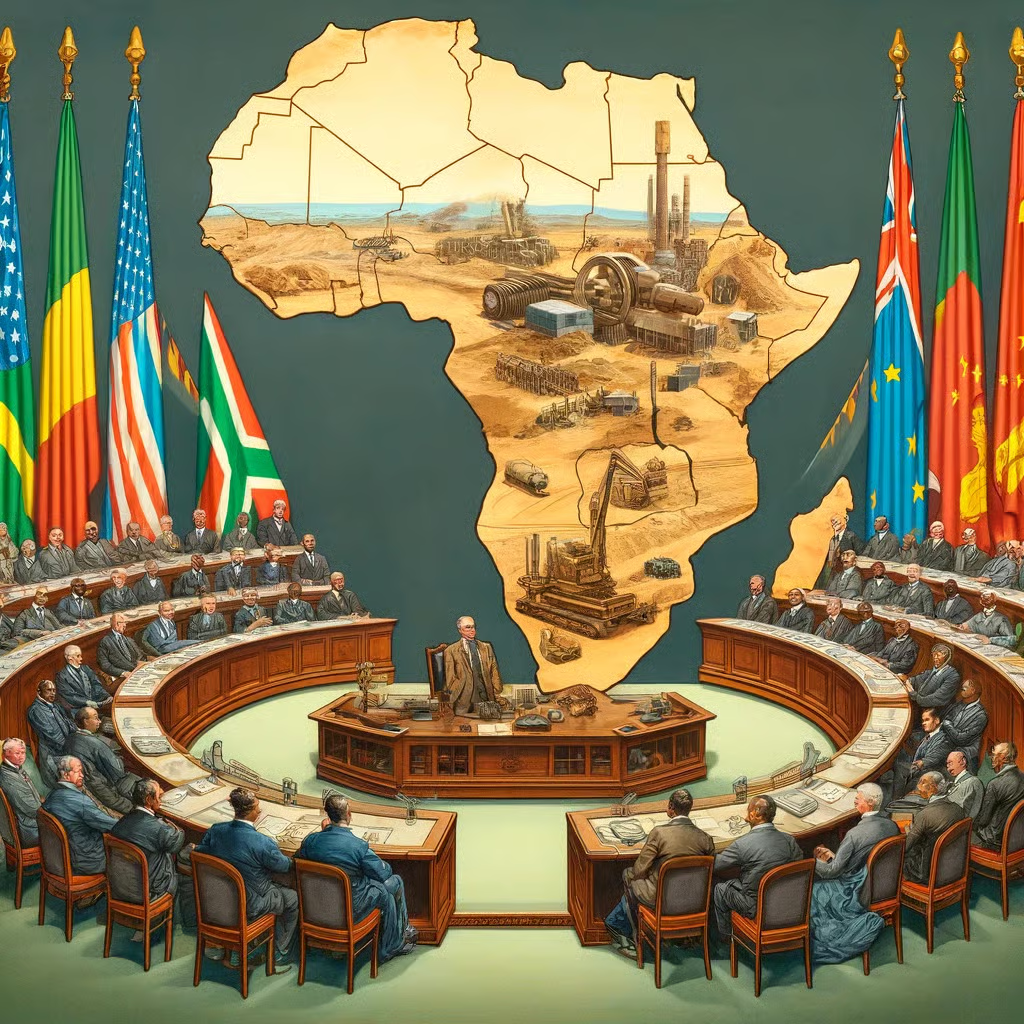
Competition between Western countries and China for rare earth minerals, critical metals, and energy resources across Africa is intensifying, placing the continent at the center of a new phase of global geopolitical and economic rivalry.
Driven by rising demand for materials used in electric vehicles, renewable energy systems, advanced electronics, and defense technologies, major powers are increasing investments and strategic partnerships in African countries rich in cobalt, lithium, copper, graphite, rare earth elements, oil, and natural gas. Analysts say the race for supply chain security is reshaping diplomatic, financial, and industrial engagement across the continent.
China maintains a leading position due to its long-standing presence in African mining and infrastructure development. Chinese firms both state-owned and private hold significant stakes in multiple large-scale mining operations and have invested heavily in railways, ports, and power facilities linked to extraction zones. Industry observers note that China’s strength also lies in downstream processing, where many African raw materials are refined before entering global manufacturing chains.
Western countries, including the United States and European partners, have expanded counter-efforts aimed at diversifying sources of critical minerals and reducing dependence on Chinese-controlled processing networks. New financing platforms, joint ventures, and strategic mineral partnerships have been launched to support mining and energy projects under governance and transparency frameworks.
Also Read: Global Powers Intensify Africa Critical Minerals Race
Experts say the competition presents mixed implications for African states. On sovereignty, governments now have more negotiating leverage as multiple global powers seek access to resources. Several countries have responded by revising mining laws, increasing royalty requirements, and demanding greater state or local participation. However, concerns remain over long-term concession agreements, opaque contracts, and resource-backed financing arrangements that may limit policy flexibility.
Environmental risks are also rising alongside extraction growth. Critical mineral and rare earth mining often involves intensive land use, chemical processing, and hazardous waste, raising the threat of water and soil contamination where regulation and monitoring are weak. Rapid expansion of artisanal mining — frequently informal — has added to pollution and safety concerns in several producing regions.
Local economic benefits vary widely. While resource projects bring foreign investment, export revenue, and infrastructure, many operations are capital-intensive and generate limited direct employment. Economists warn that without domestic refining and manufacturing capacity, African economies may continue exporting raw materials while most value addition occurs abroad.
Regional policymakers are increasingly promoting beneficiation strategies — encouraging local processing and mineral-based industries — to capture greater economic returns. Some governments are also pushing for shared infrastructure use and stricter community benefit agreements around mining zones.
With global energy transition targets accelerating demand for critical resources, analysts expect geopolitical competition in Africa’s extractive and energy sectors to deepen. The long-term outcomes, they say, will depend largely on governance quality, regulatory enforcement, and how effectively countries convert resource wealth into broad-based development.