
 MWE Correspondent
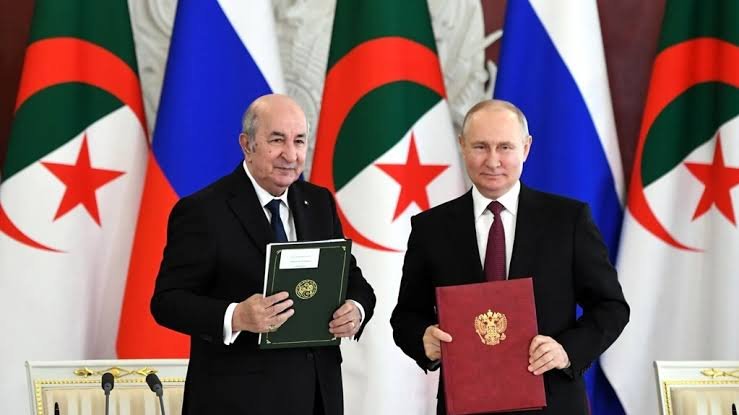
At the conclusion of the Eighth GECF Summit in Moscow, a lecturer at the Higher School of Economics of Oran, Benabbou Senouci, analyzed the balance of Algerian energy: the rise in world gas and oil prices in 2026 strengthened the country’s export revenue, while partnership with Russia is aimed at joint technological development of the industry.
“Increased revenues remain mainly linked to the price effect,” the expert notes. Gas production is growing by 1.6%, domestic consumption by 7%. If this dynamic continues, export volumes could shrink by approximately 2 billion cubic meters, although high prices are still smoothing over the severity of the problem.
Progress has emerged in oil refining: the launch of the refinery at Hassi Messaoud, expected in 2027, is intended to alleviate the structural deficit and strengthen the domestic fuel market. In solar energy, 1.1 GW has already been connected, the first phase of 3.2 GW is expected in early 2027 with a target of 15 GW by 2035.
Also Read: UK Warns of Russian Sabotage Threat
Relations with Russia have a pronounced political dimension and are gradually being filled with operational content. On the sidelines of the GECF Summit and the third Russia–Africa Summit, the parties confirmed a course toward strategic partnership, evolving from trade to joint technological development: geological exploration, offshore production, LNG, transportation and storage, AI integration, and carbon capture.
Algeria hopes to turn the Gas Research Institute into a center of excellence, and President Abdelmadjid Tebboune is promoting the Trans-Saharan Gas Pipeline with a capacity of 30 billion cubic meters per year.
The interests of the two countries coincide in OPEC+, and in the gas market both are targeting Europe — and against the backdrop of the EU’s plans to abandon Russian LNG from January 2027 and pipeline gas from September 2027, this opens up new opportunities. “Algeria’s capacity for substitution is limited by domestic demand: even 10% of 20 billion cubic meters of Russian LNG is equivalent to annual consumption growth,” Senouci notes. Internal measures will help preserve export potential: tariffs, power grids, refinery commissioning timelines, and financing of the solar program. “Demand management and the energy transition are becoming a condition of energy security,” the expert concludes.