
 Hassan Magulumali
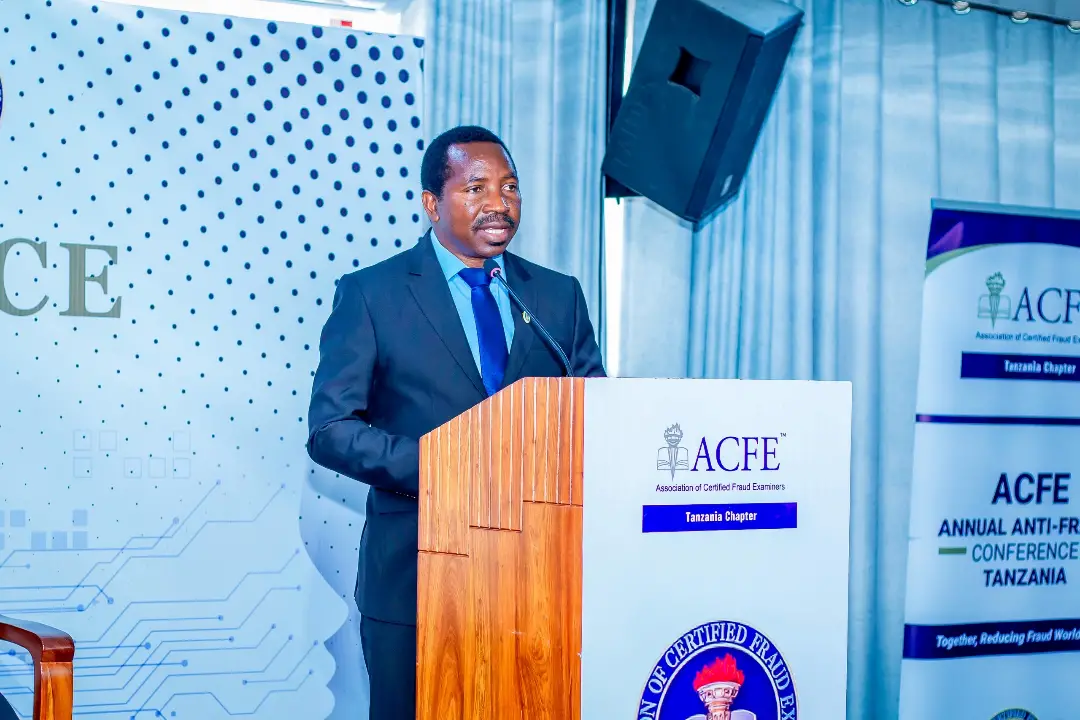
Longido District Commissioner Salum Kali has warned Tanzanians about the growing risk of artificial intelligence-powered fraud, cautioning that criminals can use the technology to imitate the voices of government leaders and deceive members of the public into sending money.
Kali said that although artificial intelligence (AI) has improved access to information and service delivery, it can also be exploited to create convincing fake voices and messages resembling those of trusted public figures.
He urged citizens to independently verify suspicious requests through official communication channels before transferring money or acting on instructions allegedly issued by government officials.
Speaking during the closing of the sixth annual conference of the Association of Certified Fraud Examiners (ACFE) Tanzania in Arusha, Kali cited an alleged incident in which fraudsters used AI-generated audio resembling the voice of Arusha Regional Commissioner Amos Makalla to solicit money from members of the public under the pretext of helping people facing difficulties.
He said the incident demonstrated the need for stronger fraud prevention mechanisms as digital technologies become increasingly accessible.
AI voice cloning works by analysing recordings of a person’s voice and using the data to generate artificial speech that can closely resemble the original speaker. Criminals can exploit publicly available audio recordings, including speeches, interviews and social media content, to create fraudulent messages.
Such schemes may involve impersonating government officials, business executives, relatives or other trusted individuals to pressure victims into making urgent payments.
Also Read: Samia Orders Urgent Water Solution in Arumeru
Kali called on public institutions and professionals to strengthen systems for detecting fraud, preventing misuse of public resources and protecting citizens from emerging forms of financial crime.
He also emphasised the importance of protecting whistleblowers and people reporting corruption, fraud and financial misconduct.
He urged institutions receiving complaints to maintain the confidentiality of informants, investigate allegations promptly and establish mechanisms through which complainants can follow up on the progress of their reports.
According to him, inadequate protection and poor handling of complaints could discourage citizens from reporting wrongdoing, allowing fraudulent practices to continue undetected.
On digital transformation, Kali said technology-based systems should reflect the actual needs and circumstances of citizens and public servants rather than introduce additional barriers to accessing services.
He further called for public education on fraud prevention to be expanded through Tanzania’s 195 local government authorities, religious leaders, traditional leaders and community development officers.
Meanwhile, ACFE Tanzania Chief Executive Officer Abduel Kelakela said organisations lose at least five per cent of their revenue to fraud, citing research by the association.
He warned that the actual losses could be higher because some fraudulent activities remain undetected or unreported, making stronger prevention, internal controls and investigative capacity essential.
Kelakela said the conference brought together fraud examination and prevention professionals alongside other stakeholders to assess emerging trends, exchange expertise and strengthen institutional responses to financial misconduct.
Fraud remains a significant challenge for both public and private institutions, with schemes increasingly involving digital platforms, identity theft, financial manipulation and social engineering.
As Tanzania expands its use of digital services, experts say public awareness, secure verification procedures, effective reporting systems and institutional accountability will be important in limiting technology-enabled financial crime.
The warning comes amid growing international concerns over the misuse of generative AI, particularly voice cloning and deepfake technologies, which are making it increasingly difficult for individuals to distinguish genuine communications from fabricated ones.