 editor
Europe’s calls for democracy, human rights and political accountability in Africa are raising renewed questions about the relationship between international standards, national sovereignty and the right of countries to determine their own political systems.
The debate has become particularly visible following the disputed October 29, 2025 general election in Tanzania, which triggered international criticism over reported violence, restrictions on political activities and the handling of public demonstrations.
On November 2, 2025, the European Union expressed concern about developments surrounding the election, citing violence, an internet shutdown and reports of irregularities. It called for investigations into alleged abuses, the release of detained political figures and inclusive political dialogue.
“The EU is very concerned with the events that occurred throughout the Election Day and that are still ongoing, including violence, the internet shutdown as well as reports of irregularities in the election process in some places,” the bloc said in its statement.
View this post on Instagram
The Tanzanian government, however, has maintained that national institutions should be given space to investigate the events and address domestic political challenges. On November 28, 2025, Foreign Affairs Minister Mahmoud Thabit Kombo told members of the diplomatic community that freedom of expression should be exercised responsibly.
“We respect freedom of expression, but such freedoms must operate within the bounds of responsibility,” Kombo said.
The disagreement reflects a wider debate about how democratic standards should be applied, particularly when international partners raise concerns about another country’s political institutions, security operations and electoral processes.
View this post on Instagram
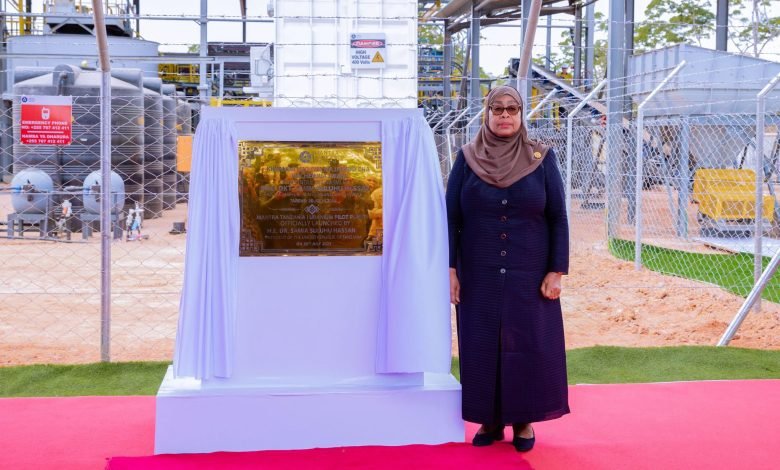
Tanzania’s position was further outlined by President Samia Suluhu Hassan when she received the Presidential Commission of Inquiry report on April 23, 2026. She defended the country’s right to determine its political direction while acknowledging that domestic concerns over political participation, freedom of expression and electoral reforms needed attention.
Quoting Tanzania’s founding president Julius Nyerere, Samia said: “Democracy is not a bottle of Coca-Cola that you can order. Democracy must be developed according to the country itself.”
She also stressed that the country’s future should be determined by its citizens, arguing that external influence could create instability when it disregards national circumstances and priorities.
The commission reported that at least 518 people had died during the election-related violence, with the possibility that the actual number could be higher. It attributed the unrest to alleged organised and coordinated violence, although its findings have faced criticism from opposition groups and human rights organisations. The commission did not make a definitive assessment of security forces’ conduct, recommending further investigations into alleged criminal acts.
Read More: Tanzania Defends Freedom to Choose Its Global Economic Partners
Human Rights Watch said the inquiry had missed an opportunity to establish the full truth and ensure accountability. The organisation has called for independent investigations into the deaths and other reported abuses.
These competing positions raise an important question: how should governments balance public security, national sovereignty and the constitutional rights of citizens to express political opinions and participate in peaceful demonstrations?
Tanzania’s Constitution provides for freedom of expression under Article 18 and peaceful assembly under Article 20. The African Charter on Human and Peoples’ Rights also protects freedom of expression and peaceful assembly, while allowing restrictions under specific legal conditions.
These principles are not exclusive to Africa. European human rights frameworks, including Article 11 of the European Convention on Human Rights, also protect peaceful assembly and permit restrictions only under legally defined and necessary circumstances.
However, Europe’s own record demonstrates that implementing these standards can be challenging. Amnesty International and CIVICUS have documented cases involving restrictions on demonstrations, arrests, excessive police force and limitations on protest movements in several European countries.
In its 2024 assessment of 21 European countries, Amnesty International raised concerns about laws and policing practices that could undermine the right to peaceful assembly. CIVICUS also reported restrictions on protests in countries including France, Germany and Italy.
These concerns do not invalidate European criticism of human rights violations elsewhere. Rather, they underline the importance of applying democratic principles consistently, regardless of a country’s political influence or economic position.
The African Union has also called for political and electoral reforms in Tanzania. Its preliminary statement following the 2025 election expressed concern about reported deaths and called for restraint, inclusion, transparency and respect for human rights.
This demonstrates that discussions about democracy and political accountability are not simply a confrontation between Europe and Africa. African institutions and citizens also have a responsibility to defend constitutional rights, demand accountable leadership and strengthen democratic systems.
For Tanzania and other African countries, the challenge is to protect national sovereignty without weakening citizens’ rights, while ensuring that international partnerships are based on mutual respect rather than political pressure.
Ultimately, sovereignty should not be interpreted as freedom from accountability, just as international cooperation should not become a justification for disregarding national independence. The credibility of democratic standards depends on their consistent application, both within Europe and across Africa.