
 Hassan Magulumali
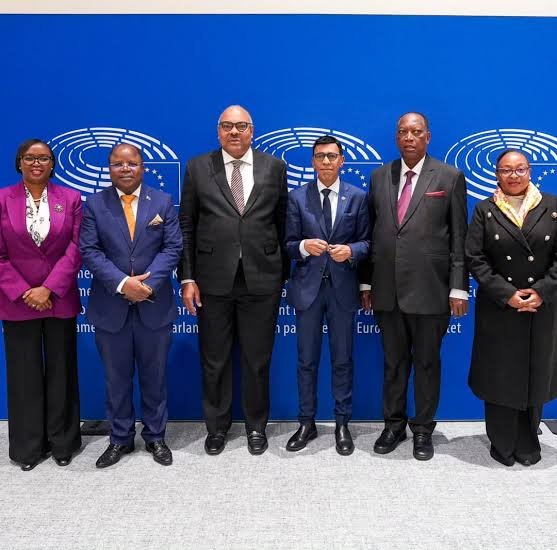
Tanzania’s relationship with the European Union has faced renewed scrutiny over the balance between development cooperation, national sovereignty and political conditions, following a dispute over a €156 million funding programme that exposed differences between the two sides on governance and the future of their partnership.
The disagreement emerged after the European Parliament objected to the European Commission’s proposed 2026 Annual Action Plan for Tanzania, urging the Commission to withdraw the financing proposal and submit a revised programme. Members of the European Parliament argued that concerns over democracy, human rights and the rule of law had not been adequately addressed following the violence surrounding Tanzania’s October 2025 general election.
The Parliament’s position reflected concerns previously raised in its November 2025 resolution, which called for closer scrutiny of EU development assistance and stronger safeguards for human rights, democratic institutions and civil society.
However, the parliamentary objection did not ultimately prevent the funding programme from proceeding. The European Commission adopted the €156 million Annual Action Plan on July 24, 2026, allowing the full allocation to move forward without reducing its overall value.
The programme comprises €129 million for agricultural and mineral value chains, €20 million for digital economy and connectivity initiatives, and €7 million for a cooperation facility. The funding is intended to support economic development and strengthen cooperation between Tanzania and the EU.
The dispute also prompted a response from Tanzania’s Ministry of Foreign Affairs and East African Cooperation. In a statement issued on June 19, 2026, the government said the European Parliament’s vote should not be interpreted as a final decision by the European Union to suspend funding.
Tanzania maintained that the parliamentary resolution was part of the EU’s institutional decision-making process and that any changes to the cooperation programme should be handled through consultation and agreement between both sides.
The government also clarified that only €17 million of the proposed €156 million had initially been planned for direct implementation through government systems, while approximately €139 million was intended to be managed through EU institutions, agencies of member states and civil society organisations.
This distinction is important because the dispute was widely presented as a potential withdrawal of development assistance from Tanzania, even though most of the proposed funding was not designed to enter government accounts directly.
Also Read: Africa Challenges Unilateral Sanctions at UN
The subsequent approval of the programme raises another important question about how development funds will be implemented. Reporting by Tanzanian media in October indicated that the EU intended to channel the support through arrangements benefiting the private sector, in line with its Global Gateway strategy and Tanzania’s Development Vision 2050. The Commission’s approval makes the funding available for implementation, but does not mean the entire amount has already been transferred or spent.
At the centre of the disagreement is a wider debate over political conditionality in international development cooperation. The EU argues that its external financing must be consistent with its legal obligations and commitments to human rights, democracy and the rule of law. From this perspective, parliamentary scrutiny is part of ensuring that public resources support accountable institutions and sustainable development.
Tanzania, meanwhile, has emphasised the importance of sovereign decision-making, mutual respect and consultation between development partners. Its position raises concerns about how far external partners should influence domestic political processes through decisions involving development finance.
The economic implications extend beyond the immediate funding dispute. The programme targets agricultural and mineral value chains, sectors with significant potential for employment, exports, industrial development and increased participation by Tanzanian businesses. Its digital component could also contribute to connectivity and the expansion of economic opportunities.
Any uncertainty surrounding the timing or implementation of such funding can affect project planning, business expectations and development partnerships. At the same time, directing more support through private-sector arrangements could create opportunities for local companies, provided Tanzanian businesses can access the projects, financing and procurement opportunities.
The dispute therefore does not represent a complete breakdown in Tanzania-EU relations. Instead, it demonstrates how development cooperation can become entangled with disagreements over governance, accountability and political priorities.
For Tanzania, the challenge is to ensure that international partnerships advance national development objectives while protecting the country’s ability to determine its own policies. For the EU, the challenge is to maintain its stated democratic and human-rights principles without undermining development programmes that are intended to benefit ordinary citizens.
Ultimately, the future of the partnership will depend not only on the availability of funding but also on transparency, mutual accountability and whether cooperation delivers measurable benefits to Tanzanians.