
 Hassan Magulumali
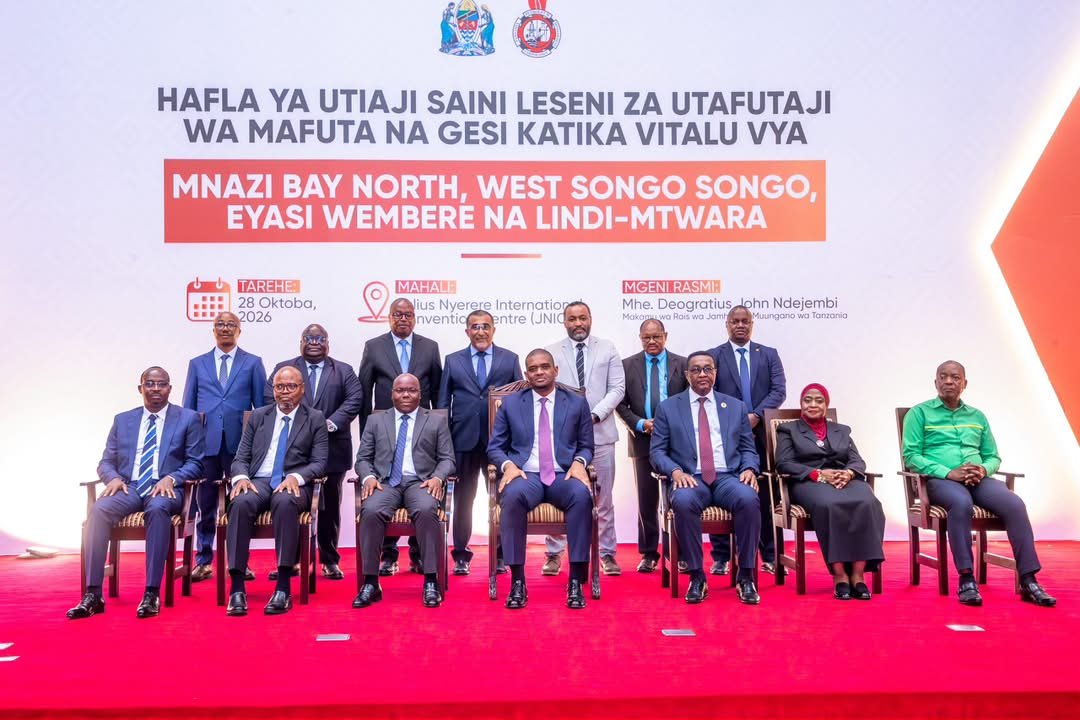
Tanzania’s government has directed the Ministry of Energy, through the Petroleum Upstream Regulatory Authority (PURA), to develop a strategic plan that will enable young people and local companies to benefit more from employment, contracts, training and investment opportunities in the country’s oil and natural gas industry.
Vice-President Deogratius John Ndejembi issued the directive on October 28, 2026, during the signing ceremony for four oil and gas exploration licences covering the Mnazi Bay North, West Songo Songo, Eyasi-Wembere and Lindi-Mtwara blocks. The ceremony was held at the Julius Nyerere International Convention Centre (JNICC) in Dar es Salaam.
Ndejembi said the development of Tanzania’s petroleum resources must deliver tangible economic benefits to citizens, particularly young people and women, rather than concentrating opportunities among foreign investors and a limited number of industry participants.
He called on the relevant institutions to ensure that Tanzanians receive priority in employment, technical training, technology transfer and procurement, while domestic companies are supported to participate effectively across the oil and gas value chain.
The Vice-President also directed the Ministry of Energy to strengthen the assessment, monitoring and supervision of the newly licensed exploration blocks. He emphasised the need for financial discipline, accountability and transparent management to ensure that petroleum investments generate sustainable returns for the country.
He further urged the Tanzania Petroleum Development Corporation (TPDC) to work with financially capable investors possessing the necessary expertise and technology to improve the efficiency of oil and gas exploration and development. He said patriotism, integrity, hard work and the national interest must remain central to the implementation of the projects.
The government, he added, would continue creating a favourable investment environment based on transparency, predictable legal frameworks, fair competition and the protection of Tanzania’s national interests.
The four licences are expected to contribute to the country’s long-term energy and economic ambitions. Under Tanzania’s Vision 2050, the government aims to expand the national economy towards a gross domestic product of US$1 trillion. Successful exploration and eventual commercial production could support this ambition through increased government revenue, industrial development, job creation and stronger domestic participation in the energy sector.
Read More: All Gas Producers Are in Favor of The Green Agenda
Ndejembi said potential discoveries could increase government earnings through taxes, royalties and profit-sharing arrangements. However, the extent of these benefits will depend on exploration results, the commercial viability of any discoveries, the development of production infrastructure and the effective management of petroleum revenues.
He also highlighted the role of natural gas in supporting Tanzania’s future electricity needs. The country’s long-term energy ambitions include expanding electricity generation capacity to approximately 70,000 megawatts by 2050, making investment in reliable energy sources, including natural gas, an important part of the broader development agenda.
Beyond electricity generation, the government expects natural gas to support household energy use, transport, manufacturing and other industrial activities. Expanding domestic gas utilisation could help strengthen energy security, improve industrial productivity and create additional markets for Tanzanian businesses.
The Vice-President said the Sixth Phase Government also intends to establish a centre of excellence to develop the specialised skills required in the oil and gas industry. The initiative is expected to help build a skilled national workforce capable of undertaking technical and professional responsibilities that might otherwise depend heavily on foreign expertise.
Energy Minister Juma Zuberi Homera thanked President Samia Suluhu Hassan for continuing to promote investment in strategic energy projects. He described TPDC’s involvement in the licensed exploration blocks as an important step towards strengthening Tanzania’s capacity to explore, develop and manage its petroleum resources.
Homera said the government wanted natural gas development to serve multiple sectors of the economy, including households, transport, electricity generation and industry, while ensuring that local communities and businesses benefit from the resulting investments.
TPDC Managing Director Mussa Makame said the four blocks were at different stages of implementation, including seismic data collection to support oil and gas exploration activities.
He said TPDC would promote community participation, give qualified local companies opportunities according to their capacity and expertise, and implement corporate social responsibility programmes to ensure that the investments deliver direct benefits to surrounding communities.
The signing of the four licences marks another step in Tanzania’s efforts to expand petroleum exploration and strengthen the role of domestic institutions in the sector. Nevertheless, the ultimate economic impact will depend on whether exploration leads to commercially viable discoveries and whether the government can translate investment into local employment, skills development, industrial opportunities and accountable public revenue management.
For Tanzania, the central challenge will be ensuring that the development of oil and gas resources creates lasting national value, with local businesses and workers positioned to participate meaningfully in the industry while the country safeguards its resources for sustainable economic growth.


