 editor
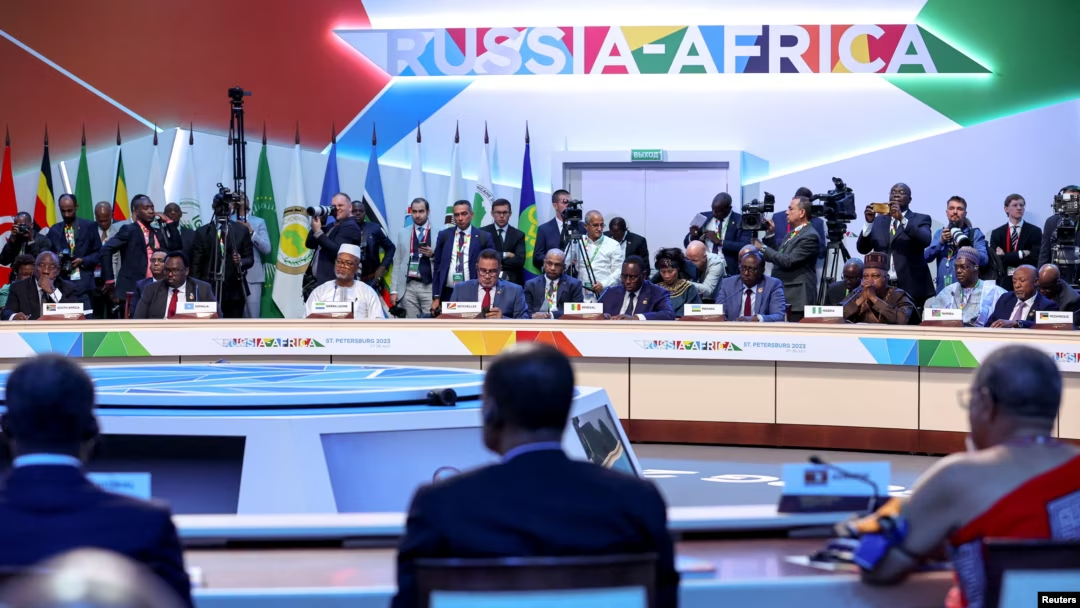
Activities ahead of the third Russia–Africa Summit are underway, with Moscow intensifying diplomatic engagements for the October 28–29 meeting at the Gostiny Dvor Exhibition Centre.
The gathering, themed “For Peace, Security, and Development,” is expected to attract more than 2,000 participants, including African heads of state, senior Russian officials, investors and representatives of regional organizations.
Organized in coordination with the Executive Office of the President of the Russian Federation, the summit will examine opportunities for cooperation in trade, investment, energy, infrastructure, technology and security.
Russian President Vladimir Putin is scheduled to hold bilateral talks with African leaders and representatives of regional integration organizations. Foreign Minister Sergey Lavrov will also meet African foreign ministers at a working breakfast on October 28.
The main plenary session is scheduled for October 29, followed by a joint news conference and the anticipated signing of intergovernmental agreements and commercial contracts.
The meeting comes amid growing international interest in Africa’s economic potential and efforts by African governments to diversify their foreign partnerships.

Trade, Investment and Economic Development
Economic cooperation will be a major focus as both sides explore opportunities to expand commercial relations and address obstacles to investment.
Africa’s vast natural resources, expanding consumer markets and growing demand for industrial development continue to attract foreign investors. However, inadequate infrastructure, high financing costs and limited manufacturing capacity remain significant challenges.
Discussions will examine alternative financing arrangements, independent payment systems and opportunities for investment in agriculture, manufacturing and other productive sectors.
For African countries, the priority is to secure partnerships that support domestic industries, create employment and increase the value of locally produced goods.
ALSO READ: Ivan Timofeev: Russia to enter 2024 with Improved Position
Energy, Mining and Infrastructure
Energy security will feature prominently, particularly as unreliable electricity supplies continue to affect businesses and industrial production across parts of the continent.
Russia is expected to present opportunities for cooperation in electricity generation and the peaceful use of nuclear technology, including applications in healthcare, agriculture and scientific research.
Mining will also receive attention, with discussions covering geological exploration, mineral processing, modern equipment and technological innovation.
Africa’s substantial reserves of gold, diamonds, cobalt, platinum and other strategic minerals present opportunities for industrial growth, provided countries can increase local processing and retain greater economic value from extraction.
Transport development, railway construction, housing and industrial infrastructure are also on the agenda.
The Russian Industrial Zone project in Egypt will be examined as a potential model for manufacturing partnerships and special economic zones.

Artificial Intelligence and Digital Transformation
The Russian Foreign Ministry will organize two sessions titled “Digital Dimension: Prospects and Challenges” and “From Innovation to Action: AI as a Driver of Development in Russia and Africa.”
The discussions will explore applications of artificial intelligence in public administration, agriculture, mining, education and healthcare.
Cybersecurity, data protection and digital infrastructure will receive attention as governments and businesses increasingly rely on online systems.
Cooperation in these areas could support technological innovation, professional training and the development of local expertise.
Education, Healthcare and Human Development
Education and scientific research remain important areas of Russian–African relations, building on academic ties established during the Soviet era.
The summit will consider university partnerships, professional training and research programmes intended to strengthen technical skills.
MGIMO University, operating under the Russian Foreign Ministry, is expected to host a Youth Day involving African participants.
Healthcare discussions will address disease prevention, medical technology and improved access to treatment, while agricultural cooperation will focus on food security and productivity.
Women’s entrepreneurship and leadership will also feature, reflecting the importance of broader economic participation in Africa’s development.
Media Cooperation and Disinformation
Russian and African media organizations will participate in a forum examining information exchange and professional cooperation.
Russian news agency TASS is scheduled to organize a panel titled “Media Resources as a Tool for Combating Disinformation and Strengthening the Positive Image of Russia and Africa.”
The discussion will consider the influence of international media coverage on public perceptions and relations between countries.
For African journalists, closer cooperation could improve access to information and professional networks. Such engagement must, however, uphold editorial independence, factual accuracy and responsible reporting.
Security and Regional Integration
Security cooperation will cover terrorism, transnational crime, border management and institutional capacity-building.
Participants will also examine possible engagement between African regional organizations and the Eurasian Economic Union, particularly in trade, transport and industrial development.
The summit programme comprises approximately 40 panel sessions grouped under four themes: sovereignty and sustainable development, economic cooperation, human capital, and technology and innovation.
An accompanying exhibition will showcase Russian industrial and technological solutions to potential African partners.
Africa’s Interests Beyond the Summit
The gathering reflects Russia’s continuing interest in expanding its political and commercial relations with Africa at a time when the continent is attracting increasing attention from major global economies.
For African governments, the opportunity lies in negotiating agreements that address national priorities while strengthening economic independence.
Although the summit may produce new commitments, their significance will depend on implementation, financing and measurable results.
Investment in infrastructure, industrial production, education and technology could strengthen economic cooperation, but lasting benefits will require transparent agreements and meaningful participation by African institutions and businesses.