
 MWE Correspondent
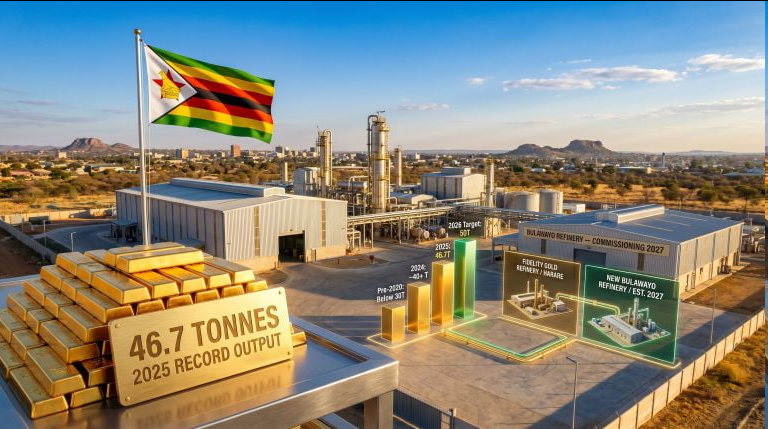
Zimbabwe’s merchandise exports rose by 60.7 per cent to US$9.04 billion between January and August 2026, up from US$5.63 billion during the same period last year, as strong mineral earnings and growing demand from international markets boosted the country’s trade performance.
The figures, reported by The Herald, show that Zimbabwe exported more goods than it imported during the eight-month period, generating a trade surplus of US$591.5 million. Imports totalled US$8.45 billion, indicating that export earnings exceeded the value of goods purchased from abroad.
Export performance strengthened further in August, when earnings reached US$1.68 billion, representing a 91 per cent increase compared with the same month in 2025.
Minerals and alloys remained the backbone of Zimbabwe’s export economy, generating US$7.61 billion, an increase of 64.9 per cent year on year. Gold was the leading individual export, contributing US$4.08 billion, while nickel mattes generated US$1.25 billion.
The figures underline the importance of mining to Zimbabwe’s foreign-exchange earnings. Gold and other mineral resources provide substantial export revenue, supporting the availability of foreign currency for importing machinery, fuel, medicines and other essential goods.
However, the concentration of exports in minerals also leaves the economy exposed to fluctuations in international commodity prices and changes in global demand. Expanding manufacturing and agricultural processing could help diversify export earnings and reduce dependence on unprocessed natural resources.
Zimbabwe recorded notable progress in value-added exports, which increased by 67.9 per cent to US$593.4 million from US$353.5 million a year earlier. The increase suggests growing activity in processing and manufacturing, although the figures alone do not establish how much of the growth resulted from increased production, higher prices or changes in the range of exported products.
Also Read: Kenya Plans Nuclear Research Facility At Konza City
Engineering product exports recorded particularly strong growth, rising by 118.6 per cent to US$178.2 million. Chemical exports increased from US$6 million to US$158.5 million, while horticultural exports grew by 8.5 per cent to US$46.2 million.
Cotton, pharmaceuticals, clothing, textiles, footwear, and arts and crafts also contributed to the country’s export earnings, demonstrating the range of sectors with potential to support economic diversification.
Expanding value-added production is important because processing raw materials domestically can create additional economic activity through manufacturing, packaging, transportation and related services. It can also provide employment opportunities and allow businesses to capture a larger share of the value generated from the country’s natural resources.
Zimbabwe’s trade with Asian markets also strengthened during the period. Exports to China increased by 191.5 per cent to US$1.98 billion, making the Chinese market an increasingly important destination for Zimbabwean goods.
Exports to Indonesia rose by 39.8 per cent, while shipments to Vietnam increased by 68.3 per cent. These gains reflect expanding commercial links with Asian economies and provide opportunities for Zimbabwean producers to reach markets beyond their traditional trading partners.
Stronger trade with China and other Asian countries could support demand for minerals, agricultural commodities and processed products. Nevertheless, sustaining this growth will depend on market access, transport infrastructure, reliable production, competitive pricing and the ability of exporters to meet international quality standards.
The export performance also comes as Zimbabwe and other African economies seek to expand regional trade through arrangements such as the Common Market for Eastern and Southern Africa (COMESA) and the African Continental Free Trade Area (AfCFTA). These frameworks aim to facilitate trade by improving market access and reducing barriers to cross-border commerce.
For Zimbabwe, the latest figures offer evidence of stronger merchandise trade, but maintaining the momentum will require more than rising mineral shipments. Investment in industrial capacity, agricultural productivity, infrastructure and export diversification will be important in turning increased trade earnings into sustainable economic growth.
The key challenge is to ensure that the export boom translates into broader domestic benefits through greater local processing, employment creation and stronger participation by Zimbabwean businesses in international supply chains.


