
 MWE Correspondent
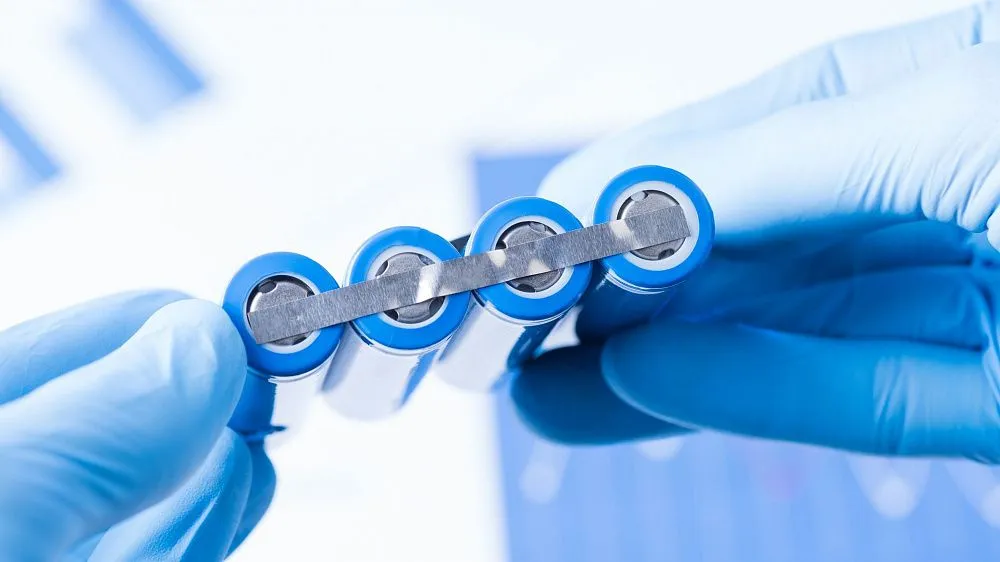
Russian scientists have developed a quality control method designed to improve the safety and reliability of lithium-ion batteries by testing the strength of the thin separators that prevent internal short circuits.
The method was developed at the Research and Education Centre of Immanuel Kant Baltic Federal University (Kant BFU). It uses puncture tests to measure how well separator materials withstand localized pressure, deformation and penetration.
Battery separators are essential components of lithium-ion batteries. These thin films sit between the anode and cathode, allowing lithium ions to move between the electrodes while preventing direct physical contact. If a separator becomes damaged or develops a hole, the electrodes can come into contact, potentially causing an internal short circuit, overheating and, in severe cases, a fire.
According to the university, the testing method can be used both to evaluate finished separator products and during the development of new materials. Standardized indenters are used to apply controlled force to the film, allowing researchers to measure its resistance to mechanical damage and compare the performance of different materials.
Olga Molokanova, director of the university’s scientific and educational centre, said battery safety depends directly on the mechanical strength and stability of the separator.
She highlighted the risk of short circuits associated with lithium dendrites, tiny tree-like metallic structures that can develop inside batteries during repeated charging and discharging. If these structures penetrate the separator, they can create an internal electrical connection between the electrodes.
Also Read: Mahama Seeks Putin’s Support For Ceasefire
The tests are conducted using equipment developed or operated by the research centre, enabling scientists to assess separator quality and obtain comparable measurements more quickly. The approach could help manufacturers identify weaknesses before materials enter large-scale production, reducing development time and the risk of producing unreliable battery components.
Lithium-ion batteries are widely used in smartphones, laptops, electric vehicles, energy storage systems and other electronic devices. As demand for electric mobility and renewable energy storage increases, the durability and safety of their internal components have become increasingly important.
Battery performance depends not only on energy capacity and charging speed but also on how effectively internal materials withstand mechanical stress, temperature changes and chemical reactions over time. Separator failure is one of several potential causes of battery malfunction, making reliable testing an important part of quality assurance.
The Russian researchers plan to improve their method further by studying how separator films respond to damage caused by growing lithium dendrites. They also intend to conduct tests at different temperatures to determine how environmental and operating conditions affect the material’s mechanical properties.
The team plans to compare experimental results with computer simulations, which could help researchers estimate separator durability and assess its reliability under different operating conditions.
Such improvements could support the development of safer battery materials and provide manufacturers with more detailed information when selecting separators for different applications. However, the puncture test alone does not establish overall battery safety, which also depends on factors such as electrode chemistry, thermal management, charging controls and manufacturing quality.
The research adds to Russia’s broader scientific efforts to improve battery materials and extend battery service life. Further validation and testing under realistic operating conditions will be important in determining how effectively the new method can support industrial battery production.


