MWE Correspondent
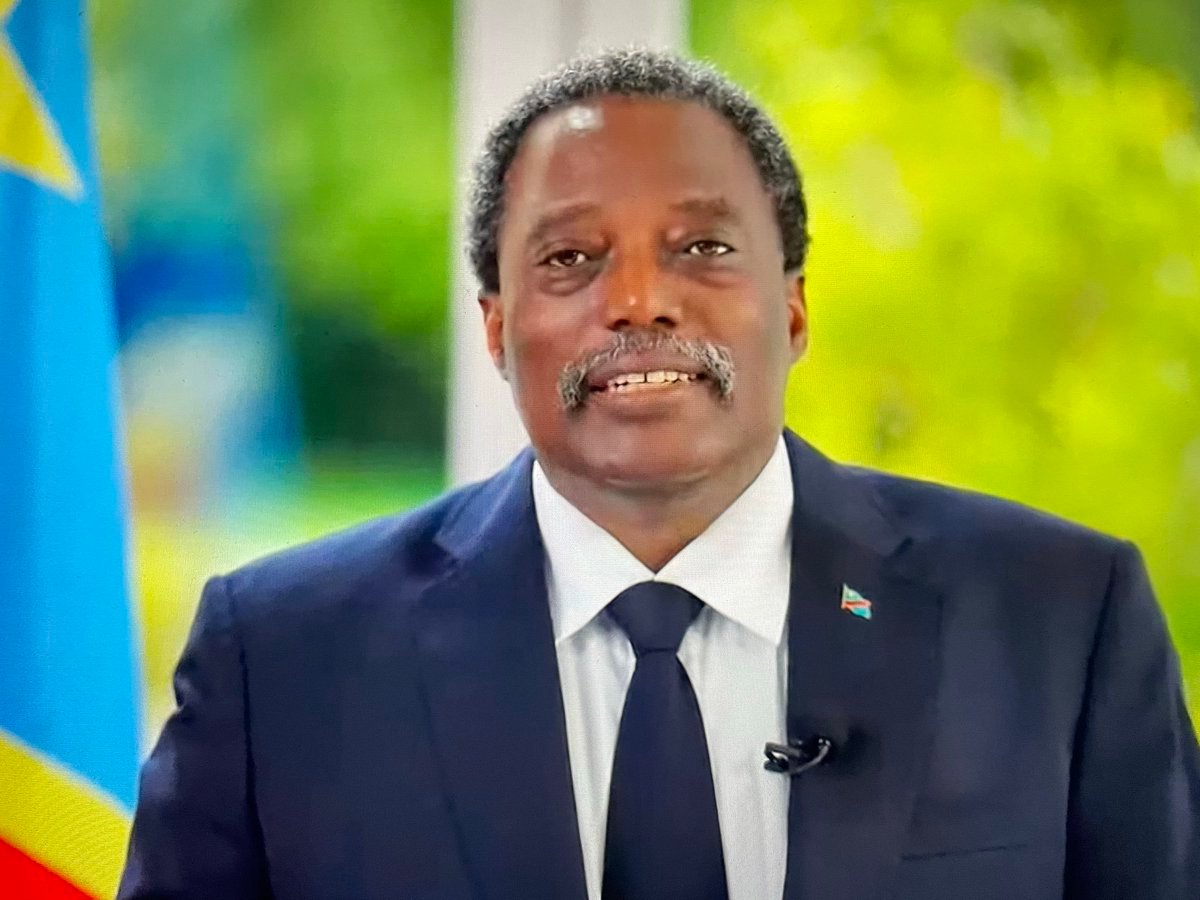
Joseph Kabila’s decision to lead a new political-military coalition incorporating the M23 armed group has reopened one of the Democratic Republic of the Congo’s most consequential political rivalries, raising fresh concerns about the country’s future and the prospects for peace in its conflict-ridden eastern region.
On October 12, 2026, Kabila emerged as the leader of the Front for the Refoundation of the Nation (FRN), a coalition bringing together the Alliance Fleuve Congo (AFC) and M23. The movement opposes President Félix Tshisekedi’s government and says it seeks to restore what it considers legitimate national governance. Its leadership has stated that it is prepared to use force to achieve its objectives.
The announcement marks a significant change for a former head of state who spent years away from frontline politics after governing the country for nearly two decades. It also intensifies questions about how a president who once commanded the national army has become associated with an armed movement challenging the government he left behind. Reuters
Kabila’s political rise began with the violent circumstances surrounding his father’s death.
His father, Laurent-Désiré Kabila, came to power in May 1997 after a rebellion supported by regional forces overthrew Mobutu Sese Seko, who had ruled the country for more than three decades.
Laurent-Désiré Kabila’s government subsequently faced another rebellion, beginning in 1998, that developed into a devastating regional conflict involving several African countries.
On January 16, 2001, Laurent-Désiré Kabila was assassinated inside the presidential complex in Kinshasa by a member of his security detail. His son Joseph, then a senior military officer, was sworn in as president on January 26, 2001, at the age of 29.
His succession was initially shaped by an extraordinary security and political crisis rather than a direct presidential election. Joseph Kabila subsequently led a transitional government established through negotiations involving armed and unarmed political groups.
In 2006, he won the country’s first direct presidential election under the new post-transition political order, securing approximately 58 percent of the vote, according to the official presidential biography published during his administration.
The election gave him an electoral mandate, although his subsequent years in office would become increasingly controversial.
Kabila governed the DRC from 2001 until 2019, overseeing a period marked by political negotiations, elections, international investment and the expansion of foreign involvement in the country’s mining sector.
His administration inherited a nation devastated by war, with weak institutions and persistent insecurity in the east. Efforts to establish a functioning national government took place alongside continued fighting involving armed groups and recurring disputes over control of territory and natural resources.
His presidency also faced sustained criticism over corruption, governance, human rights and restrictions on political freedoms.
One of the most consequential disputes concerned the timing of elections. Kabila’s constitutional mandate was due to end in December 2016, but the election was repeatedly delayed until December 2018. The delays triggered widespread protests and accusations that he was attempting to prolong his rule.
The eventual election produced a victory for opposition candidate Félix Tshisekedi, who took office on January 24, 2019.
Kabila’s departure ended his presidency but did not immediately remove his political influence. His party, the People’s Party for Reconstruction and Democracy (PPRD), retained a network of political allies, and a power-sharing arrangement initially allowed figures associated with his camp to remain influential in government.
That relationship gradually deteriorated as Tshisekedi moved to dismantle the political alliance and remove Kabila’s allies from positions of power.
Kabila’s relationship with the state became increasingly complicated after his departure from office.
His former political network faced declining influence as Tshisekedi consolidated power. In 2020, the alliance between their camps collapsed, accelerating the removal of Kabila-linked figures from government institutions.
The question of who controls the armed forces became particularly important as insecurity worsened in eastern Congo. However, claims that Kabila sought to personally take charge of the Defence Ministry while outside government require specific documentary evidence. There is insufficient verified evidence to establish that he formally attempted to assume the ministerial position as a serving government official after leaving the presidency.
What is clear is that his political confrontation with Tshisekedi eventually extended beyond disagreements over governance and the management of the armed forces.
In 2025, Kabila announced plans to return to Congo, arguing that the deteriorating security situation required his involvement in finding a solution. He subsequently appeared in Goma, a city controlled by M23, where he met religious leaders and other local figures.
The appearance intensified government suspicions about his relationship with the rebellion. His political camp rejected accusations of wrongdoing and characterised the government’s actions against him as politically motivated.
The authorities suspended his party and pursued measures against his assets, while the Senate voted to lift his presidential immunity in preparation for prosecution.
On September 30, 2025, a Congolese military court sentenced Kabila to death in absentia after convicting him of treason, war crimes, crimes against humanity and other offences connected to the conflict in eastern Congo.
The case centred on allegations that he supported the M23 rebellion and its political-military allies. The court also ordered him to pay substantial damages.
Kabila was not present during the proceedings. He denied the accusations and described the prosecution as political persecution.
The distinction is important: the sentence represents a judicial finding by a Congolese military court, while Kabila disputes the legitimacy of the proceedings and the allegations against him. The case has also generated questions about due process and the potential consequences of prosecuting a former president amid an active political and military confrontation.
The ruling nevertheless marked a turning point. A former commander-in-chief who had once presided over the country’s institutions was now facing a death sentence for offences connected to an armed challenge against those institutions. Reuters
The circumstances surrounding Laurent-Désiré Kabila’s assassination have generated persistent controversy, making it important to distinguish established facts from allegations.
Laurent-Désiré Kabila was killed by a member of his presidential security detail. The investigation that followed led to the prosecution and conviction of numerous people, including military personnel accused of participating in the plot.
Joseph Kabila publicly stated shortly after his father’s death that the immediate circumstances of the assassination were known, but that the people behind it had yet to be identified conclusively.
The investigation and subsequent military trial attracted criticism. Journalists and human rights observers raised concerns about the strength of the evidence, the fairness of the proceedings and whether all those convicted were genuinely responsible.
In January 2021, President Tshisekedi pardoned people convicted in connection with Laurent-Désiré Kabila’s assassination.
These developments have helped sustain questions about whether the full truth was ever established. However, there is no sufficiently verified evidence establishing that Joseph Kabila organised or ordered his father’s murder to inherit the presidency.
The fact that he succeeded his father does not, by itself, prove involvement in the assassination. Any claim that he arranged the killing must therefore be treated as an unproven allegation rather than a factual account of his rise to power.
Kabila’s political trajectory reached a new stage on October 12, 2026, when he formally emerged as leader of the Front for the Refoundation of the Nation.
The coalition brings together the AFC and M23, whose forces have captured significant territory in eastern Congo, including major urban centres. The movement says it opposes Tshisekedi’s administration and seeks a fundamental political transformation of the country.
The development goes beyond earlier accusations of indirect support. By accepting leadership of the new coalition, Kabila has assumed a more direct political role in a movement that challenges the authority of the government he once headed.
The coalition also includes figures associated with the rebellion, among them Corneille Nangaa and M23 military commander Sultani Makenga. Its emergence raises questions about whether Kabila can use his national political connections to broaden the movement’s support beyond its eastern strongholds.
The conflict is also regional. United Nations experts and Western governments have accused Rwanda of supporting M23, allegations Kigali denies. The relationship between the rebellion, regional security interests and eastern Congo’s mineral wealth remains central to efforts to resolve the crisis.
Kabila’s new role could complicate negotiations intended to end the fighting. The coalition has said it will assume existing AFC/M23 commitments, including those associated with the Doha peace process, but the implications of his leadership for negotiations and the security situation remain uncertain.
Joseph Kabila’s journey from military officer to president, from head of state to political outsider, and now to leader of a coalition incorporating M23 reflects the continuing struggle over power and state authority in the Democratic Republic of the Congo.
His presidency was shaped by the aftermath of war, the restoration of electoral politics, economic opportunities and persistent allegations of corruption and human rights abuses. His departure in 2019 did not resolve the rivalry with Tshisekedi, and the subsequent criminal proceedings deepened their confrontation.
His formal leadership of the new coalition now places that rivalry in a more dangerous context, where political competition intersects directly with armed conflict.
For civilians in eastern Congo, the central question is whether the latest political realignment will create an opportunity for a negotiated settlement or deepen a war that has already displaced millions and caused immense suffering.
Kabila’s next chapter will be judged not only by his stated political objectives but also by the consequences of the coalition’s actions for the country’s institutions, territorial integrity and civilian population.